India’s billion-dollar trade juggernaut has an unwanted case of missing balance
India’s early FTAs promised a two-way trade highway, but 15 years later the traffic looks decidedly one-sided. Deficits with ASEAN, Japan and South Korea have ballooned as imports raced ahead of exports. Trade experts say the answer is not to shut the road, but to repair it — from tariff imbalances and non-tariff barriers to poor FTA utilisation and costly inputs at home.
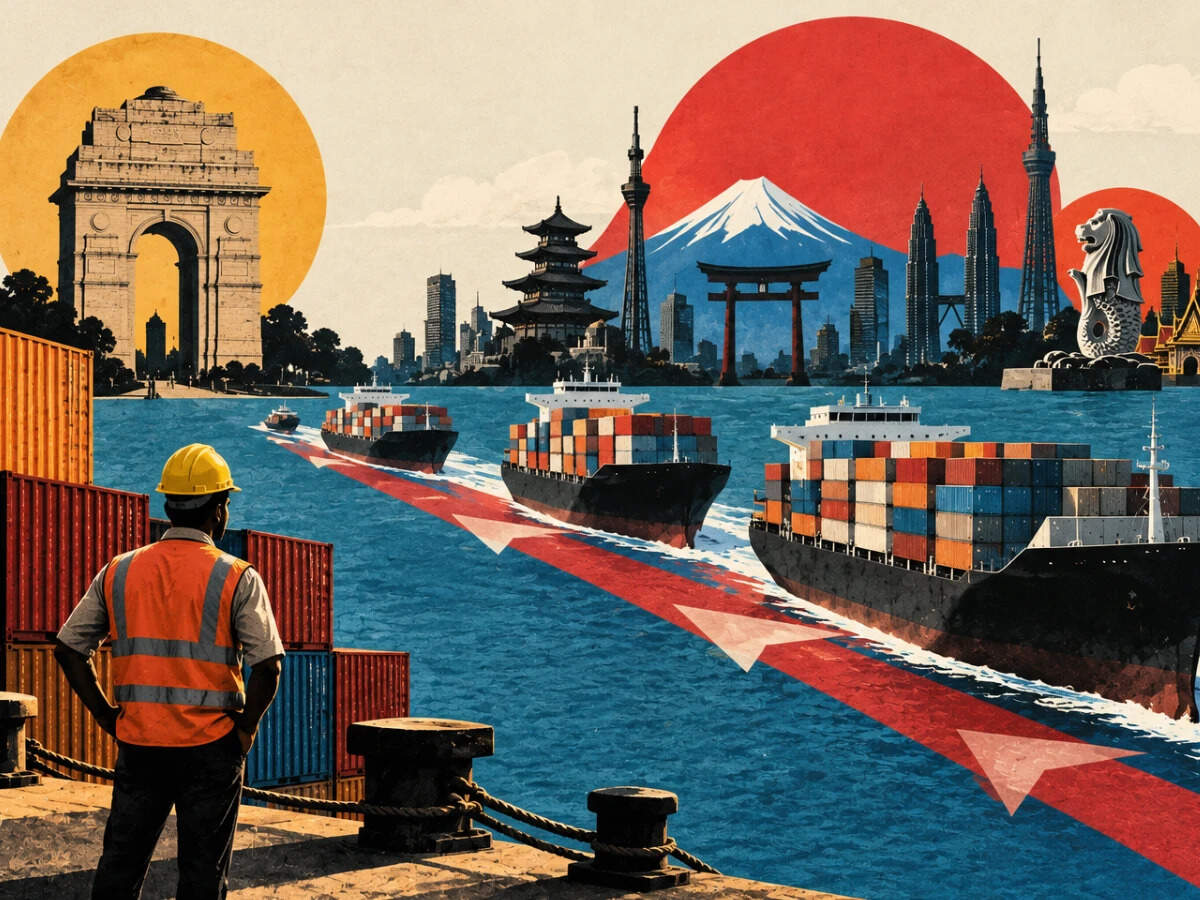
India's trade sector has experienced significant growth in recent years, particularly with its trade deals with the Association of Southeast Asian Nations (ASEAN), Japan, and South Korea. However, according to a report by the Global Trade Research Initiative (GTRI), India's trade deficit with these countries has been growing at an alarming rate - 381% with ASEAN, 318% with Japan, and 268% with South Korea since 2007-09.
This imbalance has raised questions about whether India has secured and utilized enough export opportunities to match the market access granted to its partners. While exports have indeed increased, imports have grown even faster. For instance, India's exports to ASEAN have risen from $19 billion in 2008-09 to around $38 billion in 2025-26, while imports have climbed from $26 billion to nearly $90 billion. The situation is similar with South Korea and Japan, where exports have risen but imports have surged.
Experts suggest that the asymmetry in tariffs and non-tariff barriers may be contributing to this imbalance. India's trade-weighted Most-Favoured-Nation (MFN) tariff is around 12.6%, while average tariffs in markets like Singapore are close to zero, while in Japan and Malaysia, they are below 4%. This means that while India may eliminate tariffs under an FTA, the foreign partners may not experience the same level of tariff advantage, creating a significant price difference.
India's exports to these countries are not utilizing the full benefits of the FTA agreements. Only around 20-30% of India's eligible exports use FTA preferences, compared with 60-70% utilization by exporters shipping goods into India. This underutilization means that many opportunities for improving the trade balance are being left on the table.
Written by urgent.news from The Economic Times - Economy's reporting — not their text. Machine-written — may contain errors; check the original before relying on it.