How Do You Read Ancient Charred Scrolls? Make Your Own
A new technique could unlock the secrets of the Herculaneum scrolls The post How Do You Read Ancient Charred Scrolls? Make Your Own appeared first on Nautilus .
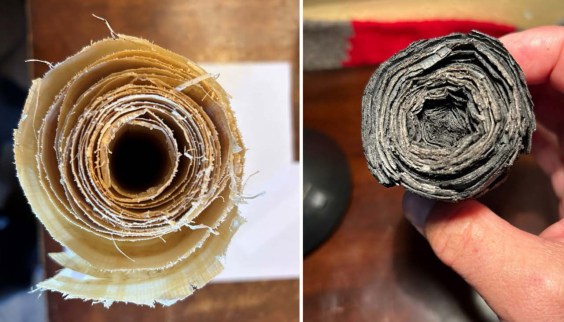
A new method could potentially decode the enigmatic Herculaneum scrolls. Mount Vesuvius erupted in 79 CE, obliterating nearby Pompeii and the town of Herculaneum, burying a library of Greek and Roman papyrus scrolls beneath ash and volcanic gases. These scrolls turned to charcoal, yet surprisingly, they were preserved. In the 18th century, attempts to read the carbonized scrolls failed due to destruction.
Now, modern technology offers a second chance. Researchers from various disciplines combined their expertise to devise a technique for swiftly identifying and reading the scrolls. To simulate ancient materials, they created their own scrolls using carbon-based ink, papyrus, and reeds. The ink contained lead nitrate, which absorbs X-rays, making it easier to detect on CT scans.
When the homemade scrolls were scanned, they revealed promising results, with letters appearing "like a Christmas tree." The next step is to virtually unroll the scrolls using a custom computer program, potentially transforming the decades-long task of translating the Herculaneum scrolls. Many of these scrolls haven't been scanned for lead, which could be done using handheld instruments.
The researchers believe scanning for lead could be a game-changer, as it could help read many of the scrolls with low contrast between carbon ink and paper. This breakthrough could unlock ancient wisdom that was lost to time, all thanks to interdisciplinary researchers and cutting-edge technology.
Written by urgent.news from Nautilus's reporting — not their text. Machine-written — may contain errors; check the original before relying on it.