Harness Previews Revamped Platform for the Agentic Engineering Era
Harness today previewed a revamped user interface for its platform for managing software deployments that makes it simpler for software engineers to manage teams of artificial intelligence (AI) agents using a forthcoming Harness Software Factory platform. Speaking at an {unscripted} NYC 2026 event, Harness CEO Jyoti Bansal told conference attendees the Harness Software Factory will […]
Harness unveiled a refreshed interface for its platform designed to streamline the management of software deployments. This platform, known as the Harness Software Factory, is intended to simplify the process for software engineers overseeing teams of artificial intelligence (AI) agents. During a recent NYC 2026 event, Harness CEO Jyoti Bansal revealed that the Software Factory will standardize processes within agentic AI engineering workflows.
Instead of allowing AI agents to repeatedly redesign application development, the Software Factory employs specifications to maintain standards, reducing token consumption.
Bansal introduced Vibe Mode, a new interface for the Harness platform. This feature applies policies to code developed by 'citizen developers' using AI tools. Additionally, Harness announced a Flex Pricing option, allowing DevOps teams to purchase a pool of credits applicable across various platform components, eliminating the need to license modules separately.
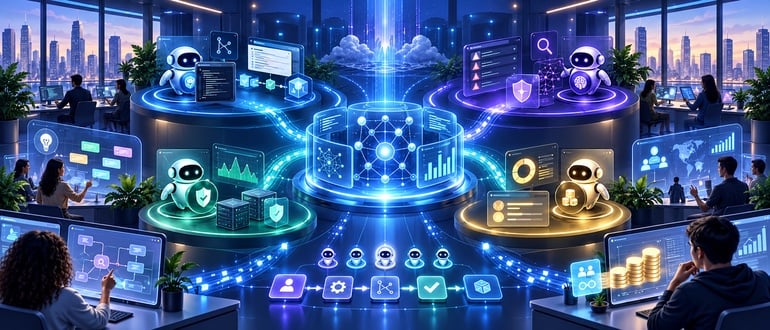
The Harness platform now centers around four primary AI agents responsible for software delivery, security testing, runtime security, and cost management. Each of these agents distributes specific tasks to sub-agents, enabling the autonomous completion of tasks. At the heart of these AI agents is Harness's knowledge graph, a tool enabling AI agents to manage DevOps workflows at machine speed. Currently, the knowledge graph tracks 567 entity types, with 29 billion context updates per month.
Bansal emphasized the importance of eliminating the need for software engineers to write and manage scripts for constructing DevOps workflows, particularly as application developers may soon generate 15 to 20 pull requests (PRs) per week. The AI agents' role is crucial in managing the controls necessary for safely deploying applications. These agents are essential given the lack of context in AI coding tools to successfully deploy code in a production environment.
The adoption of AI agents in DevOps workflows will likely vary, with organizations potentially implementing multiple levels of automation, from fully autonomous to augmenting human engineers. As AI agents become more integrated into DevOps workflows, managing the development and deployment of custom applications will become more accessible to a wider range of organizations. The challenge now lies in re-engineering these workflows to achieve faster and better application deployment.
Written by urgent.news from DevOps.com's reporting — not their text. Machine-written — may contain errors; check the original before relying on it.