Geldpolitik: US-Inflation wird noch bis 2029 zu hoch sein – was das für die Zinsen bedeutet
Gegen den Willen von Präsident Donald Trump hat die US-Notenbank die Zinsen erhöht. Ihren Höhepunkt dürften sie aber noch nicht erreicht haben, wie eine Fed-Befragung zeigt.
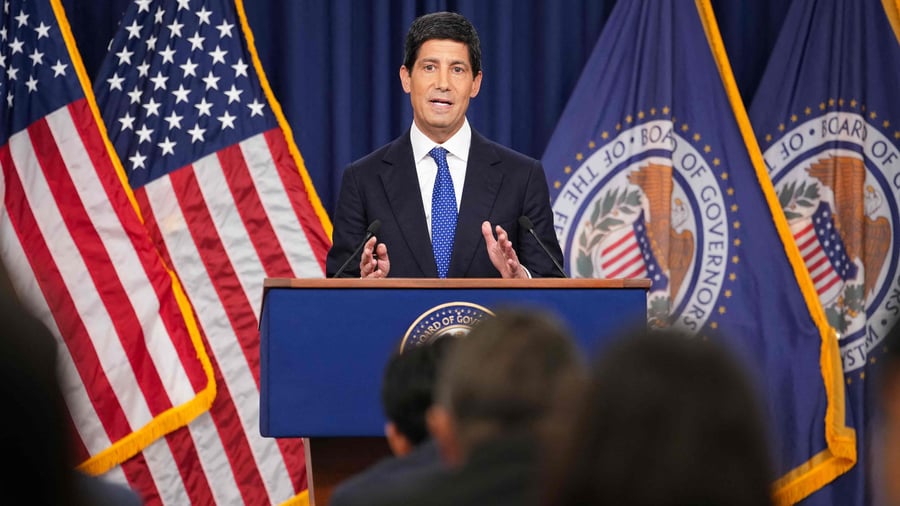
Federal Reserve chair Kevin Warsh celebrated his "independence day" as the US central bank raised its target interest rate for the first time in over three years on Wednesday night. This decision came despite President Donald Trump's explicit request for lower interest rates. The Fed signaled its commitment to tackling inflation and currency depreciation.
This was confirmed by a survey of central bankers published alongside the interest rate decision, which showed that Fed members only expect the annual inflation rate to return to its target of 2% by 2029. This level would ensure both economic growth and price stability. The inflation rate has been above the target for almost five years, with August's annual inflation reaching 3.4%.
The Fed's preferred gauge of inflation, excluding volatile energy and food prices, stood at 2.4% in August. Fed Chair Warsh emphasized during a press conference that "the problem is inflation" and reiterated his commitment to delivering price stability. He mentioned this eight times during the conference. Analyst Andrzej Skiba of RBC Bluebay in London praised Warsh's communication, stating that he now appeared more credible and conveyed a consistent message.
The interest rate decision was a test for Warsh, who took over from Jerome Powell in May. Trump had been a persistent advocate for rate cuts, demanding them even on Wednesday night. However, economists currently consider rate cuts highly unlikely. August's surprisingly strong job data suggests that the economy could withstand a higher interest rate without being excessively damped.
The Fed thus surprised markets with its hawkish stance, as initial expectations had been for a rate cut. Three factors contributed to this: the unanimous 12-0 vote in the Fed to raise rates, the omission of a passage acknowledging that increased inflation was due to supply shocks, and Warsh's statement that the higher inflation was partly due to those shocks.
After the rate hike, Warsh left open whether the current interest rate was restrictive, meaning it would curb economic growth. The "neutral" rate, which would leave monetary policy neither stimulating nor slowing the economy, was raised in that case. Historically, rates of 4% were considered restrictive. Following the 0.25 percentage point hike, the target range is now between 3.75% and 4.0%.
The Dot Plots predict that the Fed will keep the target range at 4.0-4.25% by the end of the year, with forecasts predicting a plateau at that level by 2027. The motto seems to be "higher for longer" rather than a rapid reversal. The decision was Warsh's attempt to dispel doubts about the Fed's independence. In the bond market, the hike initially had little impact, as yields had already risen due to inflation concerns, doubts about the Fed's independence, the high US national debt, and increased supply from corporate bonds.
US Treasury bonds with a two-year maturity were already yielding 4.7% before the decision. Bonds with maturities of ten years or more had yields of 5% and higher. So, the Wednesday rate increase and at least two more 0.25 percentage point hikes by the end of 2027 are already priced in.
Written by urgent.news from Handelsblatt's reporting — not their text. Machine-written — may contain errors; check the original before relying on it.