“Diesel show”: The bitter aftertaste of high politics is now mixed with the smell of diesel
Could a new wave of the global fuel crisis create a perfect storm?
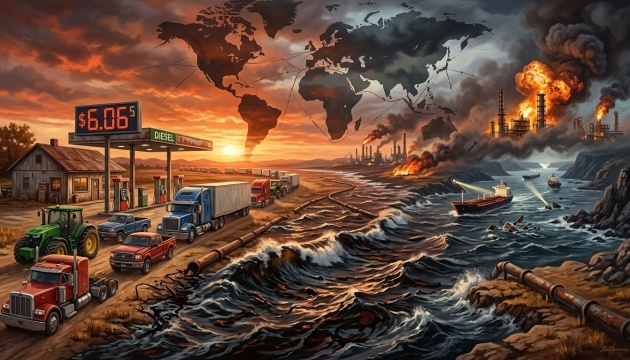
On September 10, the cost of diesel fuel in the United States reached $6 per gallon for the first time ever. This surpassed the previous record of $5.82 set in June 2022. President Donald Trump quickly blamed Ukraine for the diesel crisis, suggesting that the country should cease striking Russian oil refining infrastructure to alleviate the problem. While this explanation provided a clear culprit and a straightforward solution, it failed to consider the complex factors contributing to the global fuel shortage.
The crisis primarily stemmed from a refining and logistics issue rather than a pure supply problem. Oil must be transported from refineries to ports, then delivered to its final destination. When disruptions occur along this chain, the price of the finished product can become decoupled from the price of the raw material. This phenomenon was evident in Europe, where gasoline prices hit a record high of €2.273 per liter.
Global oil product inventories had already reached record lows before the current crisis, further exacerbating the situation. In the United States, distillate stocks fell by 17 million barrels in just two weeks, reaching a seasonal low. Moreover, the Strait of Hormuz, a critical shipping route, experienced a 90% drop in traffic following the conflict between the United States and Iran. This bottleneck severely impacted global oil supplies, with an estimated 8 million barrels per day no longer reaching the market.
Russian refineries, once a significant exporter of diesel and gasoil, contributed to nearly half of the global seaborne trade in these products before the war. However, Russian refinery throughput plummeted to around 3.8 million barrels per day in July, its lowest level in over two decades. Russian exports dropped to 1.2 million barrels per day, down from 2.3 million the previous year.
Despite Putin's claim that Russia had restored most of its damaged refining capacity, this assertion was contradicted by data, export restrictions, and fuel shortages in St. Petersburg, as well as Trump's own statement.
The search for a single "culprit" does not address the underlying issue. Trump's claim of Ukrainian culpability is an oversimplification that fails to account for the complex interplay of factors contributing to the diesel crisis. For Ukraine, Russian refineries are vital to their war efforts, generating export revenue and providing financial resources to the aggressor.
Moreover, Russia has consistently attacked Ukrainian energy infrastructure, exacerbating the global fuel shortage. As nations scramble for alternative fuel sources, the price of diesel inevitably rises, making the situation politically charged during an election year.
Written by urgent.news from Ukrinform - Economy's reporting — not their text. Machine-written — may contain errors; check the original before relying on it.