Colombian Archaeologist Reveals Another Treasure of the San Jose Galleon
Last year, Colombian authorities recovered five objects from the San Jose galleon, which lies about 600 meters beneath the Caribbean Sea near Cartagena. The artifacts — a cannon, a porcelain cup and three macuquinas, or colonial-era coins — represent only a small sample of the valuable cargo that sank with the ship more than three […]
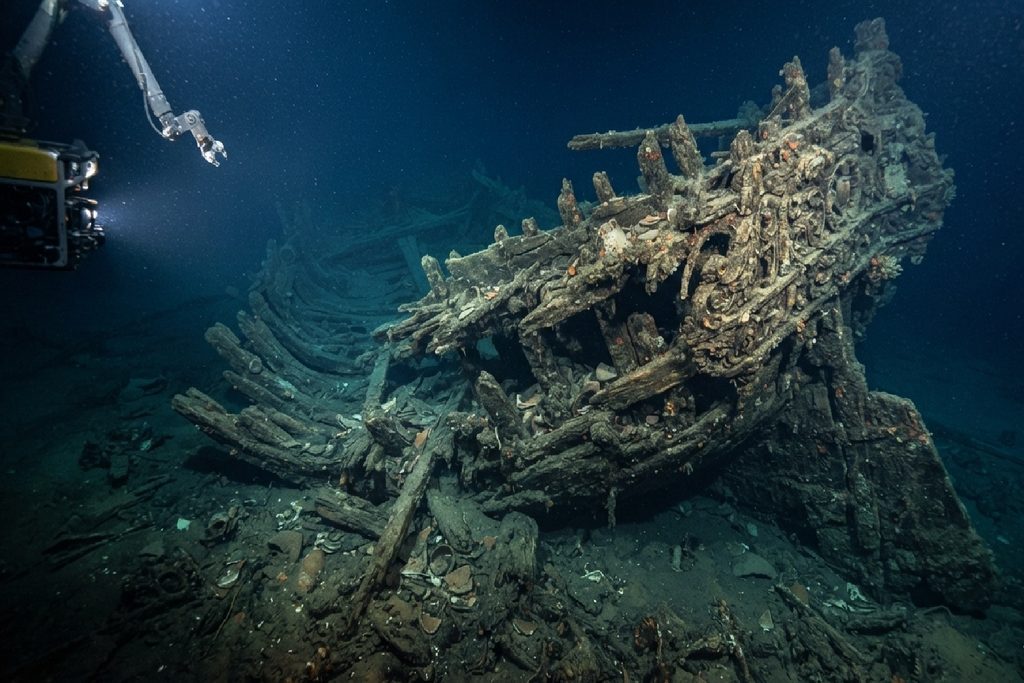
Colombian archaeologist Ricardo Borrero Londoño has unveiled new insights into the San Jose galleon, a Spanish ship that sunk in 1708 during a battle with a British squadron. The shipwreck, located about 600 meters beneath the Caribbean Sea near Cartagena, contained a valuable cargo of gold, silver, emeralds, and other items. However, Borrero Londoño's focus is not on the precious cargo but on the ship's naval architecture and the scientific principles behind Iberian shipbuilding.
Borrero Londoño, a historian, archaeologist, and member of the Colombian Institute of Anthropology and History, examined the ship's wooden structures and naval design to better understand the mathematical and geometric principles used in Iberian shipbuilding. His research appears in a two-volume book titled "Brief History of Iberian Ship Conception and Design (1570-1712): The Coordinate System that Preceded Descartes."
The book explores how mathematical and philosophical principles were applied to ship design, revealing that Iberian ships were more than just tools for warfare and trade. The first volume delves into the conception and design of ships during the 16th and 17th centuries, while the second volume traces the development of galleons and compares structural components found in 17th-century Iberian shipwrecks.
Borrero Londoño's work highlights the advanced technological inventions of the scientific revolution in Europe during this historical period.
Written by urgent.news from Colombia One's reporting — not their text. Machine-written — may contain errors; check the original before relying on it.