BOJ faces higher bar to support yen after Fed’s hawkish hike
The Fed's move threatens to keep the U.S.-Japan rate gap wide even as the BOJ is expected to raise its own policy rate this week.
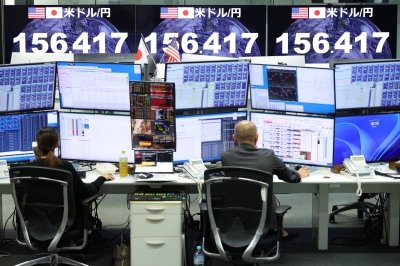
The Bank of Japan (BOJ) faces a more challenging task in supporting the yen following the Federal Reserve's aggressive interest rate hike, according to financial strategists. The Fed's decision to raise borrowing costs for the first time since 2023 and to anticipate further increases has prompted traders to expect three more rate hikes by mid-next year. This situation could widen the gap between U.S. and Japanese interest rates, even as the BOJ is anticipated to raise its policy rate this week.
The yen experienced a sharp decline of up to 1% against the dollar to 156.42 per dollar following the Fed's hawkish stance. This drop occurred after a significant rally earlier in the month, driven by expectations of a more aggressive BOJ tightening policy, the unwinding of yen-funded carry trades, and speculation that Japanese pension funds might allocate more funds to domestic assets.
As the BOJ prepares for its policy meeting on Friday, market participants are urging the central bank to demonstrate a clear commitment to additional rate hikes to prevent further weakening of the yen.
Written by urgent.news from Japan Times's reporting — not their text. Machine-written — may contain errors; check the original before relying on it.
This story
This is one outlet's version. Read the fullest account.
- Euro weakens to near 1.1450 as Fed raises rate for first time in three years fxstreet.com
- Hawkish Fed lifts dollar to seven-week high as focus turn to BOJ channelnewsasia.com
- Hawkish Fed lifts dollar to seven-week high as focus turn to BOJ freemalaysiatoday.com
- Hawkish Fed lifts dollar to seven-week high as focus turn to BOJ brecorder.com
- Hawkish Fed lifts dollar to seven-week high as focus turn to BOJ nst.com.my
- IMF downgrades Australian economic forecast amid fears of interest rate hike theguardian.com
- Australian dollar crushed as Fed fails Warshach test macrobusiness.com.au