Autonomes Fahren: US-Behörde nimmt sich Teslas Robotaxi vor
Nach US-Regeln brauchen auch autonome Robotaxis eine Ausnahmeerlaubnis, wenn sie ohne Lenkrad und Pedale unterwegs sein sollen. Elon Musks Tesla ignorierte das.
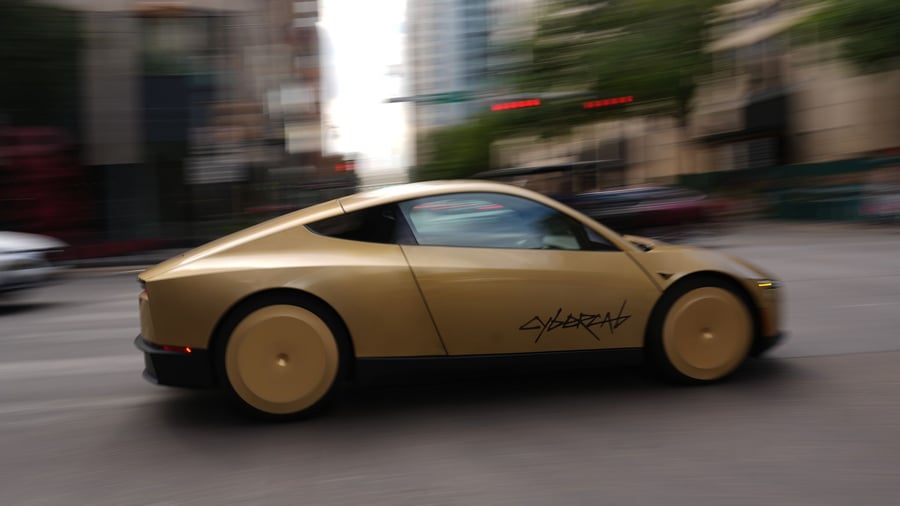
The United States transportation safety authority, NHTSA, has expressed concerns about Tesla's introduction of its robotaxi, the Cybercab, which lacks a steering wheel and pedals. In a questionnaire, the authority specifically points out that vehicles on US roads must have a foot-operated brake and inquires how a Cybercab without pedals can comply with this safety regulation.
Tesla has been granted until the end of September to respond. Continuous non-compliance could result in fines of up to $139 million (121 million euros). Following the usual procedure in the United States, Tesla assured that the vehicles would meet standard traffic safety regulations before the debut of several Cybercabs in Austin, Texas, at the beginning of September.
However, NHTSA immediately raised questions about this. Typically, all cars on US roads need a steering wheel and pedals. For instance, Waymo, a leading robotaxi provider, maintains control elements in thousands of its driverless vehicles to be used by law enforcement or fire services when needed. No exception application is required.
There is an exemption rule: after an NHTSA review, companies can be granted permission to put up to 2,500 pedalless vehicles on the road. Amazon's subsidiary Zoox utilized this rule, transporting people in their novel transportation capsules in Las Vegas and San Francisco. Tesla, however, did not apply for such permission. Some Cybercab passengers reported seeing control elements on the vehicle's display upon entering, which failed to respond to their inputs.
Tesla may consider these functions as a reasonable replacement for pedals and steering wheels. Tesla's ambitious promises CEO Musk has declared that autonomous driving and humanoid robots would define the future of the electric vehicle manufacturer. Unlike Waymo and other robotaxi developers, Tesla avoids more expensive laser radars that scan the vehicle's surroundings, relying solely on cameras.
While this approach is cheaper, it is criticized as not secure enough by experts and competitors. Musk insists that cameras are sufficient. Despite Musk's grand declarations, Tesla has only deployed a few self-driving cars without human supervision on the roads.
Written by urgent.news from Handelsblatt's reporting — not their text. Machine-written — may contain errors; check the original before relying on it.