Asian bonds decline as US Fed hikes rates, dollar jumps
Money markets priced in about a 50 per cent chance of another Fed hike in October.
Shorter-term Asian government bonds declined, mirroring movements in U.S. Treasuries following the Federal Reserve's first interest rate hike since 2023 and its indication of additional tightening to control inflation, according to ST's news service. The Australian and New Zealand government bonds slipped in early trading after the yield on the yield-sensitive two-year U.S. note rose seven basis points to 4.74 percent, the highest since 2024.
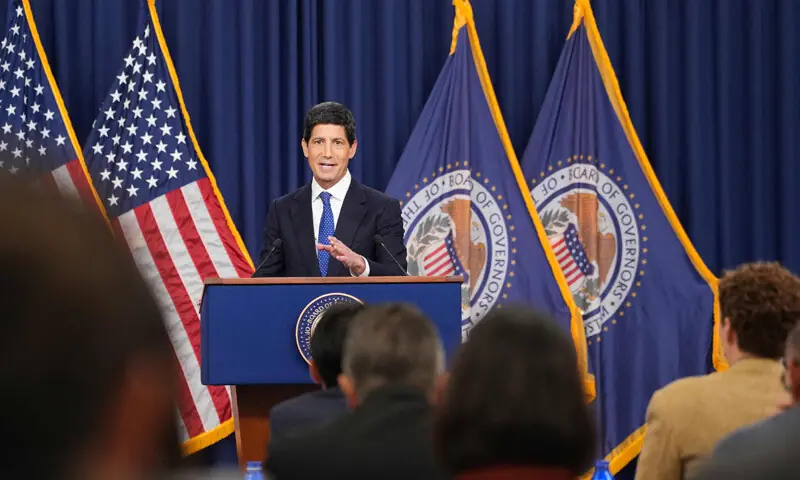
These moves came after U.S. Federal Reserve chair Kevin Warsh adopted a more hawkish stance, stating that the interest rate increase "removed a dose of accommodation". The market priced in roughly a 50 percent chance of another Fed hike in October. The dollar gauge on Bloomberg climbed 0.5 percent in New York trading post the Fed's rate hike.
Gold, usually a loss-maker when interest rates go up, maintained its decline from the previous session, trading around $4,270 an ounce. Asian equities increased by 0.1 percent, with gains seen in Japanese and South Korean benchmarks. S&P 500 Index and Nasdaq 100 Index equity-index futures also rose in early Asian trading. Earlier, Wall Street traders drove stocks to their lowest level since July due to expectations of more Fed rate hikes aimed at fighting inflation.
The Federal Open Market Committee unanimously voted to raise the benchmark rate by a quarter percentage point to a range of 3.75 percent to 4 percent. The Fed's dot plot suggested one additional rate hike in 2026. Investors are now evaluating how rapidly the Fed might continue tightening as policymakers deal with overall inflation pressures.
The committee removed references to inflation being driven by supply shocks, indicating a focus on more persistent inflation concerns over recent price increases viewed as transitory or externally driven, according to Daniel Siluk, portfolio manager at Janus Henderson Investors. In other markets, oil prices dropped on indications that some Middle East supply disruptions are easing, with Brent settling 0.7 percent lower at around $105.
Oil had surged sharply on Sept 16, settling below $106 a barrel after Saudi Arabia sought to restore about half the capacity of its East-West pipeline following drone strikes that had closed it a week earlier. The yen held its decline from the last three sessions, trading at 156.20 per dollar in Asia. U.S. President Donald Trump expressed disappointment on social media after the Fed decision, suggesting U.S. interest rates should be at 1 percent or lower, though he did not directly attack Warsh.
This rate hike could signal the beginning of a broader tightening cycle, with policymakers and traders anticipating at least one more rate increase in 2026. Attention is now turning to the timing and pace of further rate hikes.
Written by urgent.news from Straits Times Business's reporting — not their text. Machine-written — may contain errors; check the original before relying on it.
This story
This is one outlet's version. Read the fullest account.
- Most stocks rise as Fed hikes rates, signals drive to curb inflation freemalaysiatoday.com
- Shares tick higher as Fed hikes rates, dollar jumps with short-term yields channelnewsasia.com
- Global Market Today: Asian stocks tick higher as markets weigh further Fed hikes economictimes.indiatimes.com
- Shares tick higher as Fed hikes rates, dollar jumps with short-term yields nst.com.my
- Shares tick higher as Fed hikes rates, dollar jumps with short-term yields straitstimes.com
- Indian shares seen opening flat after Fed signals more hikes; NSE IPO in focus brecorder.com