Afarinick, Meiji sign agreement to develop sustainable cocoa agroforestry model in Ghana
Ghanaian-owned farm and agro-forest restoration company, Afarinick Company Limited (ACL), has entered an international partnership with Japan’s Meiji Co., Ltd. to advance sustainability and circularity across Ghana’s cocoa value chain. The two companies signed a Letter of Intent (LOI) in Accra on Monday, 14 September 2026, during a ceremony marking 100 years of Meiji Milk […]
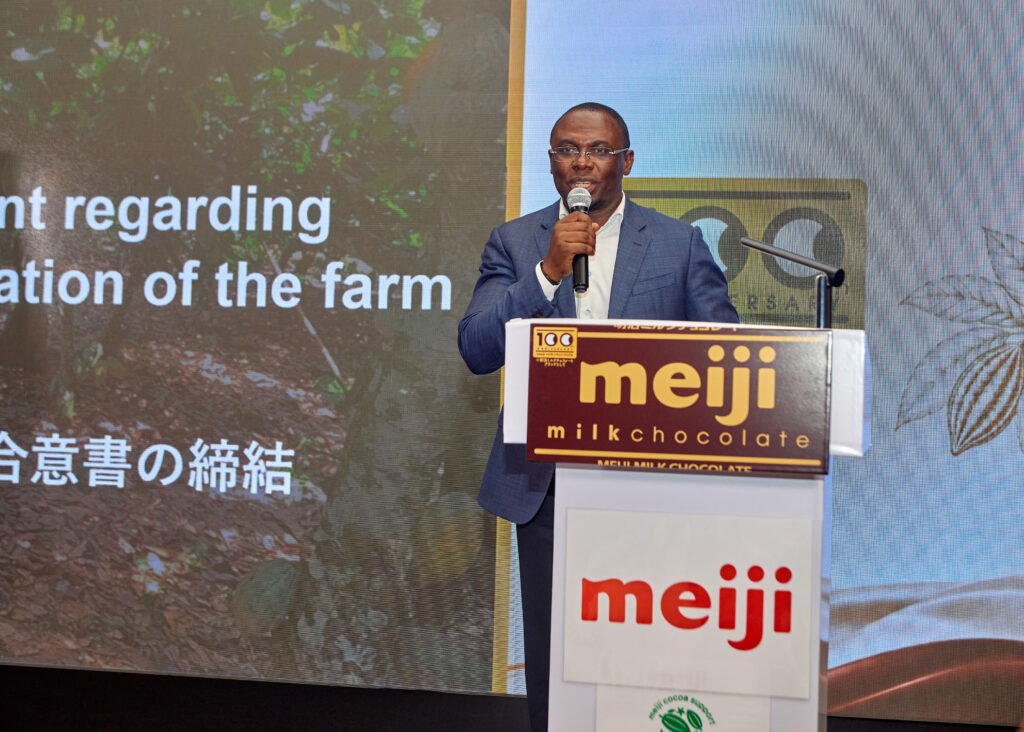
Ghanaian agro-forest restoration firm Afarinick Company Limited (ACL) and Japanese conglomerate Meiji Co., Ltd. have signed a Letter of Intent (LOI) to collaborate on a sustainable cocoa agroforestry model in Ghana. The agreement, signed on September 14, 2026, during a ceremony marking Meiji Milk Chocolate's 100 years in Ghana, aims to promote sustainability and circularity across the country's cocoa value chain.
The international partnership, led by ACL's Executive Chairman Joe Forson and Meiji Co., Ltd.'s President and Representative Director Bunjiro Yao, focuses on developing an agroforestry cacao farm in Ghana. The model emphasizes the effective utilization of farm plant waste and aims to create a circular agroforestry cacao farm that integrates cocoa production, agroforestry, and the productive use of resources generated within the farming system.
For Afarinick, the LOI marks a significant step in bringing its expertise in farm management, agroforestry, and forest landscape restoration to an international stage. The company, which operates across farm management, forest restoration, sustainable agriculture, reforestation, and GIS services, owns Ghana's largest privately owned sustainable cocoa plantation - a 2,000-acre commercial plantation in the Volta Region developed around climate-smart and agroforestry principles.
The focus on farm plant waste within Ghana's cocoa industry introduces a new dimension to sustainability, as it seeks to create greater value from resources already generated within cocoa farming systems. The LOI positions itself as a framework for developing a model that goes beyond being just another cocoa farm, emphasizing the integration of agroforestry and circular resource utilization for more sustainable cocoa production.
For Afarinick, the partnership with Meiji strengthens its position as a Ghanaian company building resilient and sustainable agricultural landscapes, while placing Ghana's cocoa value chain in a wider global discussion on circularity, resource efficiency, and the future of food production. The collaboration demonstrates that sustainability is not an add-on to cocoa production, but an integral part of the value chain itself.
Written by urgent.news from GBC Ghana's reporting — not their text. Machine-written — may contain errors; check the original before relying on it.
This story
This is one outlet's version. Read the fullest account.