A Human Colony on the Moon Could Run Out of Water in 100 Years, Study Says
A lunar city of one million people could exhaust a 1-billion-metric-ton supply of water in about 100 years even if it recycled 98% of its water, according to a research report published Sept. 14 in Frontiers in Space Technologies. Martin Elvis of the Smithsonian Astrophysical Observatory and Jonathan C. McDowell of Durham University modeled how […]
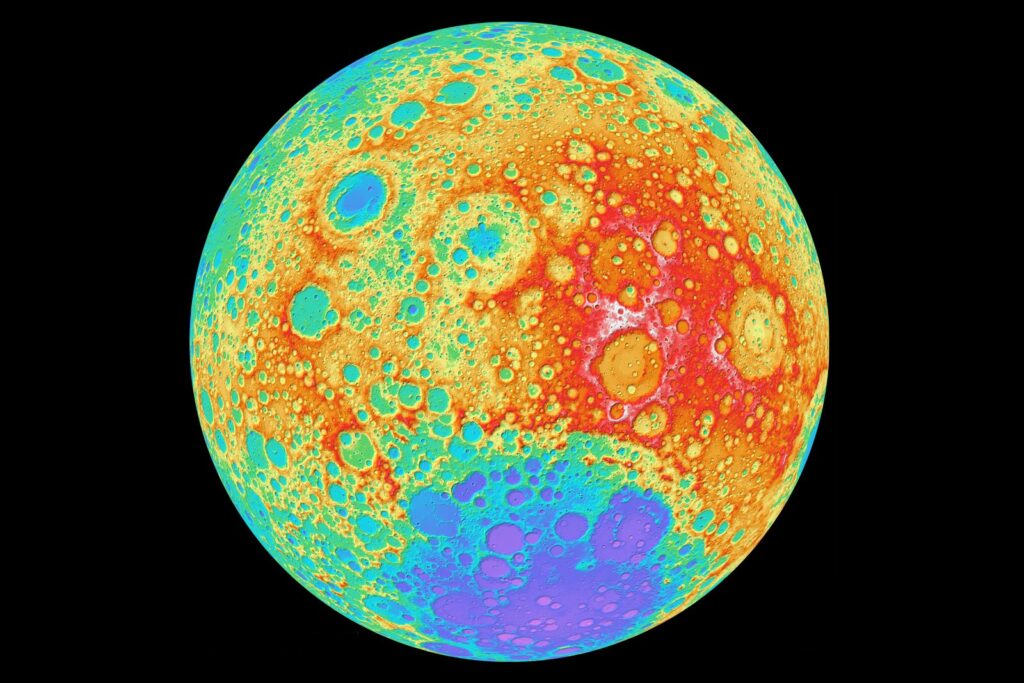
A lunar settlement of one million people could deplete a 1-billion-metric-ton water supply within approximately 100 years, even if it achieves an impressive 98% water recycling rate, according to a study published in Frontiers in Space Technologies on September 14. Researchers Martin Elvis from the Smithsonian Astrophysical Observatory and Jonathan C. McDowell from Durham University conducted calculations assuming water extraction from permanently shadowed regions near the Moon's poles and a high efficiency similar to that on the International Space Station.
The 1-billion-ton figure is an estimate rather than a precise measurement of the water resources available on the Moon. The study acknowledges the significant uncertainties in determining the exact amount of water that could be extracted, which depends on the distribution and composition of lunar ice. Water is primarily found near the Moon's poles, particularly in permanently shadowed areas inside craters, where it remains in a frozen state due to extremely low temperatures.
Various methods, including ultraviolet, infrared, radar, and neutron measurements, have been employed to study these deposits. However, each method has its limitations and provides estimates that vary substantially. A 2022 analysis of 65 large permanently shadowed regions identified eight craters as likely containing the richest deposits, estimating their combined water content to be around 34 million metric tons.
The researchers used a generous baseline of 1 billion metric tons for their calculations to explore the impact of population size and recycling efficiency on the viability of a lunar settlement.
The study assumes a total water use of 500 metric tons per person per year, encompassing drinking, hygiene, breathing, food production, and other necessities. Without recycling, the water supply would only last about 2.4 years for a population of one million residents. However, with a 98% water recycling rate, the water could sustain the settlement for around 100 years.
The research highlights the potential impact of higher recycling rates, with 99% efficiency extending the supply to about 200 years, and 99.9% efficiency pushing it to approximately 2,000 years.
Despite the promising findings, the researchers emphasize the need for more precise data on the Moon's water resources. While improved geological mapping, such as China's updated global geological map of the Moon released in August, can help identify potential sites for exploration and landing, it does not directly quantify the water reserves.
The study suggests that future lunar settlements might face long-term population limits of a few hundred thousand people if water efficiency does not surpass 99.75%, significantly higher than the current 98% rate on the ISS.
The research concludes that while technological advancements like more efficient recycling, reduced water consumption, and the exploration of additional lunar deposits could extend the viability of a lunar settlement, the fundamental question of how much water the Moon actually contains and where it is concentrated remains largely unanswered.
Written by urgent.news from Colombia One's reporting — not their text. Machine-written — may contain errors; check the original before relying on it.