Why are Man Utd better without the ball?
Under Michael Carrick, Manchester United average 1.5 points per game when they have more than 50% of the ball. When they have less than 50%, this number is 2.6.

Under Michael Carrick, Manchester United's possession statistics have shown a stark contrast with their overall performance. When United control 50% or more of the ball, they average only 1.5 points per game. However, when they have less than 50%, that number jumps to 2.6 points. This correlation of 10 wins out of the past 10 games since Carrick took charge indicates a significant impact of their possession style on results.
Former United manager Ole Gunnar Solskjaer faced a similar dilemma, trying to balance United's elite counter-attacking style with the need to beat teams that give the ball away. In a recent derby defeat, City's manager Enzo Maresca acknowledged that United's lack of space in behind and transitions after losing a man made the game more difficult for them.
Carrick's style of play, emphasizing directness and excitement, resonates with fans but can lead to disorganized defending against stubborn opposition. To address this, United has adapted a 4-2-4 shape with full-backs pushing up and wingers providing support, often leading to isolated wing players. This has resulted in United struggling to create chances in the final third, especially when relying on wide play.
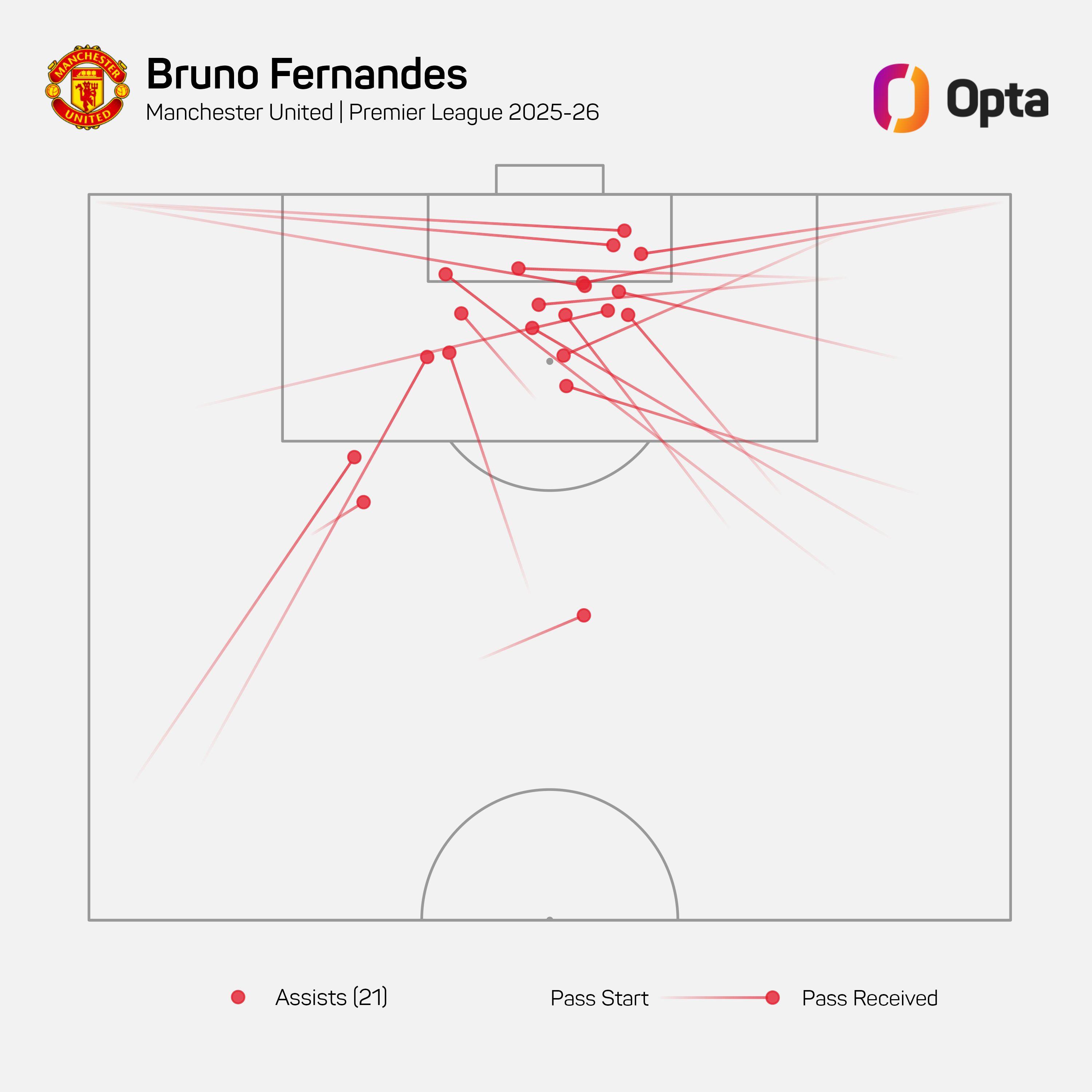
Carrick's focus on individual player freedom has helped players like Bruno Fernandes break records, but it can also make the team vulnerable to reactive problem-solving rather than repeatable methods of creating chances.
Written by urgent.news from BBC Sport Football's reporting — not their text. Machine-written — may contain errors; check the original before relying on it.
This story
This is one outlet's version. Read the fullest account.
- Why are Man Utd better without the ball? sports.yahoo.com
- Why are Man Utd better without the ball? bbc.co.uk