Who gets remembered: The forgotten heroes missing from South Africa’s history books
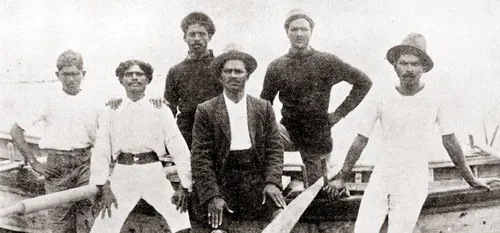
South Africa’s school history often celebrated a narrow set of Afrikaner heroes. A broader national memory should also remember the Padavatan Six, Retha Harmse, Edward Gutsche, Ayakha Godlwana and others whose courage crossed racial and political boundaries.
South Africa's gender wage disparity is deeply entrenched even before individuals are offered jobs. Research analyzing tax data from millions of formal-sector employees over eight years revealed women earned 12% less than men on average. A significant portion of this gap—about 55%—is attributed to women gravitating towards lower-paying industries.
The remaining disparity is likely due to unmeasured worker differences and broader labour market biases rather than overt discrimination within companies. This earnings divide manifests at three levels: industry, occupation, and employer. Women are overrepresented in lower-premium sectors like education, retail, and personal care, while men dominate higher-paying fields such as construction, mining, and manufacturing.
A StatsSA analysis from August of this year confirmed this trend, showing that women held 44% of South Africa's jobs but were underrepresented in transportation, storage, and motor trade industries. Occupational segregation adds another layer of inequality, with women comprising 17% of clerical workers compared to 5.8% of men and 10.8% of domestic workers compared to 0.5% of men.
Conversely, men dominate managerial roles with 10% of women holding these positions versus 10.1% of men. Furthermore, two individuals performing comparable work might receive different paychecks simply because their employers set different wage levels. Professor Linda Meyer, MD of Rosebank International and Visiting Professor at Nelson Mandela University, explained that these divisions do not exist in isolation.
When layered together—sector, occupation, and employer—workers can find themselves on markedly different earnings trajectories, allowing disadvantage to accumulate at each stage. The root of the problem lies before pay comparisons even begin. In Q2 2026, only 7.3 million of South Africa's 21.3 million working-age women were employed, with a labor-force participation rate of 54.9% for women compared to 64.4% for men.
Within the formal workforce, the employer pay gap widened significantly between the mid-20s and mid-40s. Although women and men changed jobs at similar rates, women were less likely to transition to higher-paying positions. This trend coincides with the child-rearing years. StatsSA data revealed that women accounted for 88.2% of the 2.4 million individuals outside the labor force due to caregiving responsibilities.
Unpaid domestic work limits women's earning potential and career options. Educational pathways also diverge early, with women being less represented in fields like physical sciences, engineering, and manufacturing. Despite being the majority of post-school students, men outnumber women in graduates of these disciplines. Professor Meyer emphasized that while equal-pay laws prohibiting unfair differences for work of equal value are essential, they are insufficient on their own.
Employers must conduct regular pay audits to identify and rectify internal inequalities. However, audits alone cannot help women enter higher-paying industries or companies. To close the wider wage gap, South Africa must address childcare support, offer flexible work options without pay penalties, promote fairer recruitment practices, and create stronger pathways into premium sectors.
Equal pay should not merely be assessed through side-by-side comparisons but by whether women have equal opportunities to enter and advance in well-paid parts of the economy. Until South Africa confronts both unfair pay differences and the structural barriers influencing employment paths, women will continue entering salary negotiations with limited earning potential.
Written by urgent.news from IOL's reporting — not their text. Machine-written — may contain errors; check the original before relying on it.
This story
This is one outlet's version. Read the fullest account.
- South Africa president Ramaphosa booked off from public engagements due to ill health peopledaily.digital
- Minority boycotts Foreign Affairs Committee meeting over South Africa evacuation funds gbcghanaonline.com
- INTERVIEW: Why Nigerians remain vulnerable to xenophobia in South Africa; how governments can change the narrative — Acting High Commissioner Temitope Ajayi premiumtimesng.com
- South Africa’s president withdraws from official duties over health issues punchng.com
- South Africa’s pay gap is rigged before you’re hired iol.co.za
- What to know about the deaths of 8 women in South Africa that have sparked fear and anger winnipegfreepress.com