Volatile Organic Compounds Have Been Underestimated in the Carbon Cycle
Better tracking of these reactive compounds is essential for understanding how the atmosphere and terrestrial biosphere interact.
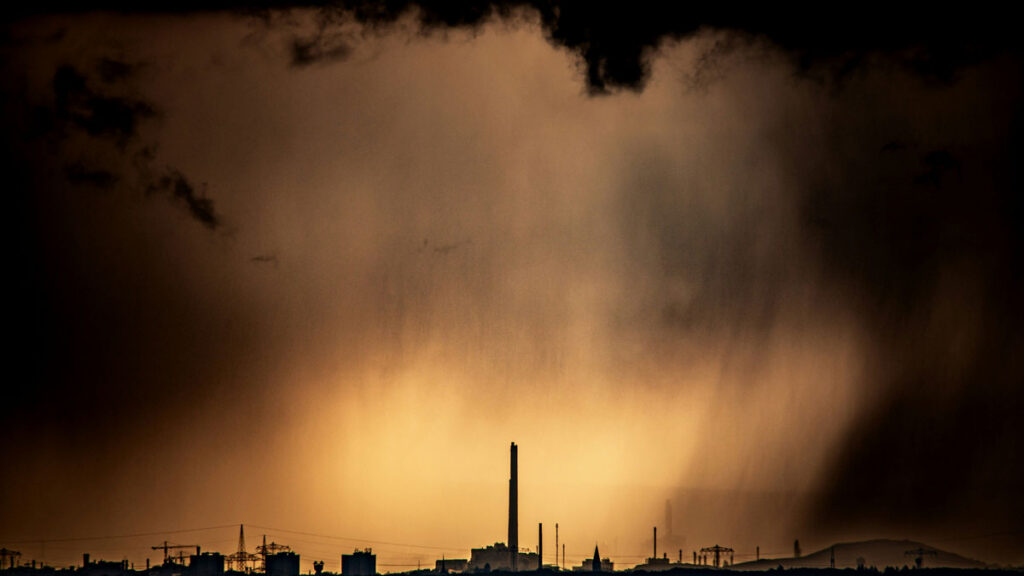
Rainwater serves as a crucial link between the Earth's biogeochemical cycles and the atmosphere, delivering compounds to the ground through a process known as wet deposition. Historically, the focus of research on airborne chemicals and wet deposition has been on inorganic compounds, such as nitrates and sulfates, which are major contributors to acid rain.
Scientists previously assumed that VOCs, found in petroleum fuels, paint thinners, and pharmaceuticals, had a negligible impact on rainwater-based cycling due to the lack of detection methods. However, recent advancements in analytical techniques have shown that VOCs are present in rainwater in higher concentrations than previously thought.
A recent review by Yañez-Serrano et al. estimates that approximately 100 teragrams of the 460 teragrams of carbon delivered to Earth annually via wet deposition are in the form of VOCs. This highlights the importance of VOCs in the carbon cycle, as climate change and human activities continue to intensify the emissions of these compounds.
The authors argue that VOCs have been "largely invisible" to biogeosciences and are a critical missing link in carbon cycle modeling. Given that VOCs are highly reactive and biologically labile, even small concentrations can significantly alter water chemistry, plant life, and microorganisms at various scales.
The review emphasizes the need for further research to address key knowledge gaps in the study of VOCs. While VOCs present unique analytical challenges due to their chemical diversity and reactivity, improvements in both detection methods and modeling are necessary to accurately assess their role in the biogeochemical cycle. This includes improved air pollution monitoring and the incorporation of VOC data into Earth system models.
Additionally, ongoing observations and experiments on the effects of VOC wet deposition on terrestrial ecosystems and biogeochemical cycles will be essential for understanding the potential consequences of VOC exposure and how they may evolve in the context of ongoing climate change. As the climate changes and VOC emissions increase, recognizing the overlooked role of VOCs in Earth's biogeochemistry has become increasingly vital.
Written by urgent.news from Eos's reporting — not their text. Machine-written — may contain errors; check the original before relying on it.