Vietnam, Austria seek deeper investment cooperation
The Ministry of Finance of Vietnam, in coordination with the Vietnamese Embassy in Austria and Austrian agencies and partners, held the Vietnam-Austria Investment Connect forum in Vienna on September 14 (local time).
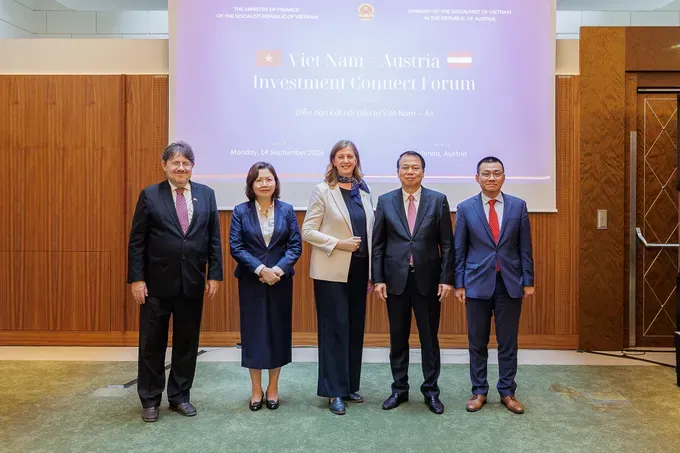
On September 14 in Vienna, Vietnam and Austria convened the Vietnam-Austria Investment Connect forum to strengthen their investment cooperation. Attended by Vietnamese and Austrian officials, the event aimed to promote collaboration between the two nations' financial sectors. Key figures present included Nguyen Duc Chi, Deputy Minister of Finance from Vietnam, and Barbara Eibinger-Miedl, Permanent State Secretary at Austria's Federal Ministry of Finance.
The forum highlighted a recent reclassification by FTSE Russell, which has now placed Vietnam's stock market in the secondary emerging market category. This move is set to take effect from September 21, 2026, with Vietnamese stocks now featured in FTSE Russell's global equity indices. To meet the new standards, Vietnam is committed to enhancing transparency, market security, and accessibility for international investors.
Vietnam and Austria share a robust economic relationship, with bilateral trade reaching approximately US$2.5-2.7 billion. Vietnam is Austria's largest trading partner within ASEAN, and the two nations have already invested in each other, with Austria hosting 49 active investment projects worth around US$150 million. Additionally, around 60 Austrian businesses maintain a presence in Vietnam through representative offices or branches.
A key focus moving forward is the EU-Vietnam Investment Protection Agreement (EVIPA). Deputy Minister Nguyen Duc Chi emphasized the importance of fully ratifying this agreement to establish a stable, long-term legal framework for collaboration. Austrian officials expressed their optimism about deepening cooperation in finance, investment, innovation, and the green transition.
They hope that further dialogue between agencies and businesses from both countries will lead to more concrete cooperation projects in areas such as high technology, artificial intelligence, clean energy, transport infrastructure, smart cities, green finance, carbon credits, and the circular economy.
Written by urgent.news from SGGP English Edition Business's reporting — not their text. Machine-written — may contain errors; check the original before relying on it.