Tonight's US Fed rate decision will cast a long shadow over India
Federal Reserve Rate Impact on India: Federal Reserve rate hike is set to intensify pressure on India’s rupee, bond yields, inflation and markets. With the US Fed expected to raise rates by 25 basis points, higher US Treasury yields, a stronger dollar and surging crude oil prices could deepen India’s market pressure. The RBI faces rising challenges from currency weakness, imported inflation,…
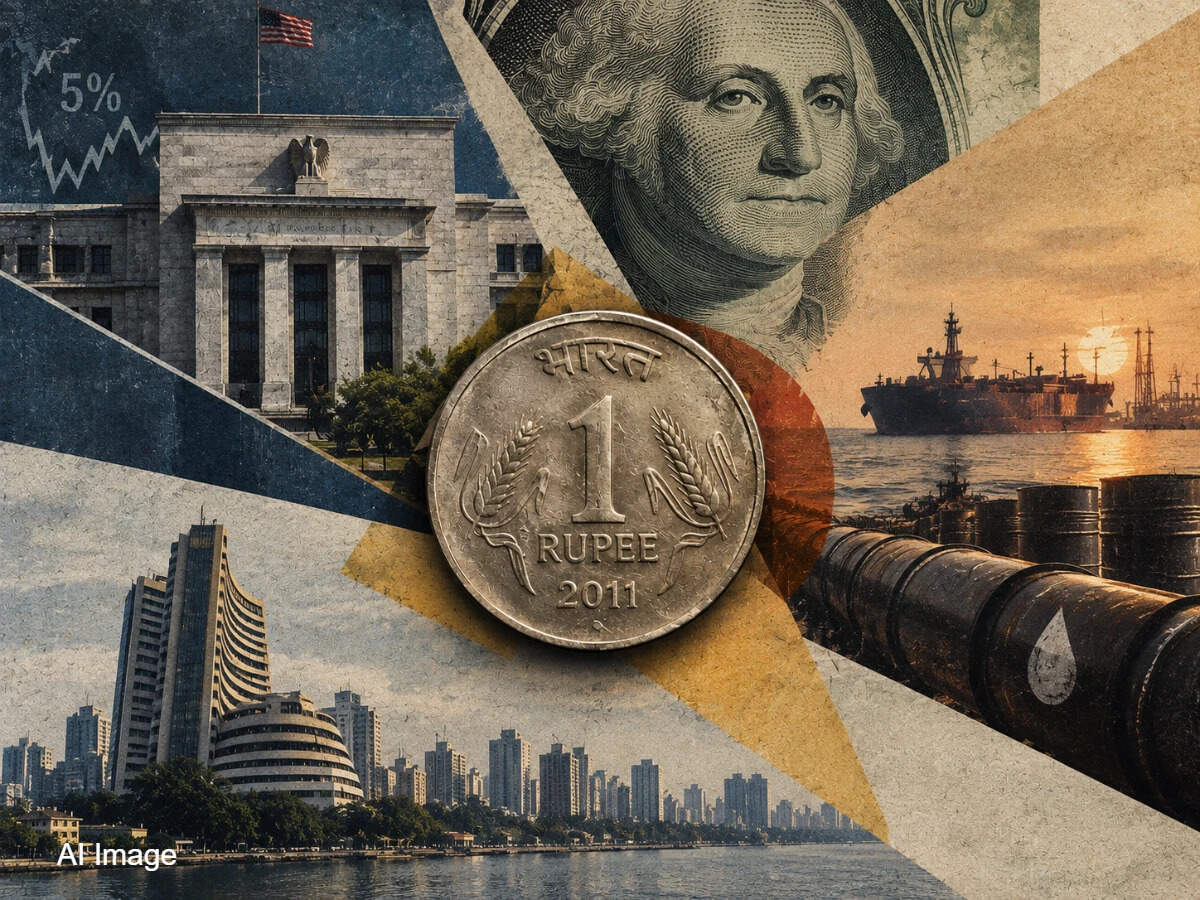
The US Federal Reserve is set to raise its key interest rate by 25 basis points to a range of 3.75%-4% tonight, signalling a shift in monetary policy amid persistent inflation. This move comes at a challenging juncture for India, as the country's currency, the rupee, is near 96 to the US dollar, crude oil prices exceed $100 a barrel, and US Treasury yields have briefly surpassed 5%.
India's central bank, the Reserve Bank of India (RBI), is already grappling with currency and liquidity pressures while domestic inflation has surged to 4.82% in August. The Fed's decision carries significant weight beyond the rate hike itself, reflecting the trajectory of US rates, the dollar, and global bond yields.
Earlier this week, the Fed had been operating within its target range of 3.5%-3.75%, unchanged since July. However, inflation data has evolved since the last meeting, with the US Consumer Price Index (CPI) rising 3.4% from a year earlier in August. Oil prices have added another layer of pressure, prompting a Reuters poll of economists to anticipate at least one additional rate hike by March 2027. Futures markets have priced several rate hikes through July next year.
The Fed's communication is as crucial as the rate hike, as it could signal whether rates will remain elevated or be adjusted further. If Fed Chair Kevin Warsh indicates that higher rates may persist, US Treasury yields could stay elevated, even after a hike that is already priced into markets. The 10-year Treasury yield reached 5% on Tuesday before easing back below that level on Wednesday.
For India, the impact of the Fed's decision is transmitted through markets rather than direct ties to the two policy rates. The rupee has already faced pressure, weakening for six consecutive sessions and hovering near 96 to the dollar, despite apparent RBI intervention through state-owned banks.
Higher US interest rates can strengthen the dollar by increasing the relative return on US assets, making Indian assets less attractive, especially when the US 10-year yield is close to 5%. India's 10-year government bond is yielding above 7.09%. The spread still favors Indian debt, but a rapid rise in US yields narrows the relative advantage and raises the compensation investors demand for currency risk.
Oil prices further exacerbate India's predicament, as the country imports nearly 85% of its crude requirement. A higher oil price, already up nearly 20% this month, raises India's crude import bill and increases demand for dollars, particularly as crude prices rose nearly 20% this month. This coincides with a growing trade deficit, with India's crude oil imports rising 25.8% year-on-year in August, even as the country's crude basket averaged $90.19 a barrel.
The consequences of a stronger dollar and elevated crude prices become evident in India's wholesale and retail inflation. Wholesale inflation accelerated to 9.92% in August, up from 9.78% in July, driven by fuel and power price increases, while CPI inflation rose to 4.82% in August, above the RBI's 4% target for the third consecutive month.
The Reserve Bank of India (RBI) has maintained a neutral stance on interest rates, keeping the repo rate at 5.25% in August. However, the latest inflation data complicates this position. If the Fed hikes rates and the rupee faces renewed pressure, the RBI will have limited room to maneuver, potentially keeping domestic rates unchanged despite persistent imported inflation.
The RBI has already been active in the foreign exchange market, using large inflows to bolster its reserves, which reached a record $785.7 billion in the week ending September 4. Nevertheless, the underlying issue of an oil-dependent economy facing a stronger dollar remains unresolved. Indian bonds are also at risk, as their yields have crossed 7%, reflecting higher global risk-free rates and expensive crude.
A sustained rise in US Treasury yields could push Indian yields higher, increasing the government's borrowing costs and potentially raising financing costs throughout the economy.
Written by urgent.news from The Economic Times - Economy's reporting — not their text. Machine-written — may contain errors; check the original before relying on it.
Also reported by 5 other outlets
- Dow Jones futures tick higher ahead of Fed interest rate decision fxstreet.com
- Asian stocks stutter, rand steady and oil softer as markets brace for US Fed decision iol.co.za
- Japan bond yield curve twist-steepens ahead of Fed decision brecorder.com
- S. Korean won falls to 2-week low ahead of Fed's rate decision en.yna.co.kr
- Stock futures mixed as Fed rate decision takes center stage seekingalpha.com