This New Brain Map Shows Every Nerve Cell in an Adult Male Fruit Fly's Central Nervous System. Here's Why That Matters
The recently released "connectome" joins a previously completed map of an adult female fruit fly’s brain. The digital 3D diagrams allow scientists to trace precise neural paths in the bugs’ brains, which can unlock secrets about the organ in humans
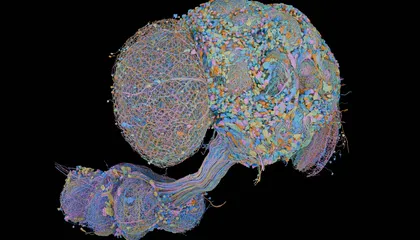
Researchers have meticulously mapped the adult male fruit fly’s brain and nerve cord, revealing 166,700 nerve cells and billions of connections within its central nervous system. Despite being the size of a poppy seed, this detailed wiring diagram offers significant insights. It has already helped scientists trace neural pathways between sensory inputs and behavioral outputs, study the impact of genes on brain circuits, and examine sex differences between male and female flies.
Published in journals Cell and Current Biology, these findings could also contribute to understanding human brain wiring. The central nervous system differs from the peripheral nervous system, which includes nerves branching from the spinal cord and aids in sensing the environment. With a previous female fruit fly brain map released two years ago, scientists have now expanded their research to include the male fly’s central nervous system.
Similar to the female brain map, the male fly's CNS was sectioned into thin slices and scanned with an electron microscope, with an AI-powered algorithm compiling millions of images into a 3D model. The intricate details captured include each neuron and over 300 million synapses. Human experts reviewed and refined the AI-generated data to ensure accuracy.
This groundbreaking research has already allowed researchers to compare male and female fruit fly brain circuitry, uncovering sexual dimorphism within the same species. For instance, a male fly's scent triggers aggression in other males but initiates courtship behavior in females. The study also sheds light on how taste receptors in the fly influence feeding, locomotion, hormone release, and courtship behaviors.
Although the fruit fly brain is vastly different from the human brain, which contains 86 billion neurons, both share enough similarities to offer valuable insights into the inner workings of human brains.
Written by urgent.news from Smithsonian's reporting — not their text. Machine-written — may contain errors; check the original before relying on it.