This banyan tree in Bihar is at least 700 years old — and science has finally proved it
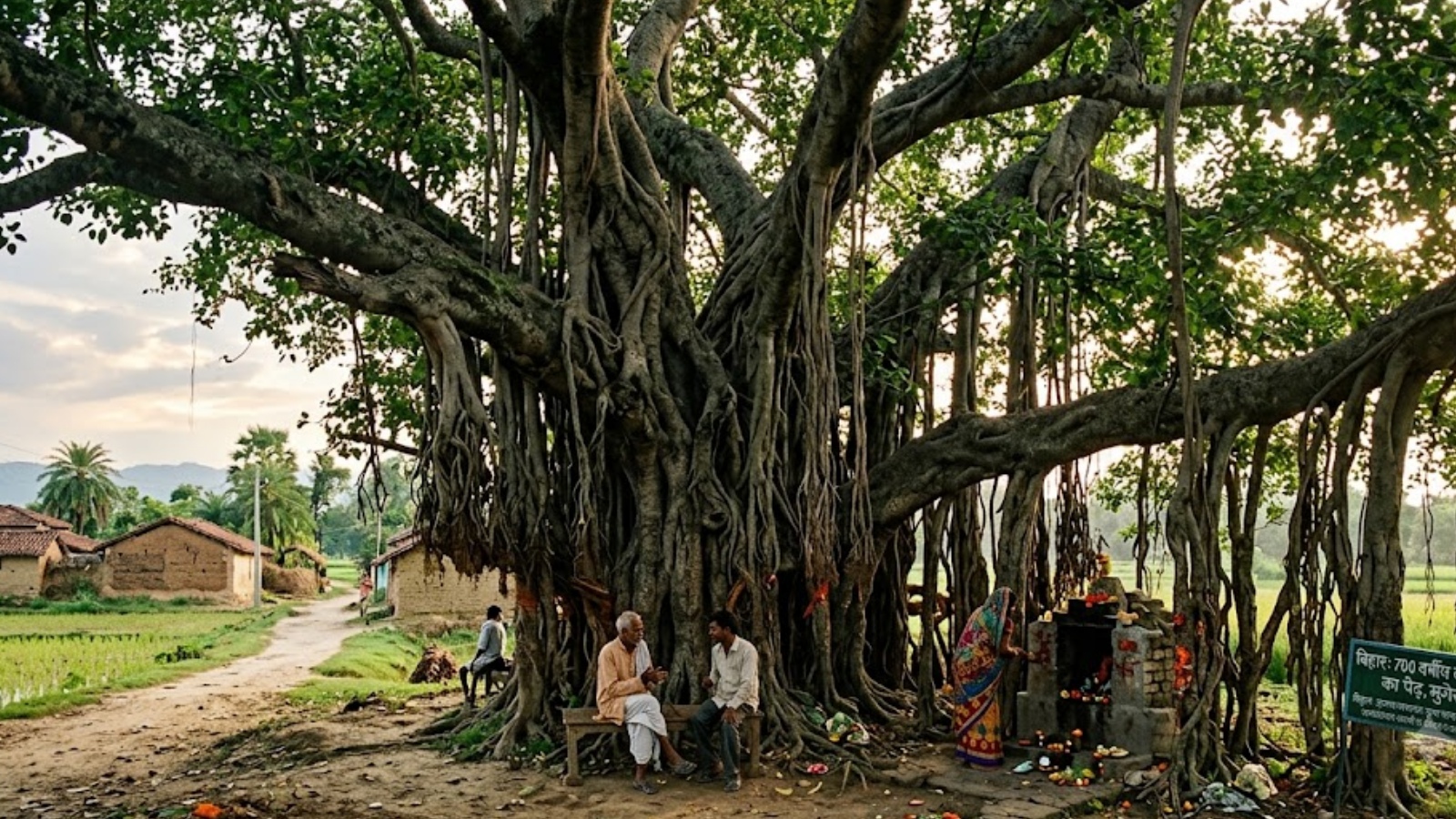
A monumental banyan tree located in the city of Munger, Bihar has finally been scientifically dated to be at least 700 years old. This groundbreaking discovery was made possible through the application of advanced radiocarbon dating techniques on the tree's secondary trunk and primary branch. Published in April 2026, the study conducted by researchers from Cambridge University confirmed that the Munger banyan is the oldest accurately dated Ficus benghalensis in the world.
This finding has been officially recognized by the Department of Science and Technology, which acknowledged the tree as the oldest accurately dated banyan tree in the world.
The significance of this discovery extends beyond establishing the age of a single tree, as it holds immense potential for both scientific research and conservation efforts. Environmentalist Jasmit S Arora believes that accurately dating tropical trees is a significant milestone for both science and conservation. He highlights that traditional methods of tree-ring dating are ineffective for tropical species due to their continuous growth and complex structures, which makes it challenging to establish their age.
The research team addressed this issue by pioneering precise pith targeting and advanced calibration methods, thereby replacing speculative folklore with empirical data.
The study's findings could fundamentally change the way heritage trees are protected. By confirming the antiquity of these trees, researchers can now provide hard evidence to secure legal heritage status and develop long-term conservation plans for such trees. Arora emphasizes that ancient trees like the Munger banyan are not just historical landmarks but play a crucial role in the ecosystem.
As ecological powerhouses and biodiversity hotspots, these trees provide essential microhabitats, create vital carbon sinks, stabilize soil, regulate microclimates, and purify the air. Furthermore, their deep roots stabilize soil, recharge groundwater, and contribute to climate regulation.
The researcher also points out that protecting ancient trees is becoming increasingly urgent due to urban expansion and climate change. As cities grow and climate change intensifies, heritage trees are becoming more valuable as powerful climate buffers and biological archives. Losing these trees would release centuries of stored carbon, destroy foundational biodiversity, and erase an irreplaceable part of our living natural heritage.
Written by urgent.news from The Indian Express's reporting — not their text. Machine-written — may contain errors; check the original before relying on it.
This story
This is one outlet's version. Read the fullest account.