Semiconductor Chips Have An Elemental Problem And Discovered Materials Wants It Fixed
India’s chip build-out continues in full swing. The Centre has so far approved semiconductor projects worth ₹1.6 Lakh Cr to…
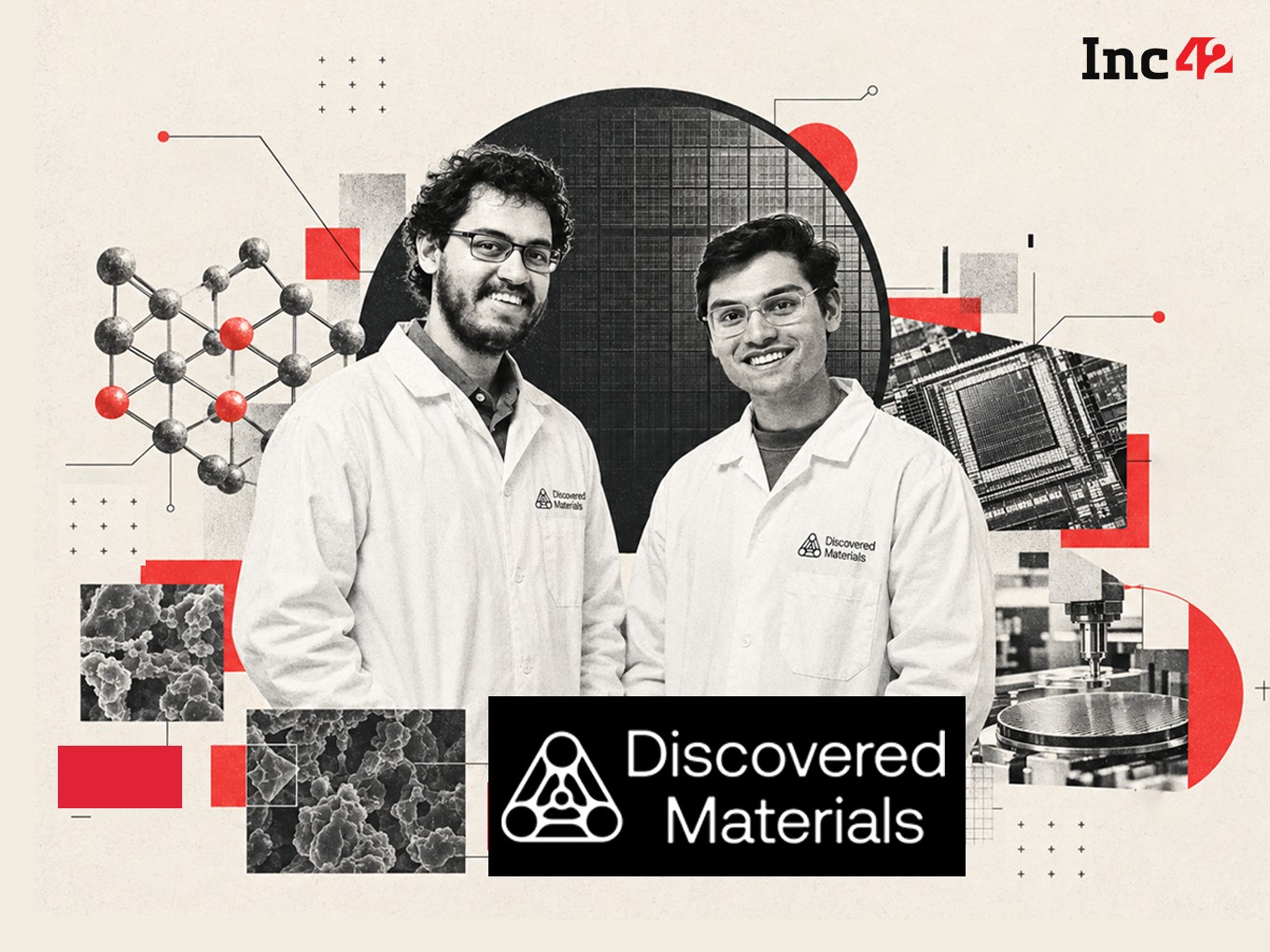
India's semiconductor industry is expanding rapidly, with the government approving projects worth ₹1.6 lakh crore to meet rising demand. To support this growth, the state-backed mission 2.0 has shifted focus to semiconductor equipment, design, and domestic intellectual property. While building fabs and increasing production are crucial, the materials used in chips and their ability to manage heat, power, and other physical constraints could be the key to unlocking further performance gains.
Discovered Materials, founded by materials scientist Akash Ramdas and AI researcher Advaith Sridhar, aims to address this challenge by using AI to accelerate the discovery of new materials for semiconductor applications. The startup recently raised $9 million in its first funding round from investors such as Lightspeed India, Y Combinator, and Peak XV Partners.
Co-founders Ramdas and Sridhar, who met during their time at IIT Madras, have combined their expertise in materials science and AI to tackle one of the biggest bottlenecks in the semiconductor industry. Working on materials that can handle heat, power, and other physical constraints is crucial as chip performance continues to grow.
Traditional approaches to materials discovery have taken years, but Discovered Materials believes AI can significantly speed up the search. By using AI agents, the startup can propose new material structures, assess their properties, and refine candidates based on learnings. However, turning promising candidates into viable materials for manufacturing is a major challenge, as current AI models struggle to identify practical synthesis routes.
Discovered Materials is addressing this by building a verification and experimental layer to distinguish theoretically attractive candidates from those that can be manufactured and deployed.
Written by urgent.news from Inc42's reporting — not their text. Machine-written — may contain errors; check the original before relying on it.