Scientists say if Venus ever had a moon like ours, it was doomed
Why doesn't Venus have a moon? A new UC Riverside study says the planet's slow spin could have pulled one down onto the surface.
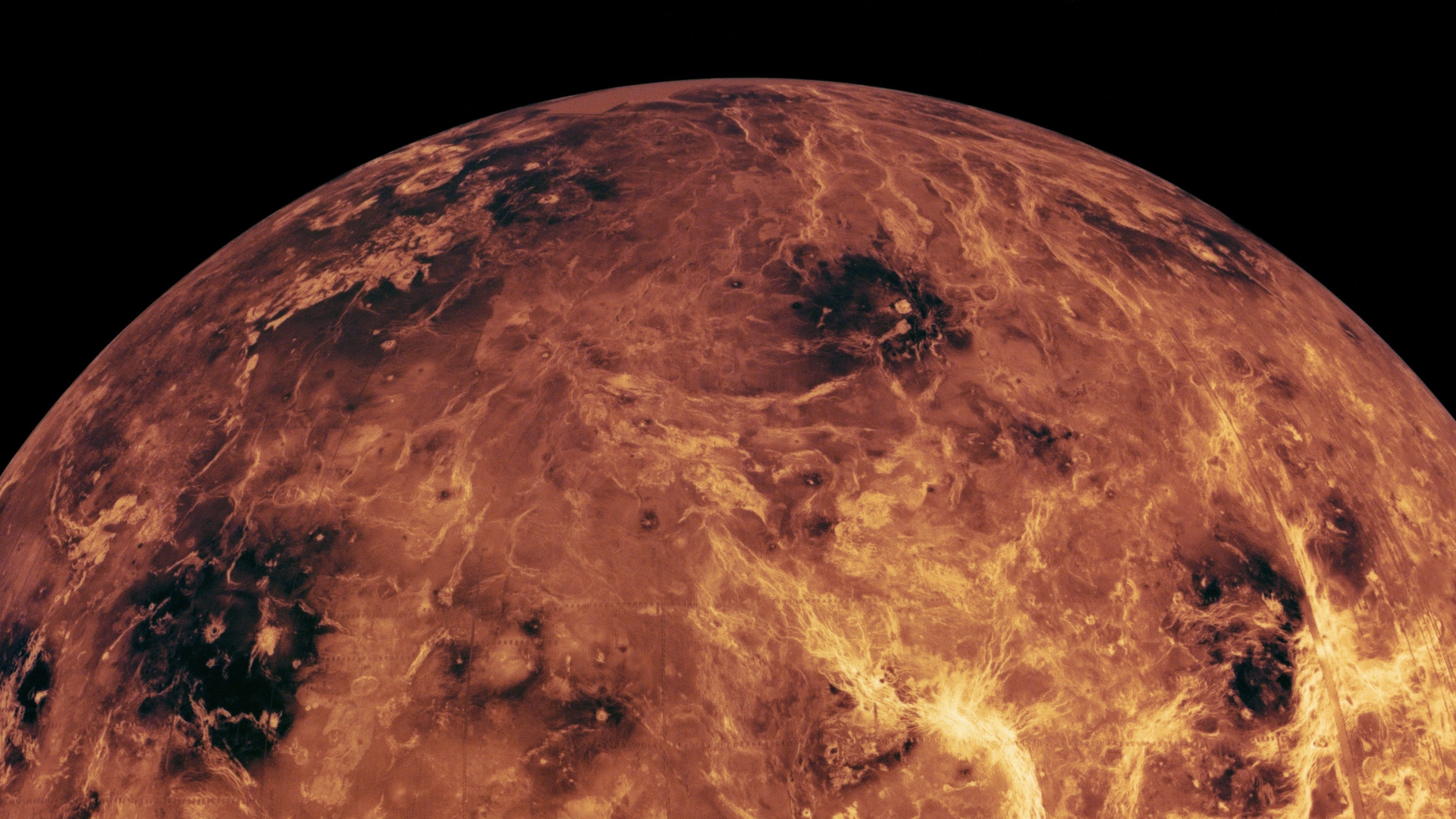
A recent study published in The Astrophysical Journal suggests that Venus, once thought to be a near-twin of Earth in size and composition, may have lacked a moon due to its sluggish spin. Astrophysicist Stephen Kane of the University of California, Riverside, led the research, which involved running computer simulations of how gravity affects a planet-moon relationship in space.
Nearly every simulation ended with an ancient Venusian moon crashing onto its host planet, typically within 30 million to 1.7 billion years. This research challenges earlier theories of Venus' lack of a moon, which posited catastrophic collisions or a lack of a moon-forming collision. According to Kane, the absence of a moon could have played a significant role in shaping Venus' history, potentially affecting its tilt, ocean tides, and geological activity.
The physics behind the findings lies in Venus' slow rotation, which is 243 Earth days compared to Earth's 24-hour spin. The gravitational pull of Venus wins in the tug-of-war with an orbiting moon, pulling it closer rather than pushing it away. While the study does not definitively prove that Venus once had a moon, it suggests that any moon-forming collision would have resulted in a Venus spin rate of 12 hours or less, making it difficult for a moon to form and persist.
Future missions, such as NASA's DAVINCI probe, may provide more evidence by detecting chemical traces of a broken-apart moon within Venus' atmosphere. Kane emphasizes that while having a moon may benefit a habitable planet, it is not a requirement for habitability.
Written by urgent.news from Mashable's reporting — not their text. Machine-written — may contain errors; check the original before relying on it.