Roman Space Telescope starts waking up as NASA powers on instruments for the 1st time
NASA has begun flipping on the instruments aboard the Roman Space Telescope to prepare the observatory for its scientific mission as it travels nearly a million miles to its final destination in orbit.
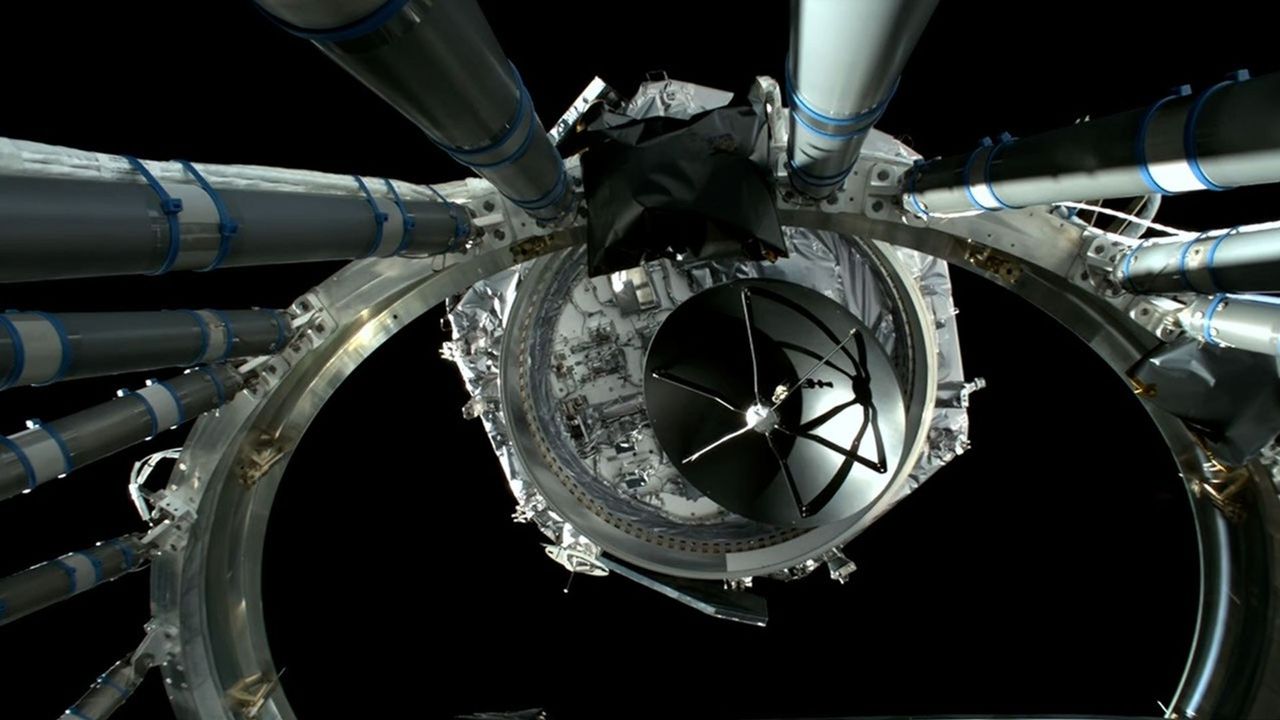
The Nancy Grace Roman Space Telescope, NASA's newest and most advanced orbital observatory, has begun the process of switching on its instruments. The telescope launched on August 30 and is now on a three-month journey to Lagrange point two (L2), a relatively idle orbital position roughly a million miles from Earth. This strategic location allows Roman to remain on Earth's night side and keep the sun behind it, creating optimal conditions for its two primary instruments: the Wide Field Instrument (WFI) and the Coronagraph Instrument.
Both instruments have yet to begin collecting scientific data, as they require approximately one more month of calibrations and tests. However, initial downlinks from the telescope indicate that the components are functioning nominally. This milestone is a significant achievement for NASA's Goddard Space Flight Center, its industry partners BAE Systems, Inc. and Teledyne, and the various science centers involved in the project.
The WFI is a 300-megapixel infrared camera designed to capture vast swaths of the sky in a single snapshot. It will be used to observe the universe's expansion, study dark energy, and map the distribution of matter. To activate the WFI, engineers first allowed it to dry out and shed any contaminants that may have accumulated during the launch.
The instrument was then cooled to around -225 Fahrenheit (-143 Celsius) to turn on its infrared detectors. These detectors gradually cooled further toward their operating temperature of about -300 F (-183 C). Once the detectors were operational, engineers proceeded to calibrate the WFI's element wheel, which filters individual wavelengths for detection.
Meanwhile, the Coronagraph Instrument, controlled remotely from the Coronagraph Commanding Center at Caltech/IPAC, has completed its initial tests. This instrument uses a series of mirrors, masks, and sensors to block the light of distant stars and detect the fainter light of planets in those stars' orbits. Engineers have verified that they can operate the instrument's electronic and mechanical systems remotely.
The Coronagraph's tests included warming the device to 72 degrees Fahrenheit (22 Celsius), which is warmer than its operating temperature of -300 F (-183 C) but simulates conditions inside NASA's test chambers, allowing engineers to better simulate and test the instrument's deformable mirrors.
Written by urgent.news from Space.com's reporting — not their text. Machine-written — may contain errors; check the original before relying on it.