PSMA says surplus sugar may delay crushing season
LAHORE: The Pakistan Sugar Mills Association (PSMA) on Wednesday warned that failure to allow the export of one million tons of surplus sugar could delay the start of the next crushing season, putting both farmers and sugar mills under pressure. The association said timely disposal of the surplus stock was essential to create storage capacity and ensure a smooth transition to the new crushing…
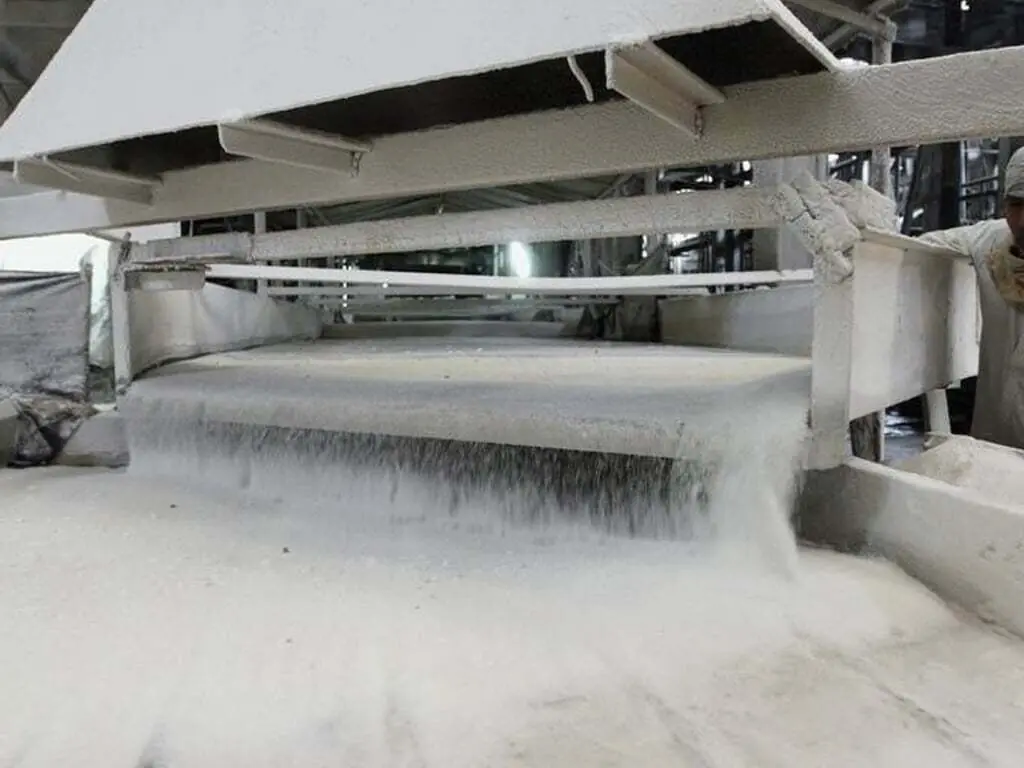
The Pakistan Sugar Mills Association (PSMA) has expressed concern that failing to permit the export of 1 million tons of surplus sugar could postpone the commencement of the upcoming crushing season, causing distress to both farmers and sugar mills. The association emphasized the necessity of timely disposal of the surplus stock to establish storage capacity and facilitate a seamless transition into the new crushing season.
If the export request is not granted, the PSMA warns that this could create challenges for farmers, millers, and disrupt the sugar sector's cyclical pattern. At the launch of the preceding crushing season on November 16, 2025, there was a sugar reserve of 271,000 tonnes. However, according to data from August 31, 2026, a total of approximately 8 million tonnes of sugar were produced this year.
Merging the preceding and current stock results in a total of around 8 million tonnes. Pakistan annually consumes about 560,000 tons of sugar. Assuming this average consumption persists until November 15, 2026, the nation will have a surplus of 1.25 million tons of sugar at the beginning of the 2026-27 crushing season, after fulfilling domestic demands.
The government has opted to export 108,000 tons of previously imported sugar and has granted approval for the export of 200,000 tons from domestic production; however, the allocated quantity is deemed insufficient. The government must immediately permit the export of at least 1 million tons of sugar to rescue farmers and the sugar industry from potential catastrophe.
Zaka Ashraf, PSMA Chairman, highlighted that the sugar industry is Pakistan's second-largest agro-based sector, following textiles. Pakistan occupies the sixth position among global sugar producers. The sector provides employment to hundreds of thousands and generates over PKR 1,000 billion in direct and indirect business activities spanning agriculture, transportation, allied industries, and retail and wholesale markets.
Furthermore, it contributes approximately PKR 300 billion in taxes to federal, provincial, and local governments. Millers argued that Pakistan's sugar industry possesses the capacity to produce 15 million metric tons of sugar per year under a 150-day crushing season, without necessitating additional investments or capacity expansion.
As a result, 8 million metric tons of sugar could be exported annually, generating USD 4 billion in revenue, while ethanol exports could yield an additional USD 1 billion annually. Central Asian states, Afghanistan, and China are significant markets for Pakistani white sugar - markets where India currently benefits despite its close geographical proximity and lower transportation costs.
Through export facilitation schemes and free trade agreements with these countries, white sugar exports could yield substantial foreign exchange earnings for the national exchequer. Despite sugarcane growers expressing renewed confidence in the industry due to favorable prices and timely payments, the sugar industry remains heavily regulated.
Although 70% of sugar production is utilized in commercial and industrial sectors and is fully deregulated, sugar intended for domestic consumption remains subject to regulation. This regulation includes the provincial government determining ex-mill prices, establishing payment schedules, and imposing penalties. Although 70% of sugar production is utilized in commercial and industrial sectors and is fully deregulated, sugar intended for domestic consumption remains subject to regulation.
This regulation includes the provincial government determining ex-mill prices, establishing payment schedules, and imposing penalties. The sugar industry relies on bagasse for its local energy needs. A secondary industry has emerged from surplus energy generation, utilizing the excess electricity for other industrial pursuits. While the government has deregulated sugarcane prices, enabling growers to earn substantial returns, sugar prices remain regulated.
The industry argues that partial deregulation is causing significant issues, with the proposed solution being the deregulation of sugar prices, akin to the deregulation of sugarcane, and allowing its import and export. Currently, the sugar industry is grappling with significant losses due to escalating production costs and the maintenance of surplus sugar stocks.
The government is urged to grant permission for sugar export as soon as possible to generate valuable foreign exchange for the country, the millers asserted.
Written by urgent.news from Business Recorder's reporting — not their text. Machine-written — may contain errors; check the original before relying on it.