Playing both sides of the U.S.-China AI “Cold War”
From Latin America to Southeast Asia, countries are dividing their AI investments between the two superpowers rather than choosing one over the other.
Saudi Arabia recently unveiled what it claims to be the world's most advanced Arabic-language AI model, named Humain-m3. This groundbreaking technology is based on an open-source system developed by the Chinese startup MiniMax. Despite the model's Chinese origins, Humain, the state-backed company behind the project, has forged significant partnerships with U.S. technology giants like Nvidia.
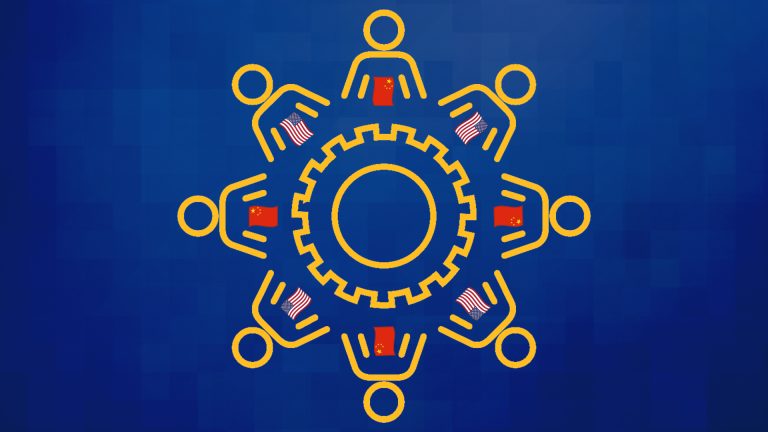
This strategic decision by Saudi Arabia is part of a growing trend where countries across the globe are combining AI technologies from both the U.S. and China, blurring the lines between competing superpowers.
Countries in various regions, including Latin America, Southeast and Central Asia, are embracing this hybrid approach. The reasoning behind this strategy is to secure the best of both worlds, diversify dependencies, and enhance sovereign control over data. For instance, Brazil recently allocated $444 million to AI development, splitting the funds between Chinese and American technologies.
The country earmarked $255 million for supercomputing infrastructure in Rio de Janeiro, developed in collaboration with China's iFlytek, while the remaining $189 million is set to go towards a separate supercomputer, with Nvidia being the primary supplier.
However, this dual approach also presents challenges for Washington's efforts to compete with China. The U.S. has a significant edge in sectors like advanced semiconductors, networking equipment, and sensitive cloud infrastructure. In contrast, countries that cannot afford or access American systems or software are more likely to rely on Chinese AI technologies.
These choices in technology are also influencing diplomatic relationships. The U.S. has accused Chinese labs of "free-riding" by using American AI models to train their systems on an "industrial scale," leading to potential retaliatory actions from Beijing.
China, on the other hand, is bolstering its influence abroad by ramping up efforts to compete with American companies across different layers of the AI stack. In Egypt, Huawei has reportedly bid to build AI data centers for the government, challenging the traditionally dominant American technology presence. Similarly, Southeast Asia is experiencing growing competition between the U.S. and China in the AI realm.
Washington has launched the U.S.-ASEAN AI Spark initiative to promote adoption of American AI technologies, while Malaysia is considering Huawei's Ascend 910C accelerators for its sovereign AI initiative. Despite their differences, both AI superpowers seem to be employing distinct strategies to expand their influence globally.
Written by urgent.news from Rest of World Tech's reporting — not their text. Machine-written — may contain errors; check the original before relying on it.