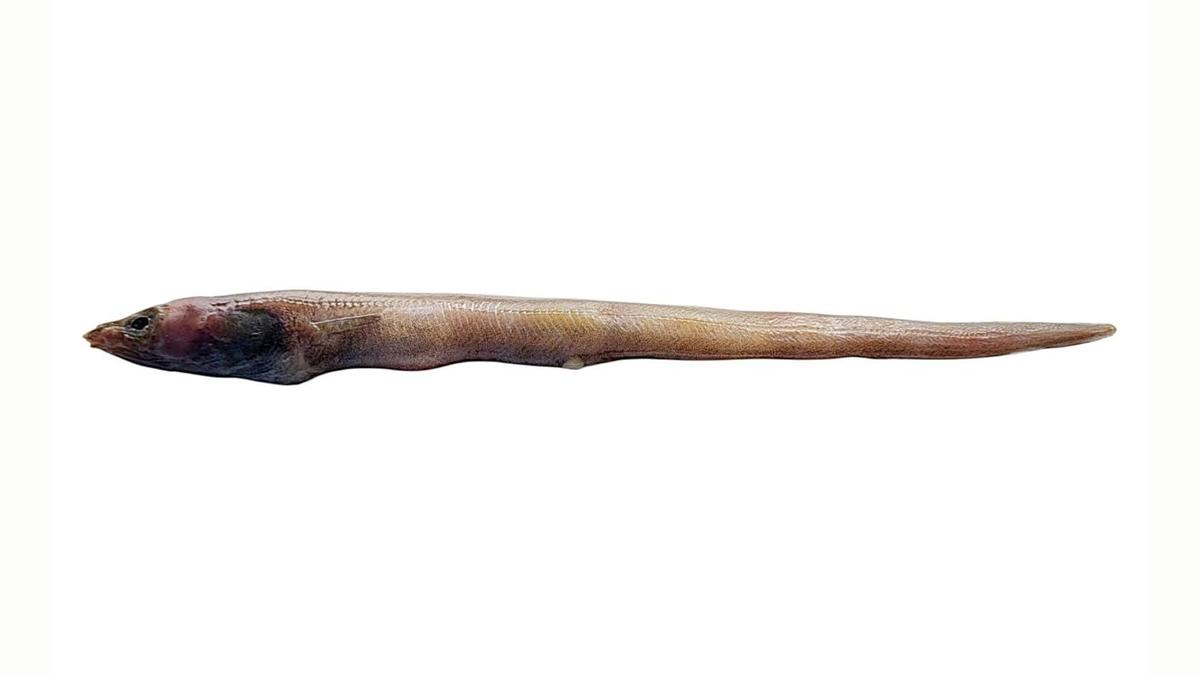
New eel species described from Arabian Sea, named after CMFRI
New species, named Ariosoma cmfriense, was collected from the waters off Kollam in Keralam at a depth of about 300 m in January 2026
The Arabian killifish (Aphaniops dispar) is a promising model organism for investigating human diseases like fungal infections and cancer progression. Its embryos have a transparent outer layer, allowing for live imaging, and can survive on their own for up to 13 days after fertilization. These fish are also adaptable to a wide range of temperatures, enabling live imaging at human-like body temperatures.
Unfortunately, the species lacks extensive genomic resources, which limits its use in genomic studies. To address this, researchers created a high-quality reference genome assembly that is 1.45 gigabytes in size and consists of 24 chromosome-level scaffolds. The assembly maintains a substantial level of homogeneity (95.6%), with nearly complete gene sets for both Actinopterygii (99.2%) and Cyprinodontiformes (97.5%) lineages.
The genome is also highly repetitive, with 58.7% of its content made up of non-coding DNA transposons. The mitochondrial DNA is 81.55% similar to that of the Spanish toothcarp (Aphanius iberus), differing only slightly in structure. Importantly, the Arabian killifish shares a highly conserved arrangement of genes with the Fundulus heteroclitus, a fish within the Cyprinodontoidei group.
These findings provide an essential genomic resource for comparative studies across the teleost family.
Written by urgent.news from bioRxiv's reporting — not their text. Machine-written — may contain errors; check the original before relying on it.