Malaysia among economies positioned to capture upside as Asean growth paths diverge
KUALA LUMPUR: Malaysia is among the Southeast Asian economies positioned to capture disproportionate upside over the next decade, according to a report by Bain & Company, DBS Bank and Vriens & Partners.
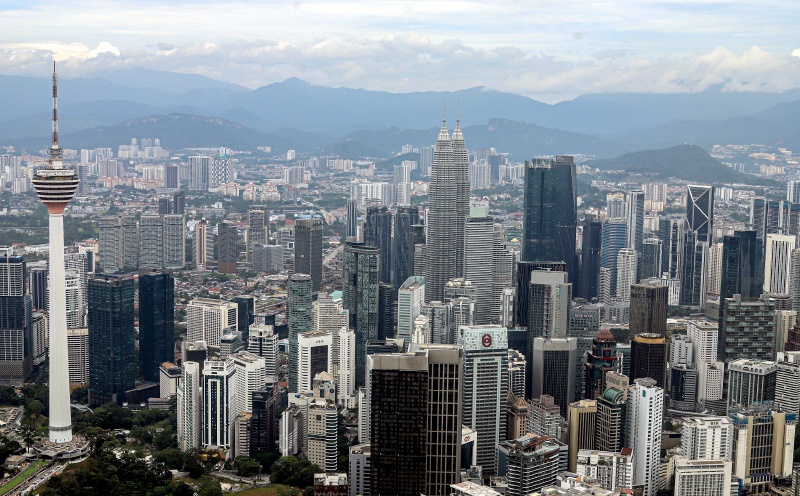
KUALA LUMPUR: According to a recent report, Malaysia and several other Southeast Asian economies are well-positioned to benefit from growing regional trends over the next decade. The report, titled "From Tailwinds to Trade-Offs: Southeast Asia Outlook 2026-2035," projects that the six largest economies in the region - Malaysia, Indonesia, the Philippines, Singapore, Thailand, and Vietnam - will see an average annual growth of 4.8 percent between 2026 and 2035.
While the overall regional growth outlook remains stable, analysts note that some countries are better positioned than others to take advantage of new opportunities and weather economic shocks.
Malaysia, Singapore, and Vietnam are seen as the most likely to capture significant upside under favorable conditions. This potential growth hinges on their strong manufacturing sectors, growing investments in semiconductors, and their increasing technological readiness. In 2024 and 2025, the six Southeast Asian economies averaged a 5.1 percent growth rate, slightly above the 4.8 percent projection for the broader region.
However, growth has been uneven, with Vietnam leading the pack at 7.5 percent over the past two years, compared to Thailand's 2.7 percent.
Malaysia's position is bolstered by its role in regional manufacturing and supply chains, especially as companies diversify production amid geopolitical tensions and supply chain shifts. Foreign direct investment into the ASEAN-6 region rose by 25 percent in 2025, compared to a 34 percent decline in China. This demonstrates Southeast Asia's growing importance in global investment and manufacturing networks.
Despite these promising trends, the report cautions that recent investment and export gains have yet to lead to broad-based productivity improvements across the region. Malaysia specifically faces the challenge of converting its strengths in high-value manufacturing and electrical and electronics supply chains into stronger domestic capabilities and wider economic benefits.
The report identifies three key priorities for the region's economic performance: strengthening institutional resilience, improving energy systems, and capturing the AI dividend.
To improve institutional resilience, countries must focus on governance, the rule of law, fiscal stability, and well-developed capital markets. Reliable energy systems, including diversified import sources and renewable energy projects, are also crucial as industrial expansion and AI infrastructure increase electricity demand. Countries that move beyond AI pilot projects to enterprise-scale adoption could see greater productivity gains, provided they invest in data governance, computing infrastructure, and workforce development.
While the 4.8 percent baseline growth forecast for Southeast Asia remains achievable, domestic policy decisions over the next two to three years will determine whether economies capitalize on current tailwinds and build lasting competitive advantages.
Written by urgent.news from New Straits Times's reporting — not their text. Machine-written — may contain errors; check the original before relying on it.