How Self-Driving Cars Might Change Crash Testing Forever
Lie down in a car, and you’re more likely to get seriously hurt in a crash. But a driverless future is forcing governments to revisit long-standing safety issues.
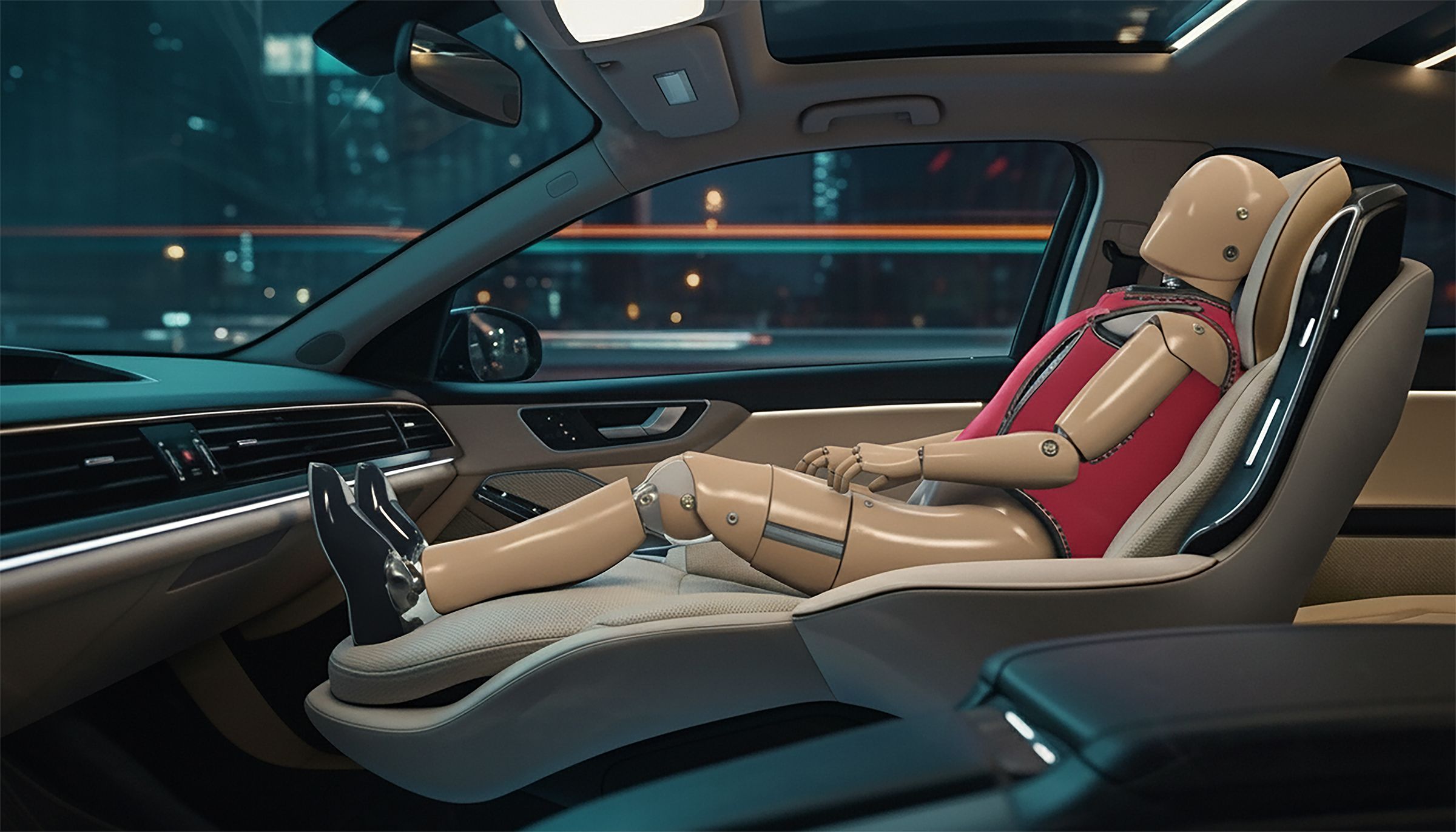
When it comes to crash testing, self-driving cars like the Tesla Cybercab could revolutionize the process. For front-seat passengers, the Cybercab allows them to recline their seats for comfort, even to the point of sleeping. However, Tesla warns that reclining seats and improper belt positioning can increase crash injury risks.
Safety researchers agree, noting that passengers in less-than-standard positions are more likely to suffer injury even with seatbelts on. In the past decade, 42 deaths in traffic crashes involved passengers with their seats reclined. The Insurance Institute for Highway Safety notes that identifying reclined occupants after a crash is challenging due to movement and quick extrication by emergency responders.
NHTSA is exploring reclined occupant safety based on the potential for passengers to choose this posture in autonomous vehicles. Creating new safety standards requires studies, funding, analysis, and public comment, a lengthy process. Autonomous vehicles, however, are prompting regulators to reconsider outdated rules and make modifications.
Companies deploying self-driving cars face lengthy approval processes, but regulators want to see these companies prevent certain injuries before adjusting safety standards. NHTSA is investigating how to stop injuries in reclined seating conditions, including developing advanced crash-test dummies that better mimic the human body's response to such conditions.
Written by urgent.news from Wired's reporting — not their text. Machine-written — may contain errors; check the original before relying on it.