Ghana’s climate adaptation priorities must respond to different realities of all segments of communities - NbS Project Coordinator
This requires a need to look honestly at where the gaps remain in representation, in access to climate finance
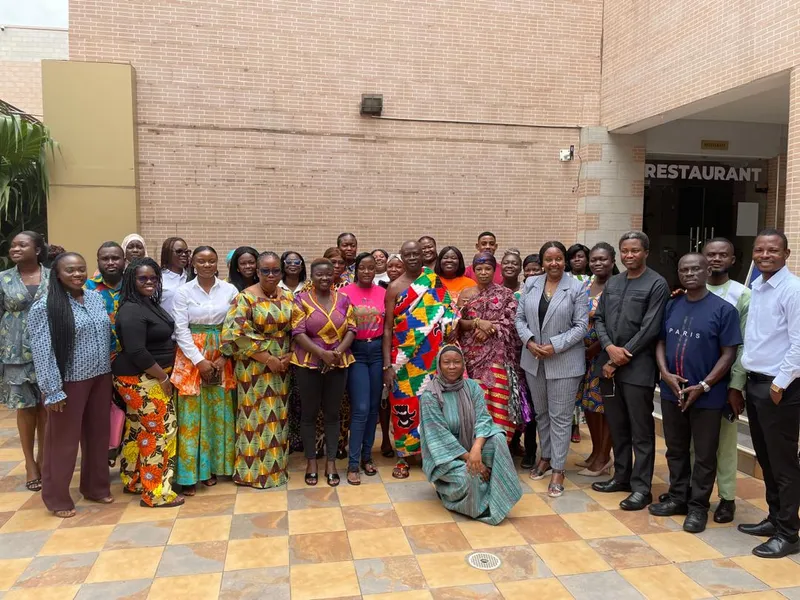
Victor Mombu, the Project Coordinator for the Nature-Based Solutions in the Guinean Forests of West Africa Project, emphasized that Ghana's climate adaptation priorities must be tailored to the unique circumstances faced by various community segments. To achieve this, he stressed the importance of addressing representation gaps, access to climate finance, institutional coordination, gender-responsive evidence, and accountability mechanisms.
He highlighted the need to consider not only the quantity of climate finance available but also who can access it, who decides its usage, which priorities it serves, and who benefits.
Mombu expressed gratitude to Global Affairs Canada for their support and to partners who contributed to building a bottom-up advocacy process. He also recognized the leadership of women's rights organizations and community representatives.
The project's foundation lies in the belief that a stronger response to climate change will be achieved when the people most affected by climate risks have the power, resources, and opportunity to shape solutions. Nature-based Solutions, such as restoring degraded forests and habitats, strengthening biodiversity, and building resilient livelihoods, can be effective, but their benefits depend on meaningful participation from women and underrepresented groups in climate planning, investment decisions, and economic opportunities.
Francoise Nduwimana, Head of Cooperation at the Canadian High Commission, underscored that communities in Ghana are already experiencing the impacts of climate change, such as rising temperatures, changing rainfall patterns, droughts, floods, coastal erosion, and pressures on livelihoods, food systems, and natural resources. She stressed that effective adaptation involves more than infrastructure, technology, or environmental management; it also focuses on people whose knowledge, experiences, and leadership are vital for building resilience.
Nduwimana pointed out that women are disproportionately affected by climate change due to existing inequalities in resource access, services, land, financing, and decision-making opportunities. However, women are also at the forefront of agriculture, natural resource management, household resilience, and community development. Her message emphasized that women's leadership and participation in climate adaptation and planning are crucial, particularly as Ghana has already recognized this priority through various commitments to gender equality and women's empowerment.
Canada shares this commitment, stating that advancing gender equality and strengthening women's leadership are essential for achieving sustainable development and climate resilience. The Nature-based Climate Adaptation in the Guinean Forests of West Africa project serves as a practical example of these shared priorities in action, funded by Canada's international climate finance.
It brings together governments, research institutions, civil society organizations, women's rights organizations, and local communities across Ghana, Côte d'Ivoire, and Guinea. The project's success lies in empowering women to influence decisions, shape policies, and lead solutions, reinforcing the message that gender equality is not an add-on but a prerequisite for sustainable, inclusive, and effective climate action.
Written by urgent.news from 3News's reporting — not their text. Machine-written — may contain errors; check the original before relying on it.