Geologists find unexpectedly large water sources in Xinjiang beneath China’s largest desert
Geologists have discovered two large water sources beneath China’s largest desert, potentially offering the northwestern region a vital new tap for sand-control projects and agriculture. The desert region has drawn attention for extensive afforestation and anti-desertification efforts taking place around its edges under the Great Green Wall initiative, alongside a rainfall trend that is…
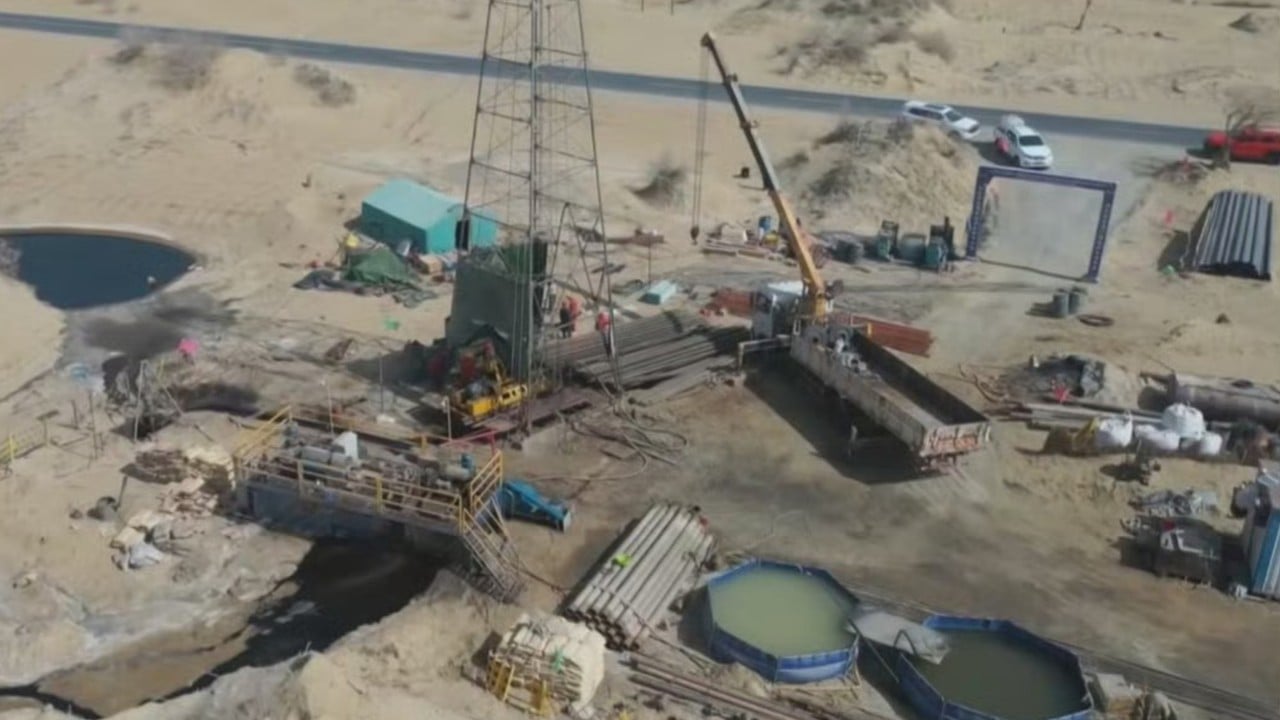
Geologists in China have stumbled upon two substantial water reserves hidden beneath the expansive Taklamakan Desert, the country's largest desert and the world's second-largest shifting sand desert. The water finds could serve as a crucial new resource for sand management projects and agricultural endeavors in the arid region. These discoveries were made during a water-finding project in the Taklamakan Desert, conducted by the Xinjiang Uygur autonomous region's geological bureau.
The groundwater discoveries challenge the long-held belief that the desert is solely composed of stagnant and saline groundwater, which is typically unsuitable for drinking and food production due to bacterial and chemical buildup. One of the new water sources was found at the southern edge of the Taklamakan Desert in Andir township, Minfeng county, while the second was discovered on the desert's interior, south of the Mazartag Mountains.
In addition to the water discoveries, researchers have also built a test station to utilize brackish water for irrigation and desertification control along the desert's edge. Brackish water, containing more salt than fresh water but less than seawater, represents an underutilized resource that could help address growing water demands, such as crop irrigation and cooling artificial intelligence data centers.
The United Nations Food and Agriculture Organisation recognizes the potential of non-conventional water resources, including brackish water, to meet irrigation needs, but emphasizes the importance of understanding the local climate, soil, and crops.
The Taklamakan Desert spans an enormous area of 337,600 square kilometers (130,350 square miles) in Xinjiang's Tarim Basin, larger than the European country of Germany. Historically characterized by minimal annual precipitation and extreme evaporation, the desert has recently experienced an increase in intense rainfall and flooding, threatening local infrastructure.
China's largest desert has been a focal point for the country's afforestation and anti-desertification efforts under the Great Green Wall initiative, which recently completed a 3,050km (1,900-mile) green belt of trees, shrubs, and sand-blocking solar panels around the desert to prevent sandstorms and safeguard regional infrastructure.
Written by urgent.news from Reuters Business via SCMP's reporting — not their text. Machine-written — may contain errors; check the original before relying on it.
This story
This is one outlet's version. Read the fullest account.