FPJ Interview: Rear Admiral MD Suresh (Retd) On India-Pakistan Naval Collision, Maritime Rules And Escalation Risks
Rear Admiral MD Suresh (Retd.) speaks to Ashwin Ahmad about the recent incident of a Pakistani naval ship crashing into an Indian one. In the interview, Rear Admiral Suresh explains the motivations of the attack, whether the attack violates international maritime law, and whether the situation is likely to escalate. A Pakistani Naval vessel had carried out aggressive manoeuvres against Indian…
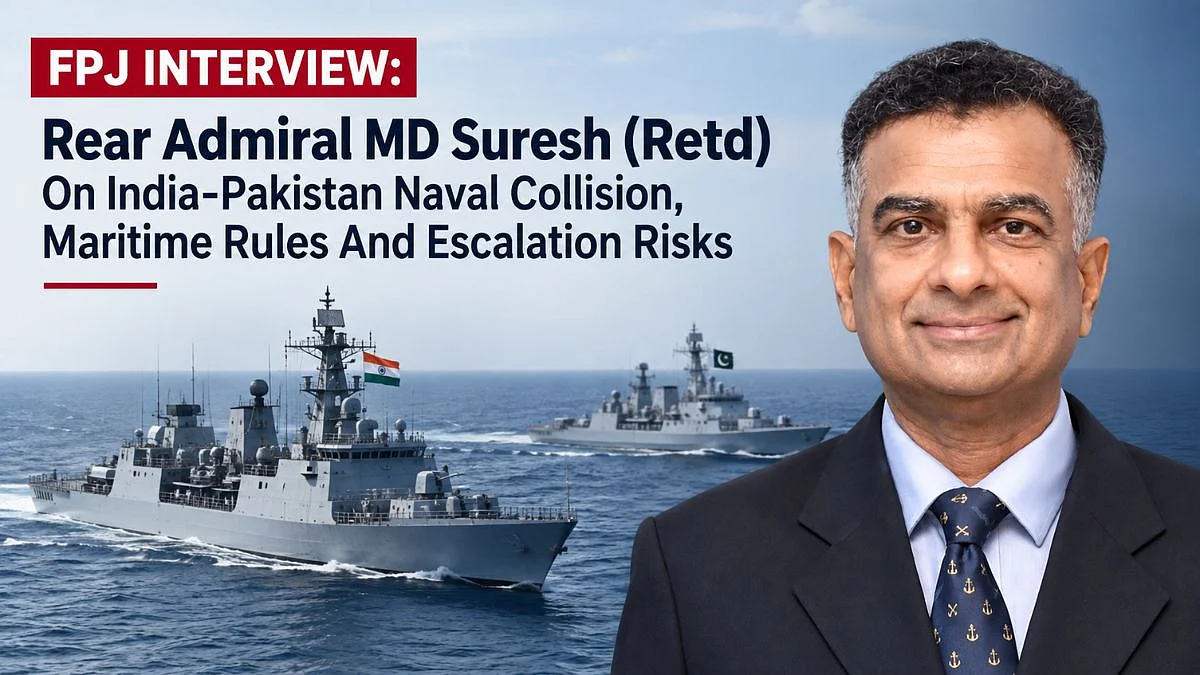
In a recent interview with Ashwin Ahmad, Rear Admiral MD Suresh (Retd.) discussed the recent clash between a Pakistani naval ship and an Indian one, as well as the implications of the incident on maritime rules and potential escalation. The Pakistani vessel had engaged in aggressive maneuvers against Indian naval ships six months prior, leading to anger among Pakistani officials who felt they were not given a chance to fight during Operation Sindoor.
They believed they were better armed than during the Kargil conflict, which fueled their aggression.
Suresh explained that the Pakistani surface navy is weak compared to its submarine force and naval aviation, but their hot-headedness on the bridge is due to their inferior position. They would become even more aggressive upon encountering an Indian warship. Regarding international maritime law, the rules of the road are more relevant in this situation.
These rules determine how ships should maneuver to maintain safety, with the safety of the ship being the top priority. The incident occurred because the Pakistani ship's commander violated these rules, closing the distance to less than two miles under good visibility and less than five miles under poor visibility.
Suresh is convinced that the incident was not a deliberate act by the Pakistani Navy, but rather a result of their weak surface navy and the commander's lack of experience. He noted that the Western Fleet, commanded by senior officers, would likely manage the situation better. The situation is unlikely to escalate as it is considered a one-off incident.
Diplomatic action is expected to follow, with both sides making noise to calm things down. They will also exchange video recordings and other evidence to support their accounts if necessary. In previous incidents, the commanding officers have been disciplined, typically through diplomatic intervention.
Written by urgent.news from Free Press Journal's reporting — not their text. Machine-written — may contain errors; check the original before relying on it.