Die OECD rüttelt am Schweizer Mietrecht
Die Wohnungsknappheit in der Schweiz verschärft sich. Die OECD kritisiert neben dem schleppenden Wohnungsbau auch die Regulierung der Bestandesmieten – und empfiehlt eine Reform, die politisch für Zündstoff sorgen dürfte.
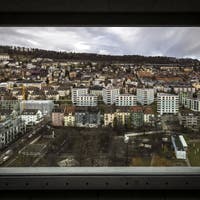
The Swiss housing shortage is worsening, according to the Organisation for Economic Co-operation and Development (OECD). The OECD criticizes the slow construction of new housing and the regulation of existing property rents, recommending reforms that could spark political debate. Long-term residents in Zurich or Geneva may have a significant financial advantage over those with newly rented properties.
While recent years have seen a substantial increase in rents for newly listed dwellings, rents in existing tenancies have grown much more slowly. Moving to a new property often means paying considerably more, even if the new home is neither better nor larger. The OECD views this as a problem for Switzerland's housing market. In its latest country report, it scrutinizes the housing market unusually thoroughly.
Its finding is that Switzerland is building too little, not optimizing the existing housing stock, and that the regulation of existing rents contributes to the issue. The OECD therefore recommends relaxing the rental law. Rents in ongoing and new contracts should be adjusted under the same rules and based on the local average rents of newly signed tenancy agreements.
However, existing rents can only be increased under certain conditions, such as changes in the reference interest rate, inflation, or value-enhancing investments. These are intended to protect tenants from abusive increases. Yet the OECD sees side effects. The gap between new and existing rents has widened, creating a lock-in effect: those with favorable dwellings are less likely to leave them.
This hinders others' access to the housing market, particularly young people, divorcees, migrants, and professionals who frequently need to change residences. They rely more on newly listed dwellings and pay higher rents as a result. This lock-in effect is confirmed by various studies. Even the real estate economist Urs Hausmann sees it as a problem.
The current regulation leads to homeowners staying in dwellings that no longer meet their needs, while others struggle to find affordable housing. Such incentives have been known for decades. As the first step, the OECD proposes that existing rents be more closely aligned with market developments. It cites Germany as an example, where local comparison rents play a role in ongoing tenancies.
However, to protect tenants from excessive rent increases, this approach would still require better official data on market rents. While the Swiss Federal Statistical Office collects data on rental prices, the OECD lacks sufficient official data on local market rents. The organization relies on data from the private firm Wüest Partner, which is based on advertisements and not on actual signed tenancy agreements.
In the long run, the OECD points to Finland as an example. There, rent control was gradually dismantled in the 1990s, first for new contracts and later for existing ones. Low-income households were supported with targeted housing subsidies. The OECD sees the rise in the share of rental housing in the housing stock, from 12% in 1990 to 17% in 2012, as a positive signal.
Hausmann can easily imagine more frequent adjustments to existing rents in Switzerland. Such adjustments would be "the best of a bad set of options" for long-term tenancies. However, simple liberalization does not go far enough. Any reform must also protect against abusive tenancy practices, which are enshrined in the constitution.
At this point, the OECD remains vague, calling for protection against excessive rent increases without specifying how this should be achieved. The OECD's solution to the housing problem is only partly focused on rent regulation. It blames various domestic obstacles, such as the strong variation in building regulations between cantons and municipalities, which increase costs and prevent economies of scale.
It also calls for greater digitalization, including the use of artificial intelligence in reviewing building applications, and stricter measures to prevent abusive objections. These actions partially open up open doors for the OECD in Bern. However, the Swiss Federal Council wants to restrict avenues for lodging complaints against building projects.
It will examine stricter conditions for complaints, as well as the costs of objections aimed at preventing or delaying projects. The UVEK is tasked with drafting a draft on this matter by the end of the year. The issue of existing rents is particularly problematic. The OECD's history shows that this has been a point of contention for decades.
Written by urgent.news from NZZ Wirtschaft's reporting — not their text. Machine-written — may contain errors; check the original before relying on it.