China’s slower loan growth is the new normal, central bank governor says
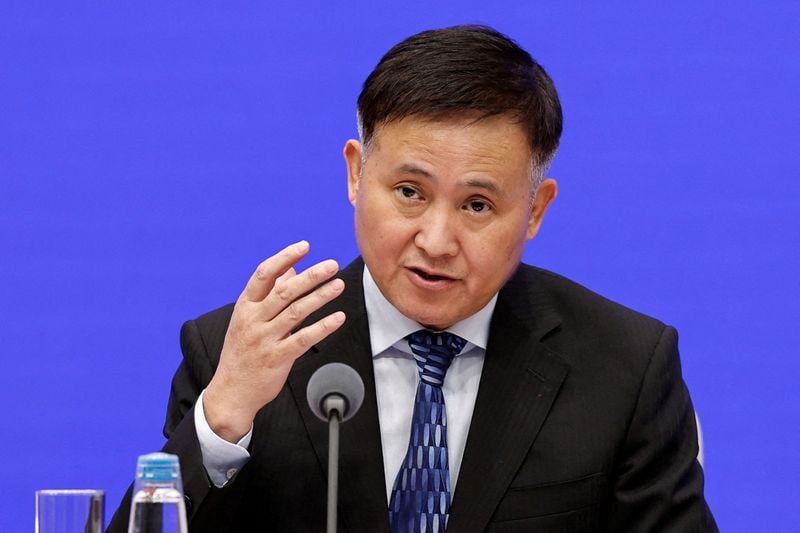
Beijing, Sept 16 - China's slowing loan growth is now considered the new normal, according to central bank governor Pan Gongsheng. The decline is attributed to property and local government sectors experiencing a credit demand decrease that outpaces growth from emerging industries, according to Pan, who shared his thoughts in the Communist Party's leading theoretical journal, Qiushi.
Earlier data indicated a rebound in new loans in August compared to July's record contraction, but still fell short of market expectations due to weak demand from households and businesses.
Pan's comments highlight a shift in China's economic landscape, with lending to the property sector and local government financing vehicles contracting while new industries struggle to compensate for the loss. The central bank governor emphasized that meeting previous overall credit growth rates is no longer feasible or necessary. Despite the reduced credit demand, he noted that financing conditions remain relatively accommodative and that essential borrowing needs continue to be met.
A significant portion of China's outstanding loans, exceeding 280 trillion yuan ($41.73 trillion), is concentrated in the shrinking property and local government financing sectors. Conversely, high-growth industries such as high-tech manufacturing and green technology, which account for over 40% of economic growth in the first half of 2026, rely more heavily on technology, data, and intellectual property than on land and factories. As a result, these sectors are less dependent on bank loans.
The central bank has increasingly downplayed bank loans as the main indicator of credit conditions, highlighting the growing significance of bond issuance and alternative funding channels within China's more diversified financial system. In 2025, loans contributed to 45% of the increase in total social financing, while bond and equity financing combined accounted for 47%, surpassing loans for the first time.
Pan pointed out that slower growth in aggregate financing would help stabilize leverage following years of rapid debt accumulation. He cautioned that excessive financial expansion could exacerbate leverage, trap funds in speculative circulation, and delay the exit of inefficient firms and excess capacity, ultimately undermining economic efficiency.
Written by urgent.news from Investing.com's reporting — not their text. Machine-written — may contain errors; check the original before relying on it.
This story
This is one outlet's version. Read the fullest account.