CHARTS: Uranium miners race to catch surging nuclear demand
Mine spending and output are rising, but lengthy development timelines threaten to leave nuclear fuel supply trailing demand.
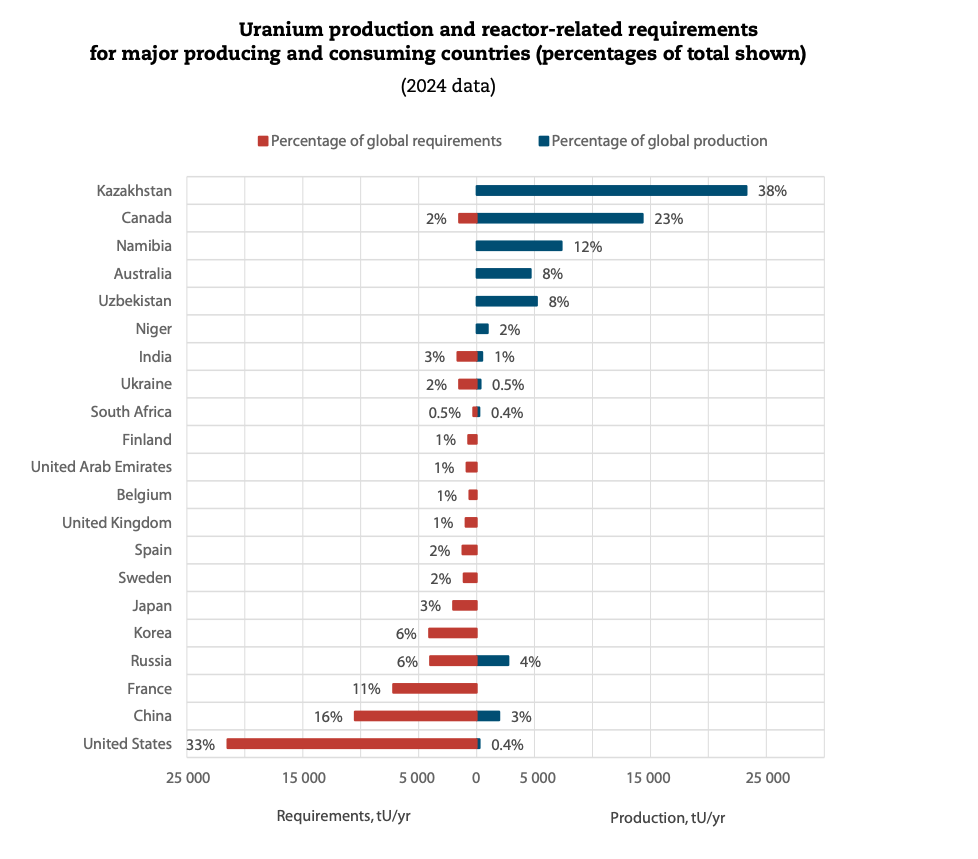
The uranium market is currently experiencing a deficit as nuclear demand rapidly outpaces the development of new mines. In 2023 and 2024, global uranium exploration and development spending surpassed $1.78 billion, marking a 46% increase from the prior two years. Production has risen by approximately 20% in the same time frame, reaching over 116,000 tonnes of uranium (tU) in 2024, the highest annual level since 2016.
Despite this output growth, Benchmark Mineral Intelligence anticipates the market will enter marginal deficit territory by 2026, with the gap widening to 18% of demand by 2027.
Several factors are driving the increased nuclear demand, including the construction of new nuclear reactors, rising electricity consumption, and the expansion of energy-intensive data centers. These factors are being fueled by renewed interest in nuclear power, including small modular reactors (SMRs) and advanced reactor technologies, as well as the growing demand for power from AI-driven hyperscalers.
However, the challenge for the uranium industry lies in the significant timeline required to develop new mines. The market is moving beyond a period of subdued demand and prices, as nuclear power interest and the need for reliable, round-the-clock electricity have strengthened demand. Tony Alderson, Benchmark's uranium research manager, emphasized that the focus on future reactor capacity may overlook the critical requirement of mined uranium to support this growth.
The availability of global uranium resources is considerable, with identified recoverable resources exceeding 8.1 million tonnes, up by 2.1% from the previous report. This resource abundance is sufficient to meet even the highest projected demand through 2050. However, the key challenge is whether miners can extract uranium quickly enough to meet this demand.
The scale of nuclear expansion over the next quarter-century is substantial. As of January 1, 2025, there were 418 commercial nuclear reactors worldwide, generating a total of 378 gigawatts electric (GWe) of net generating capacity, which requires approximately 64,500 tU annually. Another 23 reactors, totaling 19.7 GWe, were in suspended operation. Global nuclear capacity is projected to expand significantly through 2050, with annual uranium requirements ranging from 84,800 tU to 143,900 tU depending on the pace of growth.
Written by urgent.news from Mining.com's reporting — not their text. Machine-written — may contain errors; check the original before relying on it.