Anna Holmes on Why “No” Is the Most Powerful Word a Woman Can Say Today
“No.” Two little letters with enormous impact. One might contextualize them with punctuation—a comma here, an exclamation point there, a period over there—but the meaning remains about the same: a rejection of the affirmative; a refusal; an expression of resistance,
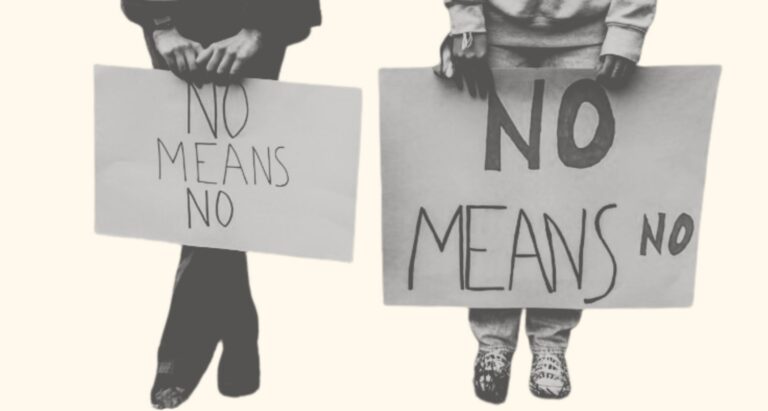
"No." Those two letters hold significant influence. One might add punctuation to the phrase—perhaps a comma, an exclamation point, or a period—but the message remains largely the same: a denial of the affirmative; a refusal; an expression of resistance, even defiance. "No." Just one syllable that can shape and define the world—our wants, needs, likes, and dislikes.
It's one of the first words many babies learn, one that often accompanies a test, a tug of war, a battle of wills over what we want, need, and are granted. "No." When spoken by women, it's a provocative statement. There's never been a more sensitive relationship between woman and word, has there? For women who opt out of childbirth, refuse marriage, or reject gender norms, "no" can be a declaration of war, a call to arms, a rejection of traits society prizes.
"No." For everyone, it's a vital tool for self-preservation, autonomy, and emotional well-being. It's a means to assert our identity and the person we aspire to become.
In 2015, I was asked to deliver the commencement speech for the graduating class of seniors at Emma Willard School in upstate New York. "No." It's an essential tool for self-preservation, autonomy, and emotional health. It's a way to assert who we are and who we want to be. I hesitated initially, as I'd never given a commencement speech before, and unlike many in the audience, I hadn't attended Emma Willard myself.
(I had attended a public high school in northern California.) But I did possess knowledge about being a woman, being ambitious, young, and trying to find my way in the world. The night before the graduation, I dined with an Emma Willard senior named Lily and her family. Her mother, Susan, turned to me and asked, "If you could go back to your younger self, six years after you'd graduated from high school, what would you ask?"
I responded, "I'm not certain I'd ask my younger self anything, but I would definitely tell her to listen more carefully to the voice inside her head and learn how to say 'no.'" Lily's mother didn't know that my speech the following day would focus on that very subject. There's no issue with saying "yes." In fact, knowing when to say "yes"—to friends, family, education, dreams—is crucial for embracing life fully, stretching our arms wide, opening ourselves to experiences and opportunities, even if we don't yet recognize them.
It's likely no one would be reading this book if not for their ability to say "yes" to life, in both large and small ways. However, many of us find saying "yes" comes easily—a skill we've had to develop from a young age. We learn to appear competent and kind; effortless and accommodating; graceful, not gregarious, to be considered successes as girls and women.
Though expectations of women are evolving, we still encounter societal conventions and assumptions about womanhood and what being a woman entails. As I told the Emma Willard students that morning, I wouldn't change much of what I experienced in my younger years, but I wish someone had emphasized the legitimacy of owning who we didn't want to be, even if those expectations clashed with what felt right.
Learning to say "no" was challenging for me. I felt inundated with "no" from a young age, from the principal in elementary school who insisted a boy do a task I was assigned to, to a high school crush who didn't feel the same way. I never demanded "no" of myself, which meant in my teens and twenties, I had no clue if the things society told me I should want were truly what I wanted.
For a long time during my youth, I believed that by saying "yes" to things, I'd increase my chances of success in life. But what I didn't realize then is that by spreading myself too thin to please others, I risked forgetting my own desires and needs. My biggest "NO," my strongest rejection of societal expectations as a woman, came in 2007 when I founded the website Jezebel.
At the time, in my mid-thirties, I was working as a writer and editor at women's and celebrity magazines to pay my rent. Something inside me was evolving, and when I was offered the opportunity to start a new women's website, I seized it. With Jezebel, I decided "no" would be our mantra. "No" to diet tips, "no" to sexist gossip, "no" to promoting expensive fashion and conspicuous consumption.
We talked about other topics too: race, gender, politics, books. Jezebel wasn't explicitly political, but we drove home the message of pushing back against societal expectations for women and girls, creating new definitions and examples of what it means to be female. When I think of "no," Joan Didion's essay "On Self-Respect," originally published in 1961, comes to mind.
Written by urgent.news from Literary Hub's reporting — not their text. Machine-written — may contain errors; check the original before relying on it.