Zähneknirschen an Zapfsäule: Tanken immer teurer: Fünf Tipps, wie Autofahrer sparen
Die Spritpreise sind teils auf Rekordniveau. Wer Preise vergleicht, zur richtigen Uhrzeit tankt und den Fahrstil anpasst, kann den Geldbeutel zumindest ein wenig entlasten.
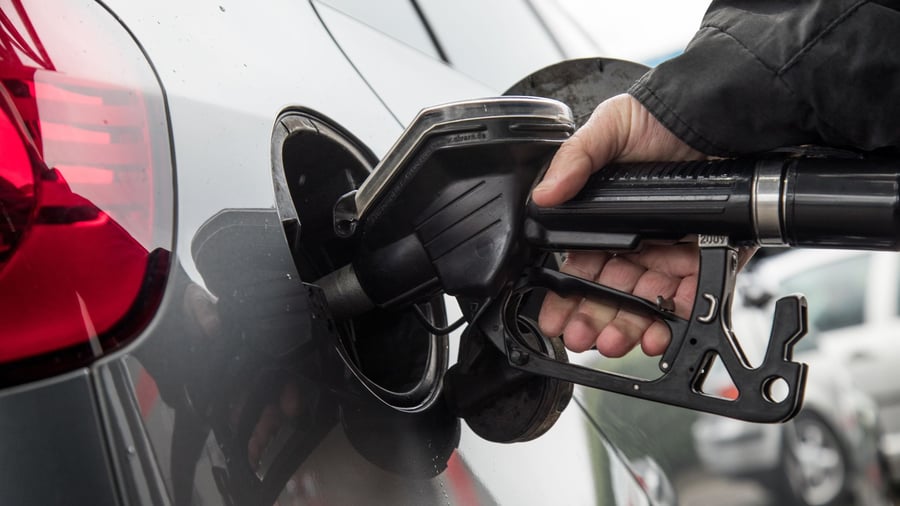
Spritpreise have reached record levels, prompting political discussions about countermeasures. Many drivers now stand hesitantly at the fuel pump. What can be done? Simply letting the car run is probably not an option for most. However, a few simple tricks can help save some money at the pump. Here are five tips that are easy to follow:
1. Check apps for the best prices. Gas price comparison apps such as "ADAC Drive", "ACE-App", "Clever Tanken", "mehr-tanken" or "PACE Drive" provide an overview of the cheapest fuel in the surrounding area. These services receive their prices from the Market Transparency Center for Fuels, as stated by the Federal Cartel Office. They are listed on the agency's website.
Even popular mapping app "Google Maps" shows fuel stations and their current prices for a liter of super gasoline. To check prices before heading out, especially on longer trips, is not always practical.
2. Fill up before noon. The time of day also plays a significant role. Since April in Germany, fuel stations are only allowed to raise prices once a day - at noon. Otherwise, only price reductions are permitted. Therefore, filling up before noon is best. Afterwards, prices tend to drop again in the late afternoon or evening. According to analyses by the ADAC, prices are usually below the daily average around 5:30 PM.
3. Take a short detour if needed - but calculate carefully for longer trips. Whether a detour for refueling is worth it depends on how much fuel is needed, how much money can be saved per liter at the cheaper station, and how much additional fuel the car consumes for the longer route. In short, the longer the distance, the lower the price at the other station should be.
A short detour, like leaving the highway for a quick fill-up, is often worth it due to the large price differences. For those living near a neighboring country with significantly lower fuel prices, like Poland, it's essential to consider the extra travel time, wear on the car, and stress against the potential savings.
4. Shift gears early and let the engine brake. The ADAC advises accelerating moderately, shifting up promptly, ideally at around 2,000 RPM. Then maintain a low engine speed for the desired speed. When braking, use the engine brake as much as possible. So, when approaching a red light, downshift to maximize engine braking.
5. Maintain speed limits instead of speed demons. On the highway, this effect is noticeable: driving faster consumes much more fuel. This is because air resistance increases faster than speed. The ADAC advises staying within the speed limit, especially when fuel economy is a concern. Even on stretches without a speed limit, avoid revving the engine excessively and aim for around 130 km/h, which is the recommended speed for fuel conservation.
Additional small adjustments: regularly check tire pressure and keep it at the upper range of the recommended pressure (found on the fuel tank or in the manual). Remove unnecessary items from the car, remove roof racks and other installations if they're no longer needed. Use the air conditioning and heating sparingly - both increase fuel consumption.
Written by urgent.news from Handelsblatt's reporting — not their text. Machine-written — may contain errors; check the original before relying on it.