When the air turns grey, ESG must mean accountability — Noor Adwa Sulaiman
SEPTEMBER 15 — The haze is back and with it comes a familiar Malaysian routine: grey skies, masks, school cl...
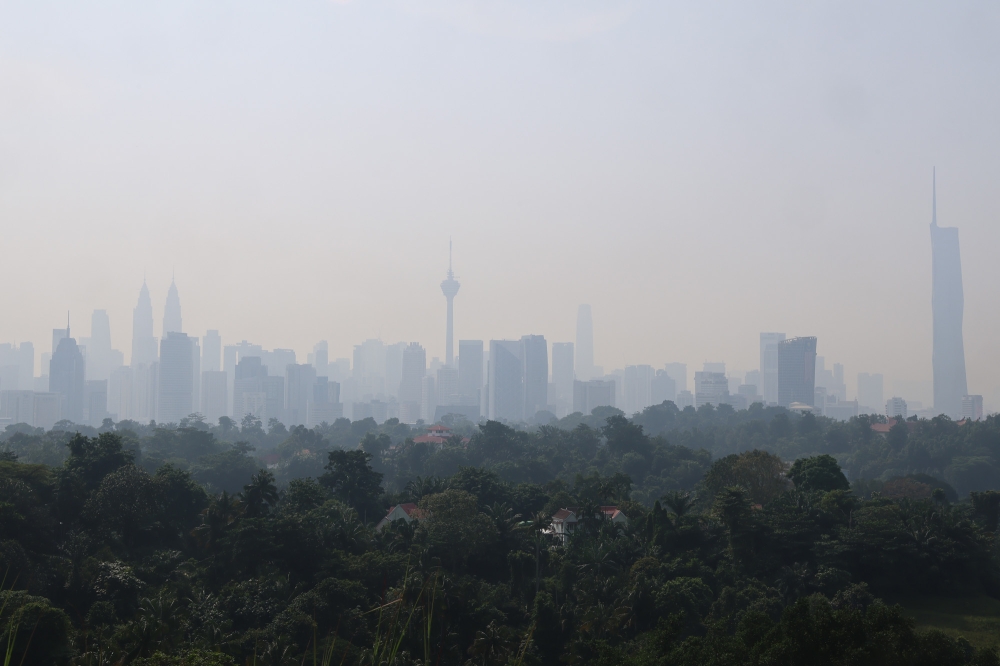
SEPTEMBER 15 — The haze is back in Malaysia, bringing with it grey skies, masks, school closures and increased scrutiny of the Air Pollution Index. This time, the situation is particularly concerning. On September 4, an emergency was declared in Serian, Sarawak, following the API reaching 519 levels. Although the emergency was lifted three days later, the air quality remains poor.
The haze affecting Sarawak has been attributed to smoke originating from forest and land fires in Indonesia's Kalimantan region. The crisis is worsening in Indonesia as well, with more than 113,000 people suffering respiratory illnesses due to the fires, according to Indonesian Health Ministry data reported by Reuters. Over 12.5 million people across seven provinces have been exposed to smoke and haze.
While the immediate concerns are air quality and public health, a more pressing question arises: Who should be held accountable for environmental harm that crosses corporate and national boundaries? This issue highlights the importance of environmental, social, and governance (ESG) commitments. The corporate dimension plays a significant role in the haze crisis.
Indonesian authorities are investigating 19 companies after detecting fires within their concession areas, covering approximately 11,047 hectares. Satellite imagery has identified 42 companies at high risk of fire. Investigations are underway to determine the circumstances surrounding each fire. Furthermore, Indonesia's Ministry of Forestry has imposed administrative sanctions on five forestry concession holders in West Kalimantan due to suspected forest and land fires within their concession areas.
These actions emphasize the need to consider corporate responsibility for preventing environmental damage within their operations and supply chains. The haze crisis demonstrates that ESG should not be limited to carbon emissions or climate targets. The environmental consequences of the fires are evident, including forest and peatland fires, greenhouse gas emissions, biodiversity loss, and severe air pollution.
However, there is also a significant social dimension to consider. Communities that are not directly involved in the activities causing pollution still bear the costs. Children miss school, outdoor workers breathe unhealthy air, businesses are disrupted, and families adjust their routines. Vulnerable groups face increased health risks as well.
The "G" in ESG, governance, is also crucial. It is essential to determine who within a company monitors environmental risks, ensures that zero-burning and environmental commitments are translated into effective controls, and monitors contractors and suppliers. Additionally, boards need to understand how warning signals are addressed and who is held accountable when controls fail.
The haze crisis is not just an environmental issue; it is also a governance, risk-management, and accountability problem. This lesson applies not only to Indonesia but also to Malaysia. The Securities Commission of Malaysia has provided guidance to boards on considering governance, sustainability data boundaries, financial impacts, and integrating sustainability risks into enterprise risk management.
Malaysia's National Sustainability Reporting Framework uses IFRS S1 and IFRS S2 as its baseline sustainability disclosure standards. The objective is to provide consistent, comparable, and reliable sustainability information. However, the haze reminds us that ESG must be judged by corporate behavior, not just the quality of a sustainability report.
While companies can make impressive commitments to zero burning, zero deforestation, responsible sourcing, and climate action, those commitments are meaningless if they lack effective governance, controls, and monitoring. Boards should ask critical questions about their environmental exposures, monitoring within their concessions and those of key suppliers, identifying emerging hotspots, ensuring contractor compliance with environmental requirements, and understanding how quickly incidents are escalated to management and the board.
With advancements in technology such as satellite monitoring and geospatial data, the ability to identify hotspots and changing environmental conditions is improving rapidly. In this context, the defense of "we did not know" becomes less convincing for governance purposes. The ultimate accountability for environmental harm should extend beyond the company gate.
Modern companies often operate as interconnected organizations, with activities spanning subsidiaries, contractors, suppliers, concession holders, and complex commodity supply chains. Corporate responsibility cannot simply stop at the legal boundary of the parent company.
Written by urgent.news from Malay Mail's reporting — not their text. Machine-written — may contain errors; check the original before relying on it.