Western Railways’ Wind-Solar Hybrid Pilot Fails; Project Shut Down After Lower Power Generation, Higher Costs
Mumbai, September 15, 2026: A Western Railways pilot project aimed at generating electricity through a combination of wind and solar power on Mumbai’s suburban network has been closed after failing to match the generation and cost-effectiveness of conventional solar systems. Installed at the Bandra-Khar and Naigaon-Vasai Road sections, the hybrid systems generated 8,793 kWh between May 10, 2023…
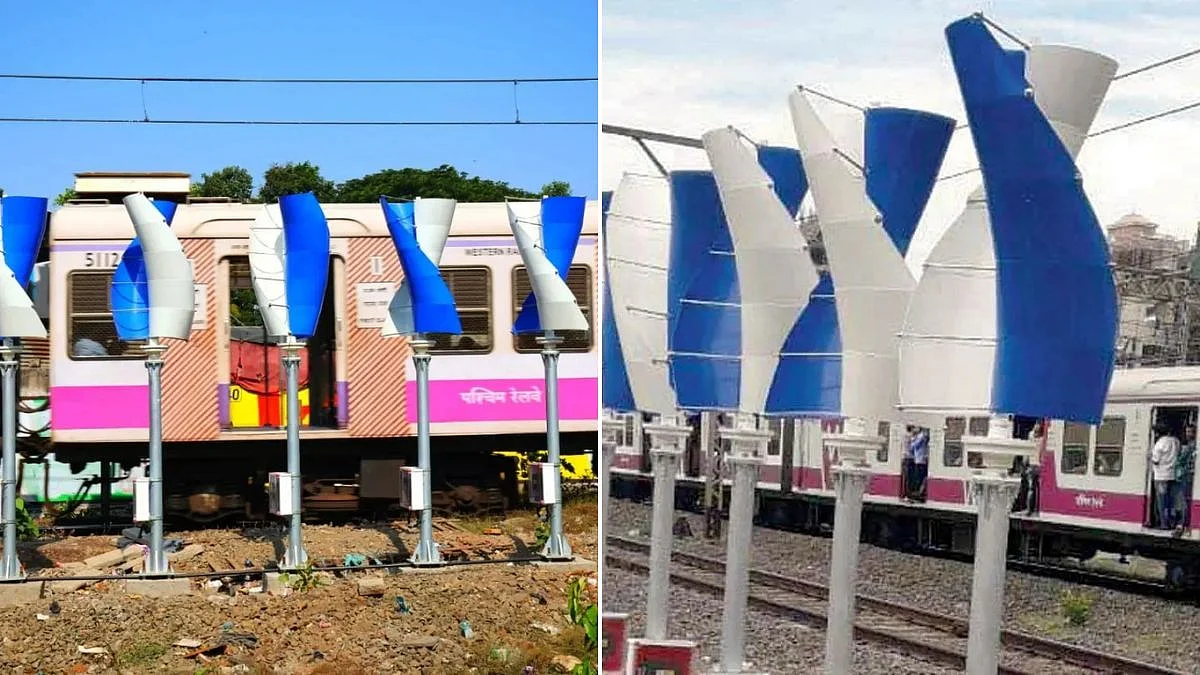
Mumbai, September 15, 2026: A Western Railways pilot project blending wind and solar power on the city’s suburban network has been halted, having underperformed compared to standard solar installations. Installed at Bandra-Khar and Naigaon-Vasai Road, the hybrid systems created 8,793 kWh between May 2023 and January 2025. However, output was 49.44 percent lower than the benchmark cited in the report, while installation costs were about four and a half times greater than conventional solar systems.
The initiative, costing Rs 19.47 lakh, was undertaken by M/s Research Centre for Sustainable Solution Pvt Ltd, Nashik. Each location featured a 4 kWp wind-solar hybrid system, comprising 2 kWp solar and 2 kWp wind capacity, totalling 8 kWp. Commissioned on May 10, 2023, the systems generated 8,793 kWh, or 1,099 kWh per kWp, during the assessment period.
Generation amounted to 1.78 kWh per kWp per hour, with a capacity utilisation factor (CUF) of 7.42 percent. This fell short of the 3.6 kWh per kWp per hour and 15 percent CUF typically seen in conventional solar systems. Consequently, the hybrid system failed to deliver the anticipated benefits of combining two renewable sources.
The cost of a conventional solar installation is estimated at Rs 50,000 per kWp, whereas the hybrid system cost around Rs 2.43 lakh per kWp. Despite the significantly higher investment, the hybrid system produced far less power. Battery storage was required to handle variations in renewable generation, with a 24V battery bank charged by solar panels and wind turbines.
An inverter converted the stored DC power into 230V AC for lighting and fan use. When renewable generation was insufficient, the batteries powered the load, switching to grid power when depleted. The assessment also highlighted the added maintenance burden of maintaining the battery system. Batteries necessitated regular monitoring and replacement according to regulatory guidelines.
Written by urgent.news from Free Press Journal's reporting — not their text. Machine-written — may contain errors; check the original before relying on it.