Vietnam's durian industry shifts from volume to value
As Vietnam's durian output climbs and importing markets tighten quality requirements, the industry must pivot from volume growth to sustainable value chains, better quality and diversified markets.
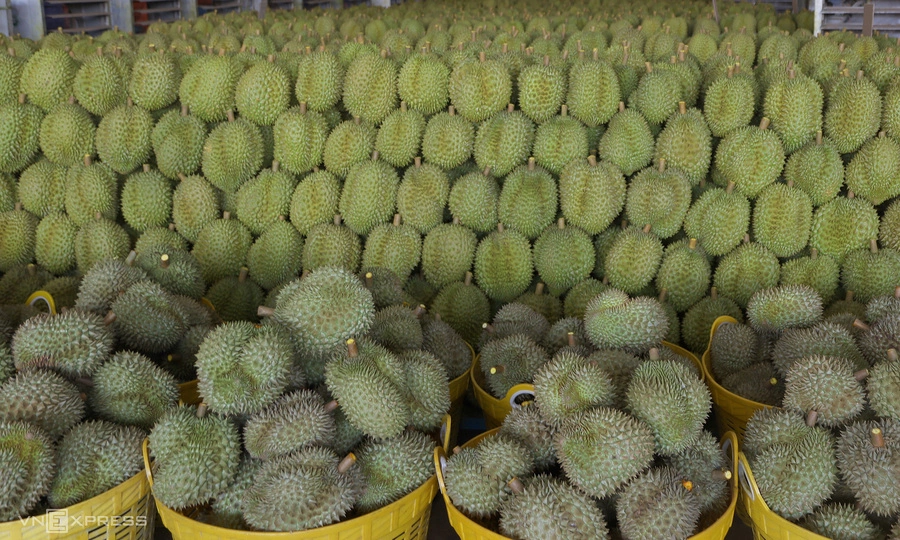
Vietnam's durian sector is pivoting from a focus on quantity to one emphasizing quality and value. The Central Highlands province of Dak Lak, responsible for roughly one-fifth of the nation's durian cultivation, now harbors around 44,000 hectares of the fruit, with nearly 30,000 hectares in production. Projections indicate a record-breaking output of about 500,000 tonnes by 2026.
However, crucial elements such as cold-chain logistics, post-harvest preservation, and value-added processing remain underdeveloped. Production remains decentralized, with weak links across the supply chain and weak quality control measures. Former National Assembly Vice President Le Minh Hoan advocates for transitioning from a simple commodity chain to a comprehensive commodity ecosystem, encompassing farmers, buyers, cooperatives, suppliers, exporters, financial institutions, research institutes, universities, and consumers.
Authorities must foster long-term relationships rather than seasonal transactions. A robust quality management and traceability system is essential, with the Ministry of Agriculture and Environment already operational since July 2026. The system currently manages data on 48,754 products from nine lines of 19 enterprises, with 24 of 34 cities and provinces showing progress.
Dak Lak is transitioning from expanding land area to enhancing quality and value, as evidenced by China approving 140 extra growing areas, packing facilities, and associated capacity. These approvals bolster the province's capacity to enter formal export channels, mandating strict adherence to Vietnamese and international regulations.
Dak Lak's current durian fields amount to approximately 41,000 hectares, with a 2025 export turnover forecast at US$1.1 billion. Nevertheless, only about 17-28% of the province's plantations are covered by the newly approved growing areas, presenting ample opportunity for further expansion in line with export standards. Dak Lak is moving away from merely selling produce and towards building a robust agricultural economy, emphasizing control over growing areas, fostering business and cooperative networks, and investing in quality enhancement, freezing, cold storage, and logistics.
Translating the nation's vast durian-growing areas into a high-value, well-tracked, and reputable industry will bolster Vietnam's competitive edge and secure its standing in global markets.
Written by urgent.news from VnExpress Business's reporting — not their text. Machine-written — may contain errors; check the original before relying on it.