UPI Charges Explained: What Is MDR And Will Customers Pay For Transactions Above ₹2,000?
Mumbai, September 15, 2026: The National Payments Corporation of India (NPCI) on Tuesday announced a 0.4% Merchant Discount Rate (MDR) on certain Unified Payments Interface (UPI) transactions to merchants when the payment exceeds Rs 2,000, while clarifying that customers will not be charged for making UPI payments under the revised system. Under the new rules, Person-to-Merchant (P2M) UPI…
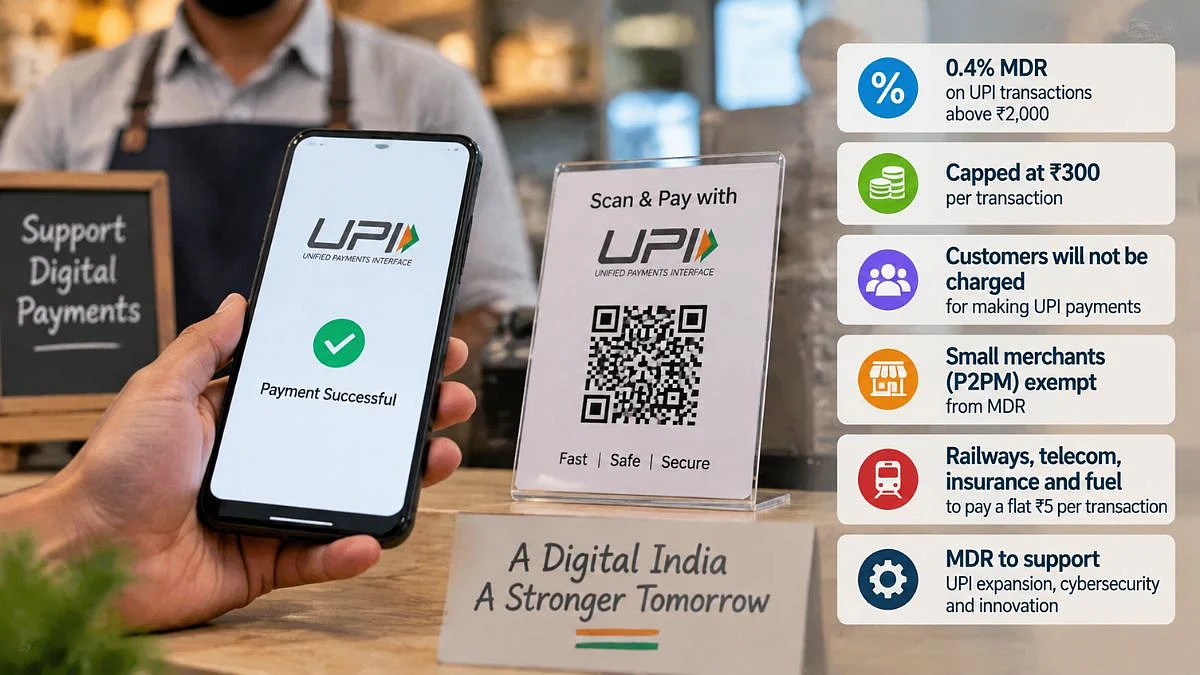
On September 15, 2026, the National Payments Corporation of India (NPCI) introduced a 0.4% Merchant Discount Rate (MDR) on Unified Payments Interface (UPI) transactions exceeding Rs 2,000 for merchants, but assured customers would not incur charges. Under this revised system, P2M UPI transactions above Rs 2,000 will incur an MDR capped at Rs 300 per transaction.
The Merchant Discount Rate represents a fee that banks and payment service providers charge merchants for processing digital payments, which can vary based on payment method, merchant category, transaction value, and agreements between businesses. The MDR will apply to P2M UPI payments over Rs 2,000, with the fee capped at Rs 300 for transactions of Rs 75,000 or more.
Small merchants under the Person-to-Person-Merchant (P2PM) framework will be exempt from the MDR. Certain categories, including railways, telecom services, insurance, and fuel, will instead face a fixed fee of Rs 5 per transaction for payments above Rs 2,000. The collected MDR from high-value transactions will be distributed among participants in the UPI ecosystem to fund UPI's expansion, resilience, cybersecurity, and innovation.
Written by urgent.news from Free Press Journal's reporting — not their text. Machine-written — may contain errors; check the original before relying on it.