Tougher Days Ahead! Weak Monsoon, El Niño Could Make Food Costlier
Mumbai: India may face sustained food inflation in the coming months as a weak and uneven monsoon threatens crop yields, while a strengthening El Niño and geopolitical tensions push global commodity prices higher. Erratic Monsoon Hurts Crops Southwest monsoon rainfall was 14.7 percent below the long-period average as of September 13. Moreover, 24 of India’s 36 meteorological subdivisions recorded…
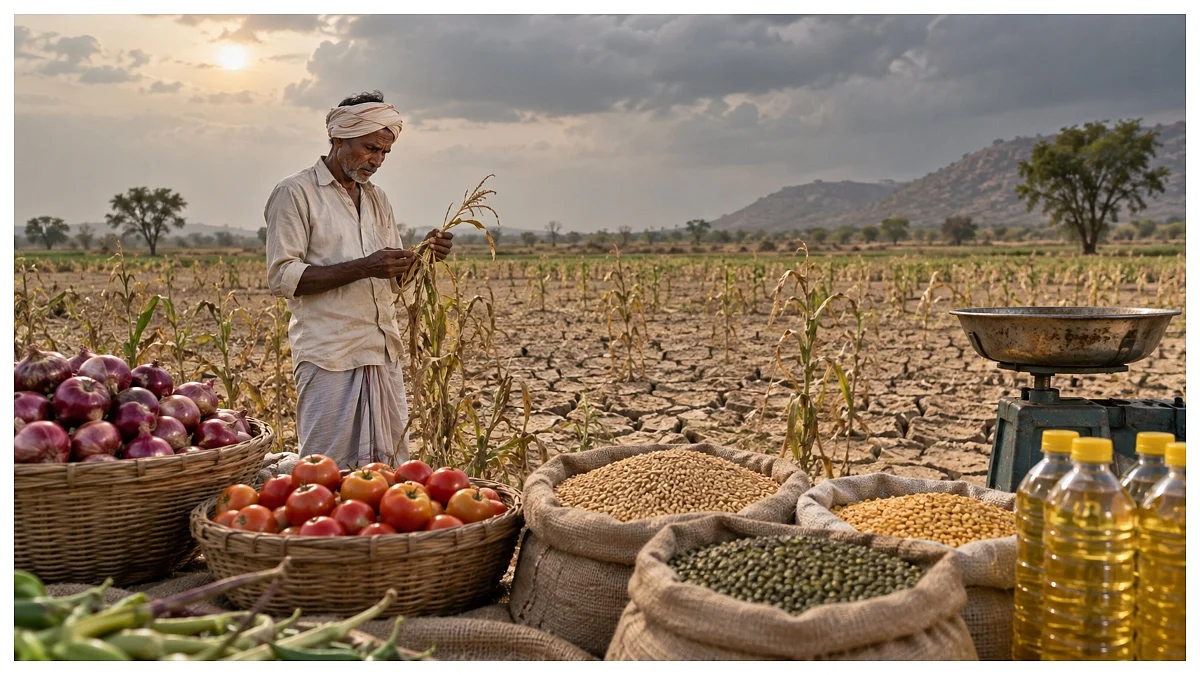
Mumbai reports that India could be facing prolonged periods of high food prices due to a weak and uneven monsoon season, combined with a strengthening El Niño and global market pressures. The erratic monsoon rainfall has fallen 14.7 percent below average by September 13, with 24 out of 36 meteorological regions experiencing rainfall deficiencies greater than 10 percent. Southern states, including Maharashtra's Marathwada and Vidarbha, have been particularly hard hit.
Despite a stable kharif sowing period, with crops covering 1,096.5 lakh hectares by September 11, only 1.4 percent less than the previous year, lower fertilizer sales suggest cautious spending by farmers and potentially reduced cultivation activity. This has led to an increase in wholesale prices for key crops; maize in Chhindwara is now around Rs 2,625 per quintal, up from Rs 2,165 last year, while arhar prices in Akola have risen to Rs 8,650 from Rs 6,200, and soyabean in Dewas has climbed to Rs 6,150 from Rs 4,300 per quintal.
These rising commodity prices are contributing to a broader increase in retail inflation, which hit an 8-month high of 4.82 percent in August, driven by higher food prices. The US Department of Agriculture predicts a decline in India's rice production to 147 million tonnes from 154 million tonnes, and maize output to 50 million tonnes from 55.1 million tonnes.
Meanwhile, the El Niño phenomenon has entered a strong phase, potentially intensifying further and reducing winter wheat, mustard, pulse, potato, onion, garlic, and spice crops.
On the global front, the FAO food price index has surged to 133.3 points in August, its highest level since November 2022, with vegetable oil prices at their highest since June 2022 and cereals reaching a 27-month peak. Additionally, wheat and corn export prices are surging, global stocks are dwindling, and trade disruptions due to conflicts in West Asia and the Russia-Ukraine war are exacerbating the situation.
With all these domestic and international factors converging, there is a strong indication that food inflation may become more pronounced and persist at elevated levels.
Written by urgent.news from Free Press Journal's reporting — not their text. Machine-written — may contain errors; check the original before relying on it.