The Conveniences I Used to Write a Book About Inconvenience (Definitely Not AI)
After a few months, I got used to the sarcasm. If I told a friend I was writing a book called Against Convenience, they’d ask whether I was planning to write it by hand, whether I’d use spell-check, or if
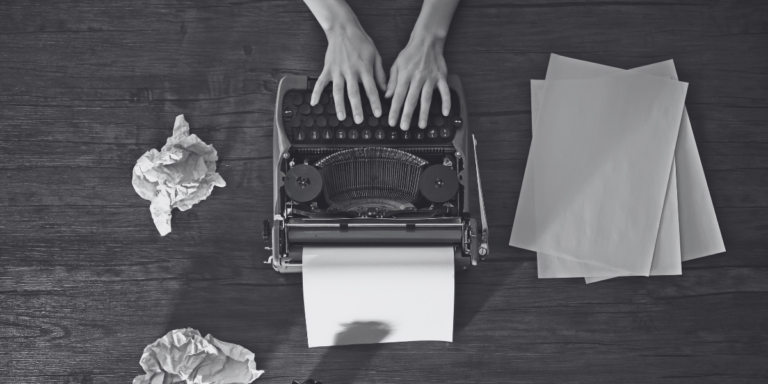
After a few months, I had grown accustomed to the sarcasm surrounding my upcoming book called Against Convenience. Friends would inquire whether I planned to write it by hand, if I would rely on spell-check, or even if I'd consider an AI summary. The jokes were easy to come by. The book itself, however, did not come to fruition.
I did, admittedly, possess a collection of pencils, fountain pens, and typewriters. Yet, I harbored no intention of forgoing digital tools for the purpose of writing the book. In fact, I had never penned anything longer than a journal entry by hand, my spelling was far from perfect, and typewriters were only used to label food trays for parties.
The internet was indispensable for my research, and I knew from the beginning that I would rely heavily on video calls, as only one interviewee resided within the same country as me and he was an hour-long train ride away. While some may argue that these time-saving inventions saved time or effort, I maintained that their impact was not as significant as perceived.
To ensure I remained true to my polemic and avoided any appearances of hypocrisy, I meticulously planned my technology usage, deciding which tools to employ and which to exclude. As I crafted my research and chapter outlines, I also devised a technology plan, determining which tools would be included or excluded from my process.
Upon delving into the research phase, I quickly realized that web search alone would prove insufficient for the extensive research required. Consequently, I obtained a library card at the University of Basel and sought counsel from a librarian on accessing various databases and utilizing interlibrary loan services. This marked the beginning of my decidedly inconvenient writing routine.
Each morning, I would commute to campus, leaving my laptop behind. At a public computer terminal, I accessed Zotero—a free and remarkable program that stored and organized my research material. After spending a few hours compiling articles, I would navigate through the library's aging wood-floor stacks, donning hard-soled shoes for added satisfaction.
The main reading room was where I first resorted to a personal digital device, using my phone camera as a portable scanner. As the week concluded, I would share my findings with my wife, compensating for the extended periods I spent alone in the library. As I continued my research, I increasingly encountered friends and former colleagues who were employing AI for research and brainstorming purposes.
In most of these discussions, I heard admissions that the bot's claims necessitated verification for potential hallucinations, that prompts had to be rewritten multiple times to achieve desired results, and that feedback often lacked depth and substance. When in a better mood, AI began to appear as a natural progression, albeit one I stubbornly resisted.
My technology was, in a sense, a means to expedite a slow process, as I utilized computers and a digital camera instead of flipping through card catalogs and photocopying pages. However, as I delved deeper into the intricacies of AI's requirements and limitations, I found myself increasingly disillusioned with its perceived significance as a forward leap compared to tools like Zotero or the web.
Those who employed AI were not saving substantial time or effort. Instead, they continued to read and write, relying on the AI as a middleman between their thoughts and the draft, rather than embracing curiosity about the concept. Furthermore, the feedback provided by AI was often half-hearted, and there were numerous humans who could offer more genuine support.
As I transitioned from digital sources to human counterparts, machines proved to be a constant disappointment. Interviews often resulted in delayed responses, apologizing for messages ending up in spam folders. In my early career as a reporter, I had grown accustomed to cold calling individuals and promptly securing interviews. However, in the present day, such an approach rarely yielded positive results, as many individuals ceased answering their office phone numbers.
When we eventually met on a video call, the initial minutes were consumed by troubleshooting connection issues and ensuring proper recording. While technology compressed the geographical distance between me and my sources, it ultimately fell short of the reliability and fidelity offered by traditional phone calls. Frustration mounted as I encountered lag and dropped connections, prompting me to consider adding a section to the book examining what we had lost in terms of reliability and fidelity with the advent of digital communication.
Ultimately, the only AI-adjacent tool I employed in writing was an old application that transcribed interview recordings. Unlike interacting with a chatbot, I fed the machine audio files and it generated text output. Automated transcription had advanced significantly, yet errors persisted, making it an inadequate substitute for listening to the tape.
Even an accurate text transcription failed to capture the tone of a conversation, as it could not convey sarcasm or provide context for a particular statement. The most valuable aspect of a transcript lies in its ability to make interviews searchable, allowing me to quickly locate specific points discussed, such as digital photography, fast food delivery, or labor economics.
Upon opening the transcript, I found the option to summarize and rewrite, enticing me to disengage from the document altogether. As I meticulously organized my WAV files and corresponding text documents into folders, I was reminded of a documentary featuring the Rolling Stone writer Ben Fong-Torres. His basement was filled with shelves of interview tapes, reflecting the enduring value of these tangible records.
Written by urgent.news from Literary Hub's reporting — not their text. Machine-written — may contain errors; check the original before relying on it.