SpaceX's next Starship launch will lift off on Sept. 22 and aim to reach orbit for 1st time
SpaceX is targeting Sept. 22 for Starship's first-ever orbital launch, a landmark flight that will deploy 26 Starlink satellites and last about 10 hours.
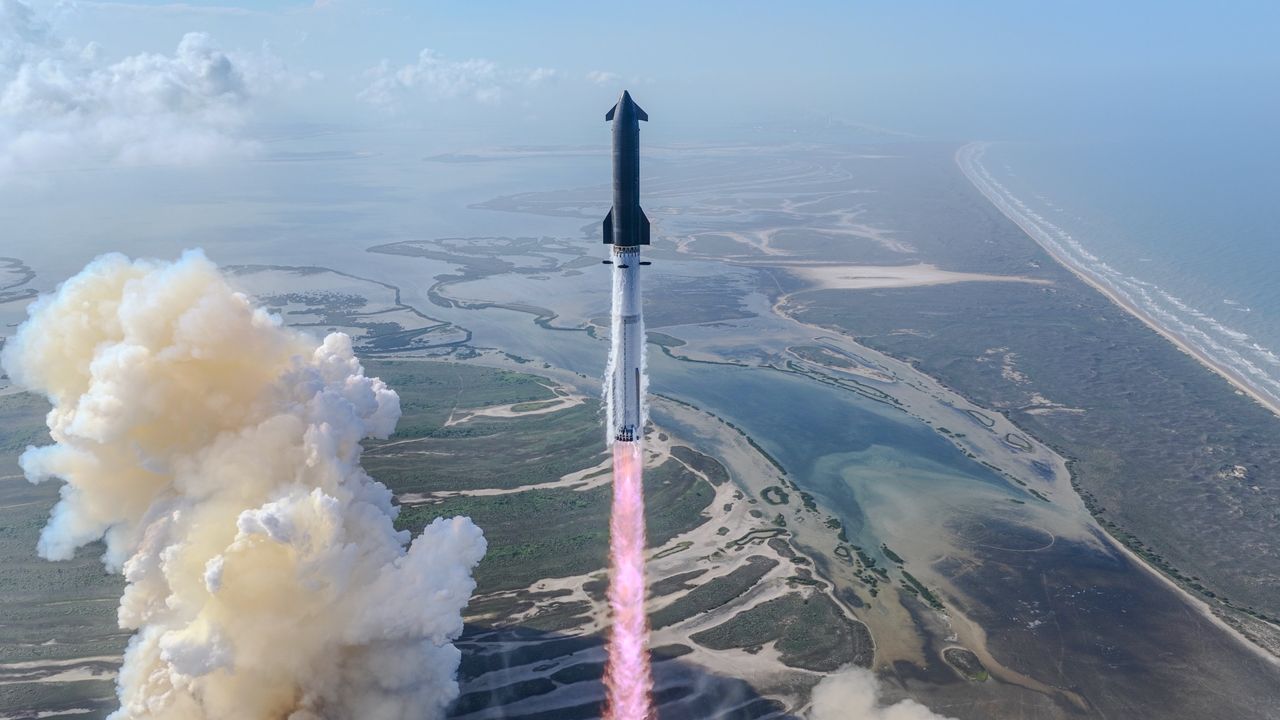
SpaceX has announced that its next Starship launch will take place on September 22nd, marking the first orbital flight of the fully reusable megarocket. The launch will occur from SpaceX's Starbase site in South Texas within a 75-minute window starting at 8:15 a.m. EDT (1215 GMT, 7:15 a.m. local Texas time). The upcoming flight will be the 14th overall for Starship, with the previous 13 attempts being suborbital.
This historic launch will serve multiple purposes. Firstly, it will mark the beginning of Starship's journey towards becoming fully and rapidly reusable. Secondly, it will be the first time Starship is set to deploy Starlink V3 satellites into the constellation, significantly expanding global connectivity speeds and reliability. Currently, Starlink consists of over 11,000 active spacecraft, but the larger V3 version, designed for Starship, has not been launched yet.
Flight 14 will carry 26 Starlink V3 satellites, with three of them equipped with cameras to photograph the heat shield on Starship's upper stage, Ship, upon deployment. This imagery will help SpaceX study and potentially improve the heat shield, which protects Ship during its return through Earth's atmosphere. If successful, Starship will complete six orbits of Earth at an altitude of approximately 171 miles (275 kilometers) before making a splashdown in the Pacific Ocean west of Chile about 10 hours after launch.
Unlike previous missions, Ship in Flight 14 will attempt to return to Earth, unlike the suborbital flights that ended off the coast of Western Australia. The first-stage booster, Super Heavy, will splash down in the Gulf of Mexico seven minutes after liftoff, similar to previous flights. While tower catches of Super Heavy have been achieved three times, this will be the first time Ship participates in this recovery method.
Musk has stated that this will become the norm for Starship flights, leading to faster and more efficient reuse of the vehicle.
Written by urgent.news from Space.com's reporting — not their text. Machine-written — may contain errors; check the original before relying on it.
This story
This is one outlet's version. Read the fullest account.