Roads, infrastructure prevent tigers from settling in Indian tiger reserve
A forested tiger reserve in southern India is home to a thriving population of spotted and sambar deer, nilgai antelopes, and wild pigs — all ideal prey for tigers. Yet the reserve has no resident tigers, reports contributor Nivedhika Krishnan for Mongabay India. Kawal Tiger Reserve in the state of Telangana connects key tiger populations […]
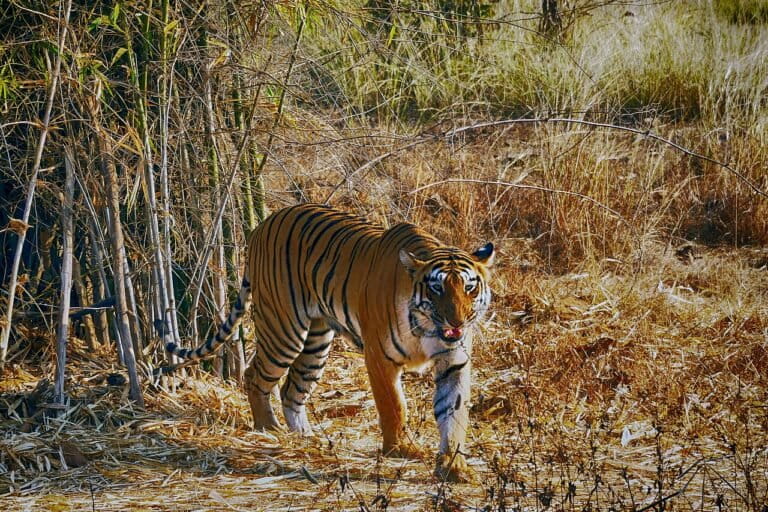
A forested tiger reserve in southern India, known as Kawal Tiger Reserve, is teeming with spotted and sambar deer, nilgai antelopes, and wild pigs, all of which provide an ideal food source for tigers. Despite this abundance of prey, the reserve currently lacks any resident tigers, according to a report by Nivedhika Krishnan for Mongabay India.
Kawal Tiger Reserve connects vital tiger populations in the reserves of Tadoba-Andhari, in Maharashtra state, and Indravati, in Chhattisgarh state. Since 2015, researchers have observed that only 15 tigers have entered Kawal from Maharashtra, with just two of them being females. Imran Siddiqui, the lead researcher, has revealed that tigers attempting to travel from Maharashtra to Kawal face significant infrastructural barriers throughout their journey.
These obstacles include open-cast coal mines, the Ada irrigation project, electrified farm fences, and the main Hyderabad-Nagpur railway line. National Highway 44 stands out as the most formidable barrier, characterized by heavy traffic and extensive fencing. Siddiqui explains that this is not a single obstacle but rather a collection of risks that dissuades dispersing tigers from continuing their journey.
While male tigers, known for their boldness, are capable of traversing human-dominated landscapes, female tigers exhibit more caution and require tranquil, undisturbed habitats to raise their cubs. The presence of highways, railways, and mines presents a considerable perceived threat to females, leading them to turn back instead of reaching Kawal.
Without females, it is impossible to establish a breeding population. Anish Andheria, president of the reserve, adds further insight into the situation.
Written by urgent.news from Mongabay's reporting — not their text. Machine-written — may contain errors; check the original before relying on it.