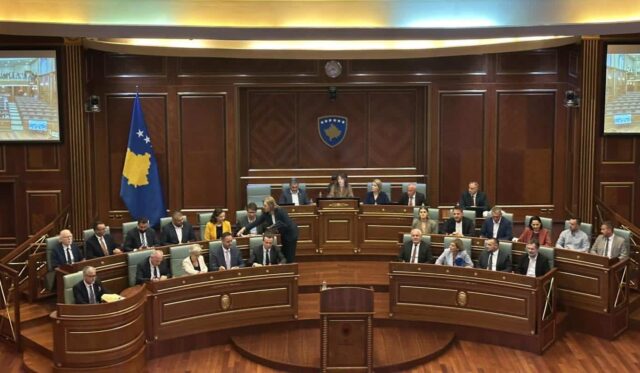
Opinion: Anger Without a Common Front
The Election Commission’s handling of the Senate collusion case will deepen public distrust, but anger alone will not produce a mass protest. Thailand’s opposition forces are divided, its major parties have little appetite for sustained street action, and many activists who once mobilised large crowds are now imprisoned, in exile or fighting criminal cases. The […] The post Opinion: Anger Without…
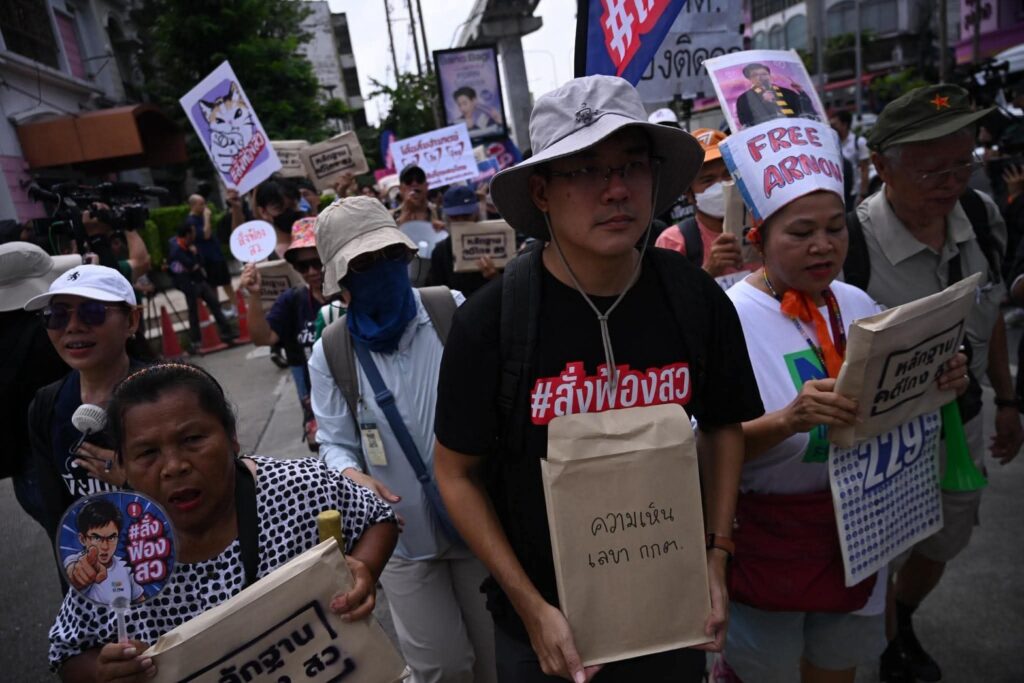
The Election Commission’s handling of the Senate collusion case threatens to erode public trust, but anger alone is insufficient to spark a widespread protest. Thailand’s opposition forces are fragmented, with major parties showing little inclination for extended street actions. Many activists who once organized sizable rallies are now incarcerated, in exile, or facing criminal charges.
The Election Commission referred only 77 out of 427 respondents to the Supreme Court’s Election Cases Division and for criminal investigations. This includes 26 serving senators, 36 voters, and 15 alleged participants. Even though an earlier recommendation was made to prosecute 229 individuals, including 21 politicians linked to the Bhumjaithai party, none of those in executive positions, MPs, or political officeholders were referred for investigation.
This decision only serves to fuel suspicion that minor figures were targeted while those involved in planning or profiting from the alleged operation remained unscathed. However, no political entity possesses the capability to transform this suspicion into a broad and persistent movement. Political scientist Punchada Sirivunnabood, dean of Mahidol University’s Faculty of Social Sciences and Humanities, concedes that the decision may diminish public confidence, but it is unlikely to galvanize large crowds onto the streets on its own.
The opposition groups are pursuing divergent paths, while much of the animosity remains confined to social media platforms. The rift between the two most prominent protest factions is particularly challenging to bridge. iLaw, a coalition of civil-society organizations and pro-democracy activists, perceives the case as yet another manifestation of institutional negligence and elite manipulation. iLaw Director Yingcheep Atchanont Sondhi Limthongkul, a former leader of the Yellow Shirt movement, views the case through a conservative, royalist, and nationalist lens.
The two camps fundamentally disagree on issues concerning the military, the monarchy, and Section 112. Yet, shared criticism of the Election Commission does not forge a unified political agenda.
Written by urgent.news from Thai Enquirer's reporting — not their text. Machine-written — may contain errors; check the original before relying on it.