Most Asian markets fall as oil tops $100 before Fed meeting
AgenciesMost Asian stock markets struggled again on Tuesday as oil prices extended gains and investors bet on a Federal Reserve interest rate hike this week, though tech firms saw...
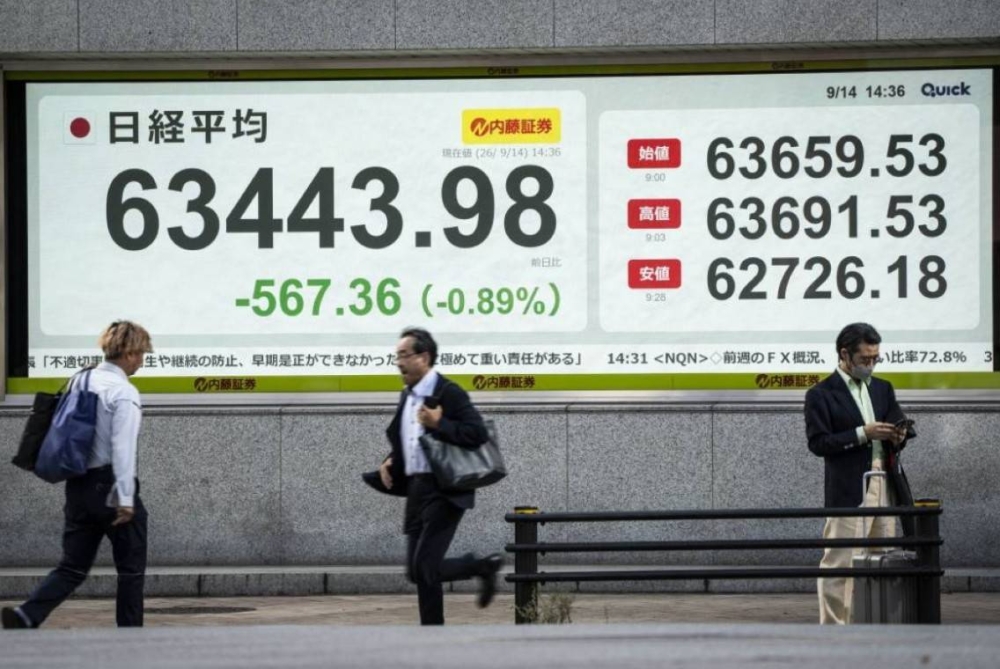
Most Asian stock markets faced another challenging day on Tuesday as oil prices continued to rise and investors anticipated a potential Federal Reserve interest rate increase during an upcoming meeting. However, tech companies experienced a modest rebound following initial losses driven by fears surrounding the rapid expansion of the artificial intelligence (AI) industry.
Houthi rebels in Yemen continued to pose a significant threat to global trade, seizing control of the Red Sea coast and the Bab Al-Mandab Strait, which has become a critical shipping route amid geopolitical tensions. With the crisis in the Middle East showing no signs of resolution, crude oil prices surged to above $100 per barrel, heightening concerns about global inflation.
Both main contracts climbed over 1 percent on Tuesday. The Houthis' recent seizure of Yemen's Red Sea coast and the Bab Al-Mandab Strait, which is vital due to the ongoing US-Iran conflict, has further strained the situation. The rally in crude prices was slightly tempered on Monday when US President Donald Trump announced on social media that Iran wished to negotiate a deal quickly, and the United States would decide whether to engage.
The increase in energy costs, with US diesel prices topping $6 per gallon on Friday, has put additional pressure on central banks to curb rising inflation. The yield on 10-year US Treasury bonds hovered just below 5 percent, having surpassed that level for the first time since October 2023. Central banks are now closely watching the Federal Reserve, with a greater than 90 percent probability that it will raise interest rates after experiencing a decline on Wall Street's three main indexes.
A slight bounce in tech firms, spearheaded by South Korean and Japanese stocks, helped Asia recover from the sell-off. Samsung, SK hynix, Kioxia, and SoftBank saw gains in Seoul and Tokyo, although they did not fully recover from Monday’s losses. This turmoil in the tech sector follows a steep decline in August, which was sparked by concerns over returns on investments in the industry and stretched valuations.
Analysts noted that this forced traders to reevaluate their outlook for the pace of AI development after years of explosive growth. "Hedge funds had recently regained interest in the technology trade, with positions rebuilding toward levels seen prior to the summer sell-off," said Stephen Innes at Quintex Intel. "Hyperscalers had attracted much of that buying, while the supply chain remained one of the cleanest expressions of the belief that the AI capex machine would continue operating at full capacity.
This works smoothly as long as everyone agrees to maintain the pace. However, it becomes more complex when the top executives overseeing the largest AI companies start discussing the need for speed governors."
Written by urgent.news from Qatar Tribune Business's reporting — not their text. Machine-written — may contain errors; check the original before relying on it.