'Marble and mahogany' do not make a judiciary, says CJ
PUTRAJAYA: A judiciary is built not by grand courthouses but by the character, conduct and legacies of the judges who serve within it, said Chief Justice Tun Wan Ahmad Farid Wan Salleh.
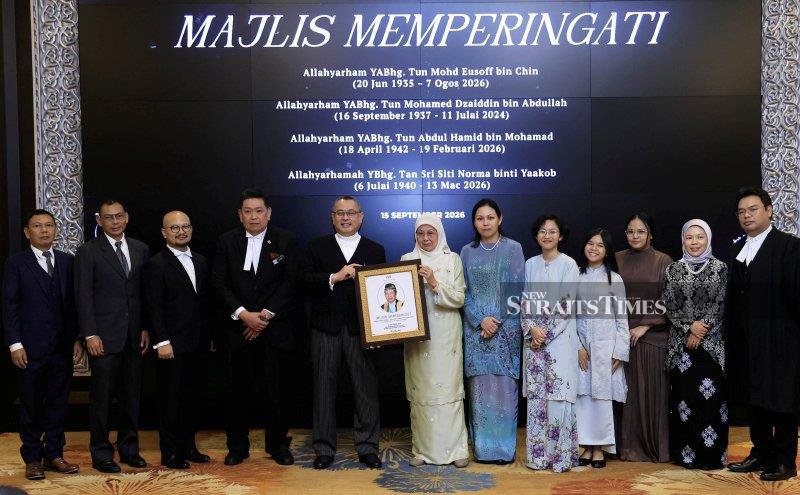
Chief Justice Tun Wan Ahmad Farid Wan Salleh emphasized that a judiciary is not built with marble and mahogany, but rather through the character, conduct, and legacies of the judges who serve within it. Speaking at reference proceedings in honour of four former senior judges, Wan Farid stated that courts, judges, and even grand buildings like the Palace of Justice alone do not establish the standing of the institution. Instead, an institution earns its standing through the character and conduct of those entrusted with it.
Each of the four former judges honoured - Tun Mohd Eusoff Chin, Tun Mohamed Dzaiddin Abdullah, Tun Abdul Hamid Mohamad, and Tan Sri Siti Norma Yaakob - inherited a judiciary shaped by their predecessors, strengthened it in their own ways, and passed it on to the next generation. The strength of the judiciary, according to Wan Farid, lies in the values passed down by generations of judicial officers, not in the physical structures that house them.
Tun Eusoff, who served as Chief Justice for the longest tenure in history, introduced a clocking-in system for judges, reflecting the principle that judicial time belongs to litigants who may have waited years for their day in court. Tun Dzaiddin, who became the first Chief Justice appointed from the Bar, aimed to "put our house in order" and restore the judiciary to an institution respected as good, strong, efficient, incorruptible, and just.
He recognized early on the role technology could play in the courts, an insight that benefited judges conducting online hearings.
Tun Abdul Hamid, although he headed the judiciary for less than a year, left behind a legacy of 567 judgments, eight books, and more than 500 speeches and working papers. His writings on the relationship between syariah and civil jurisdictions continue to guide judges in determining jurisdictional boundaries. Tun Siti Norma Yaakob broke barriers for women in the judiciary, becoming the first woman appointed to the High Court, the first woman to sit on the Court of Appeal, and the first woman elevated to the Federal Court.
She was remembered for her qualities of patience and incorruptibility, with the latter encompassing resisting pressure, flattery, and deciding cases based on the law alone, not the litigants before her.
In summary, the strength of the judiciary lies in the character and conduct of its judges, not in the marble and mahogany buildings that house them. Each of the four former judges honoured today strengthened the judiciary in their own ways, and it is the compound effect of their contributions that we see today.
Written by urgent.news from New Straits Times's reporting — not their text. Machine-written — may contain errors; check the original before relying on it.