Java 27 Tackles Post-Quantum Security and a Faster Patch Cadence
Java 27 strengthens enterprise security with monthly critical patch updates and post-quantum TLS 1.3 support, helping organizations prepare for AI-driven threats and future quantum risks.
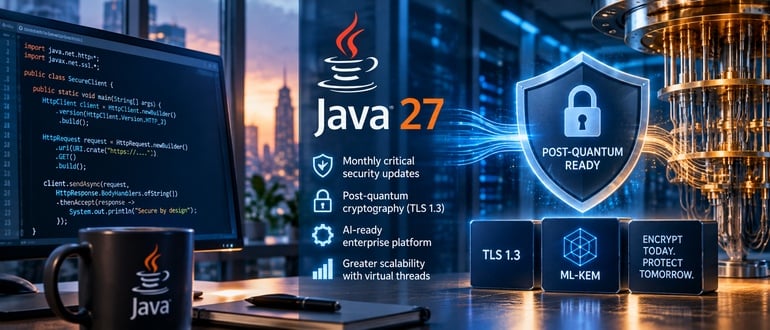
Security teams have been concerned about AI models surfacing vulnerabilities faster than most organizations can patch them. Oracle aims to address this by altering the frequency of Java security patches and preparing for emerging threats. Java 27, released on September 15, introduces monthly critical security patch updates and the most significant cryptography milestone in years: post-quantum hybrid key exchange for TLS 1.3.
This feature, called JEP 527, integrates ML-KEM key exchange into TLS 1.3 with minimal disruption for existing applications. Oracle's backport timeline ensures that older LTS releases will receive the post-quantum capability in their critical patch updates and full support in the second half of 2027. Mitch Ashley, from The Futurum Group, emphasizes that the backport schedule is crucial as it ensures protection on older LTS releases, which are more vulnerable.
Arnal Dayaratna of IDC highlights Java's role in AI applications, emphasizing the importance of Java 27's tools for AI development and post-quantum cryptography. Oracle has also transitioned from quarterly to monthly critical security patch updates, intending to maintain a drop-in replacement for existing applications during upgrades.
The release of Helidon 27, Oracle's microservices framework, coincides with Java 27, offering scalability through virtual threads and enhanced text-editing controls. Oracle's post-quantum readiness and AI support will continue to be recurring themes throughout the year.
Written by urgent.news from DevOps.com's reporting — not their text. Machine-written — may contain errors; check the original before relying on it.