Iran war: Are Houthis fighting for Iran or pursuing their own goals?
Dubai: A militia that began as a relatively small rebel movement in the mountains of northern Yemen now finds itself with the ability to influence an international war, threaten one of the world’s most important shipping routes and put fresh pressure on Saudi Arabia. The Houthis’ dramatic rise has taken on even greater significance since their latest advances along Yemen’s Red Sea coast brought…
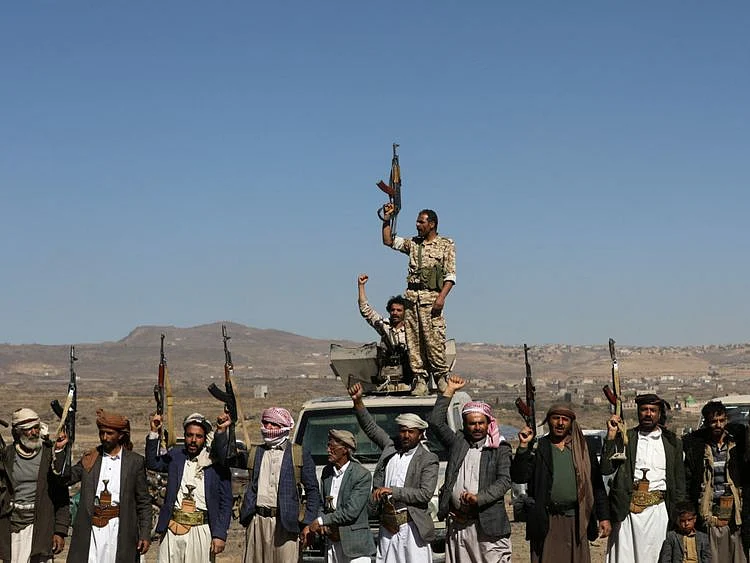
The Houthis, once a small rebel group in northern Yemen, have evolved into a regional force with the ability to influence international conflicts and disrupt vital shipping lanes. This transformation began in the early 2000s, when the Houthis fought against Yemen's central government, eventually gaining control over much of northern Yemen, including the capital, Sanaa.
Their military prowess has allowed them to threaten vessels far beyond Yemen's borders, particularly after they started attacking ships in the Red Sea in 2023. While the Houthis are often portrayed as an Iranian-backed militia, their rising role in the conflict prompts a more complex question: are they fighting primarily for Iran or for their own interests?
An analysis by The New York Times suggests that the answer is more nuanced than a simple yes or no. Iran has provided the Houthis with support and weaponry, which has given Tehran additional leverage in its ongoing confrontation with the United States. However, the Houthis have their own distinct objectives. They aim to rule Yemen, defeat or marginalize the internationally recognized Saudi-backed government, end Saudi Arabia's involvement in the Yemen conflict, and secure financial compensation from Saudi Arabia for the years-long war.
The recent territorial gains of the Houthis along Yemen's Red Sea coast have increased their leverage in regional affairs, particularly around the Bab Al Mandab, a critical maritime chokepoint connecting the Red Sea to the Gulf of Aden. This strategic position becomes even more significant when considering the disruption of the Strait of Hormuz, another vital shipping route.
The Houthis have demonstrated that their power lies not in possessing a large navy or a robust economy, but in leveraging their geographical advantage. Bab Al Mandab, a narrow waterway between Yemen and the Horn of Africa, allows them to exert influence on regional powers dependent on maritime trade. For Saudi Arabia, confronting the Houthis again poses significant risks.
The kingdom's previous military intervention against the group from 2015 onwards failed to eliminate the movement and caused immense humanitarian suffering in Yemen. Moreover, the conflict proved costly both politically and financially for Saudi Arabia. As The New York Times points out, Saudi Arabia must now weigh the potential benefits of another military confrontation against the risks it could pose to its economic and tourism ambitions, including hosting Expo 2030 and the 2034 FIFA World Cup.
The distinction between the Houthis and Iran is crucial in understanding their motivations. While their actions benefit Tehran by providing additional leverage in regional conflicts, the Houthis' interests are not identical to Iran's. The movement seeks political dominance in Yemen, economic resources, and concessions from Saudi Arabia.
Iran's support has undoubtedly helped the Houthis pursue these objectives, but the Houthis have their own reasons for exploiting the current conflict. This makes them potentially harder to contain, as even a diplomatic settlement involving Tehran would not automatically resolve Yemen's struggle for power. Ultimately, the rise of the Houthis highlights that military strength alone does not determine power in the Middle East.
A relatively small force positioned near a critical maritime chokepoint can impose costs on much larger states. Iran has long exploited this geographical advantage around the Strait of Hormuz, and the Houthis are now demonstrating a similar principle around Bab Al Mandab. With two of the world's most strategically important waterways caught up in the same widening conflict, the Houthis have acquired a level of global leverage they could scarcely have imagined when they began as a rebellion in northern Yemen.
Written by urgent.news from Gulf News's reporting — not their text. Machine-written — may contain errors; check the original before relying on it.