Ingen enighet i overtidsstriden
Kjersti Stensengs (Ap) arbeidsgruppe har jobbet i halvannet år. Spørsmålet om hvorvidt…
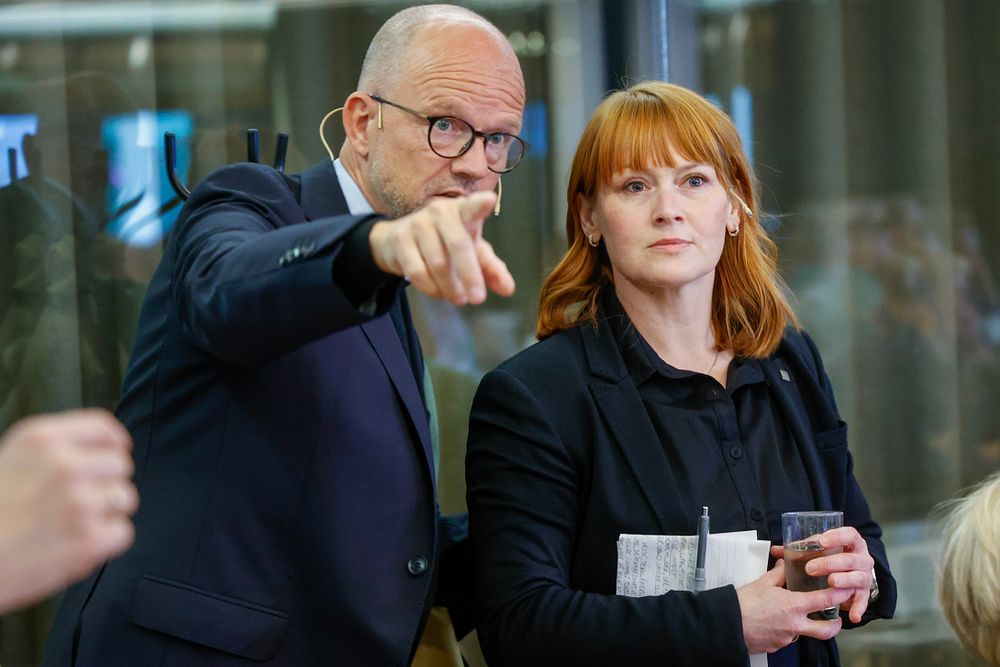
Over the past month, a secret has been poorly kept, but on Tuesday it became publicly known: the group effort on part-time overtime, which has been ongoing since April 2025, has not resulted in any solution. The report the labor life organizations are now presenting contains no joint proposals, despite Labor Minister Kjersti Stenseng's (Ap) clear order. - It has been an arduous work with strong opinions on both sides.
I have received an orientation on the main lines of the reports, and what I know is that the parties still stand far apart on several points. It is not surprising, but I had expected and hoped for more, says Stenseng in a press release. NHO chief Ole Erik Almlid admits to being disappointed with the result. - We would like this group to have come up with solutions so we could show that tripartite cooperation is able to make employment more predictable.
But we have not managed that, says him to E24. NLO deputy Henriette Jevnaker is also disappointed. - This is a matter that is extremely important, and according to our view, there is no doubt that Norwegian labor practice must be redesigned. Employers have sat on their hands and waited for this report, so now we, as responsible parties, have to solve this issue, says she.
Norway introduced the EU part-time directive into Norwegian law in 2005, when the Labor Environment Act was adopted. In 2023 and 2024, the EU Court of Justice dealt with two cases regarding the interpretation of the part-time directive. In the judgments, the EU Court of Justice ruled that it was illegal to discriminate against part-time employees by not paying overtime for work exceeding the agreed working hour.
These EU judgments have furthered two cases in 2026. An employee at Coop Bygg and an employee at Sykehuset in Innlandet have both been granted backpay for overtime hours they worked over their regular weekly hours over the past three years. Both judgments are appealed to the Supreme Court and are therefore not legally binding. The government set up a working group in April 2025 to consider how Norway's compensation rules for overtime should be changed.
This was presented on Tuesday, September 15th. Despite the parties not coming any closer to a consensus, part-time workers have experienced heated rhetoric in both E24 and other newspapers in recent times. Jevnaker does not hide where she thinks the responsibility lies. - We have always shown a willingness to find solutions. So far, the employer side has said no to everything, says she.
NHO chief Ole Erik Almlid points the finger at the trade unions, saying that the trade unions in particular must take more responsibility in the future. - It is not possible to have both a cake and a fork here. Almlid emphasizes that a lot of the rulebook and legislation in Norwegian labor practice is interconnected. That is why one cannot simply start paying overtime for extra time without making other adjustments, argues he.
Almlid also points to issues such as parental leave, the possibility for employees to change shifts, student jobs with part-time hours, and overall overtime rates. - If you are not willing to sit down and discuss this as a total solution, you are only pushing the problems ahead. - NLO always thinks holistically about major changes, but here it is practice that needs to be changed first, and then we can see if there are any challenges that need to be addressed.
If we start paying overtime for overtime work at night, we can expect costs to rise for businesses. There is no doubt about that. On the other hand, in the worst case, we can see solutions where there is less labor available. That is why NHO chief Almlid is not ready to give up the discussion. - Even though the result of this work was as it was, we must realize that we have a special responsibility now and beyond the fall.
This responsibility does not just belong to us. The government must be held accountable more, the trade unions must be held accountable, and we must be part of the talks, of course. We still believe that it is possible to find solutions, he says. Jevnaker also believes that the parties still need to resolve this matter. - No, it's probably group work now.
But the parties have always managed to find major shifts in Norwegian labor practice. We are not saying that it is a "quick fix" here, but we must find practical solutions. While NHO is concerned about the country's businesses, the opposition is raising a red flag at Kjersti Stenseng's office, says Gangsø. The collective employer side believes that the current Norwegian system can be maintained, despite two clear EU judgments and two judgments in Norwegian appellate courts. - Norway should use the legal arena that exists.
This responsibility lies with the government, says Gangsø. The Labor Minister thanks the working group for their efforts. In the press release, the department says that "much indicates that rule changes will be necessary". - The government is prepared to take responsibility in this matter. In further work, we will bring in external expert support and have a dialogue with the parties, says she.
Written by urgent.news from E24 Norway's reporting — not their text. Machine-written — may contain errors; check the original before relying on it.