India's middle-income trap has a problem money may fix
Economist Thomas Piketty says India can escape the middle-income trap through massive investment in education, healthcare and infrastructure, while deeper global cooperation is needed for inclusive growth. He warns that climate change, rather than artificial intelligence, could become the real geopolitical battleground, urging India to reduce its material footprint and support sustainable…
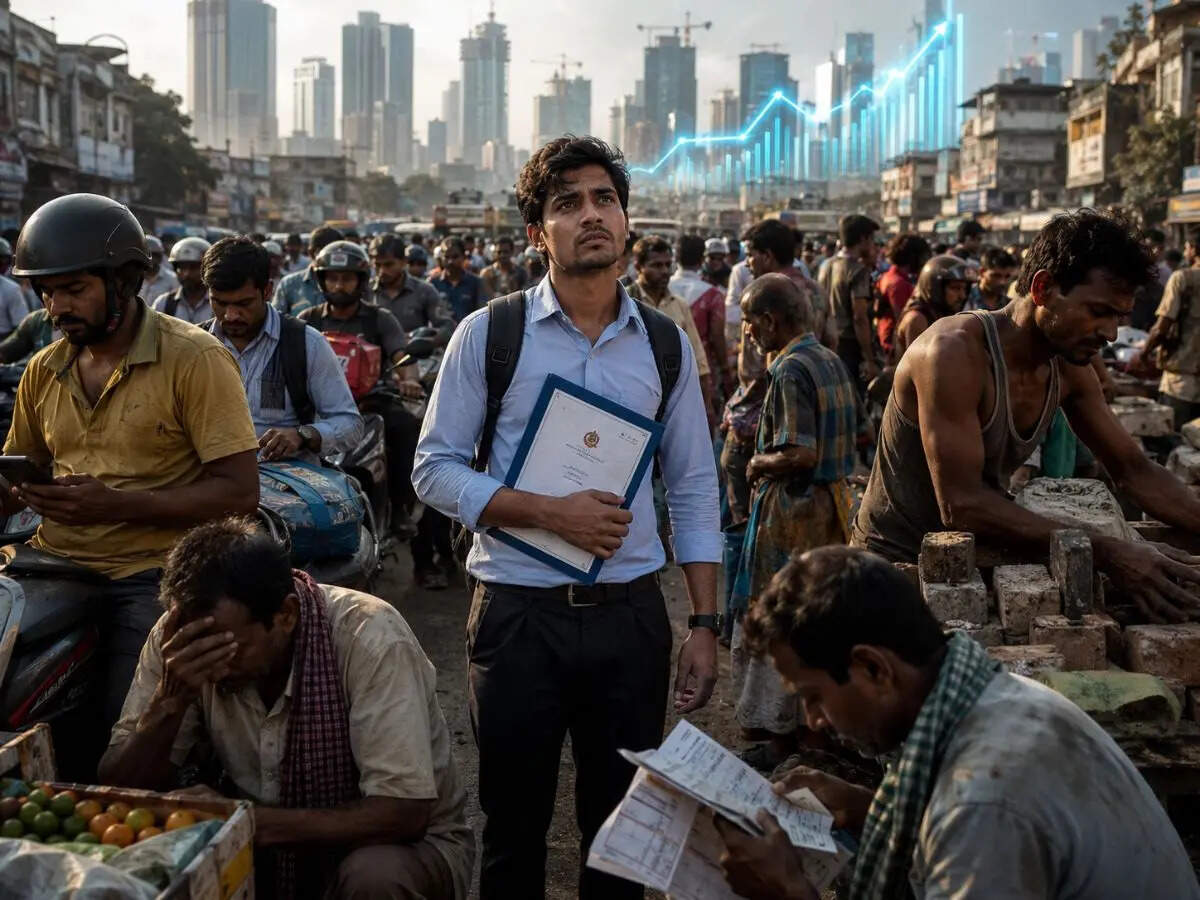
India can overcome the middle-income trap by heavily investing in education, healthcare, and infrastructure according to French economist Thomas Piketty. The middle-income trap refers to a situation where a country struggles to compete globally in low-skill manufacturing due to high wages, and also struggles with high-value industries due to low productivity. This leads to slow growth, stagnant or falling wages, and a burgeoning informal economy.
Piketty stressed the importance of India's inclusion in global coalitions to foster inclusive and sustainable growth. He further highlighted that India must participate in broad international coalitions promoting a more inclusive and sustainable development model.
Piketty suggested that India needs to combat the middle-income trap through investment in education, health, and infrastructure. He specifically called for democratic regulation of AI, alongside proper accounting of AI's material footprint and other sectors.
AI is becoming a major geopolitical battle as world powers vie for control over vital technology, data, and global influence. Piketty argues that AI is currently more of a diversion and could exacerbate the environmental crisis, reflecting the accumulation of resources and power by a select few tech billionaires disconnected from sustainable and inclusive development.
India, with over three-quarters of the world's population, faces significant challenges in transitioning to a high-income status within the next few decades. The World Development Report 2024 points out that while countries initially grow by investing in infrastructure and labour, the returns on such investments decline as economies mature, leading to stagnation at moderate income levels.
Despite India's significant share in global economic activity, education remains a weak point, with spending at 4.1% of GDP since 2015, and a further decline in its share of public expenditure. Piketty emphasized the critical role of India in shaping the global movement towards sustainable development and economic justice.
Written by urgent.news from The Economic Times - Economy's reporting — not their text. Machine-written — may contain errors; check the original before relying on it.