Heart of the Matter: How a Major Children’s Hospital Uses Open Source NVIDIA AI for Cardiac Care
Children’s Hospital of Philadelphia (CHOP) is employing open source AI tools, built on NVIDIA's MONAI framework, to rapidly create precise 3D models of children's hearts for cardiac care. Approximately 1% of live births involve congenital heart defects, with each case presenting unique anatomical challenges. Traditionally, surgeons relied on off-the-shelf devices, ill-suited to individual patients.
To address this, CHOP's cardiac modeling service, leveraging MONAI and NVIDIA's Auto3DSeg, generates anatomically accurate heart models from existing imaging data within seconds. Previously, this process took up to four hours of work by a skilled researcher. Over 20 U.S. children's hospitals now utilize this service, with CHOP aiming to expand its use to hundreds of cases this year.
Building on this success, CHOP is developing the IDEA Lab to apply these tools across various medical disciplines. The team's work began with SlicerHeart, an extension of the open source 3D Slicer software, which CHOP developed to model pediatric hearts and valves. Machine learning has significantly accelerated model creation, allowing a trained network to produce results equivalent to a human specialist in mere seconds.
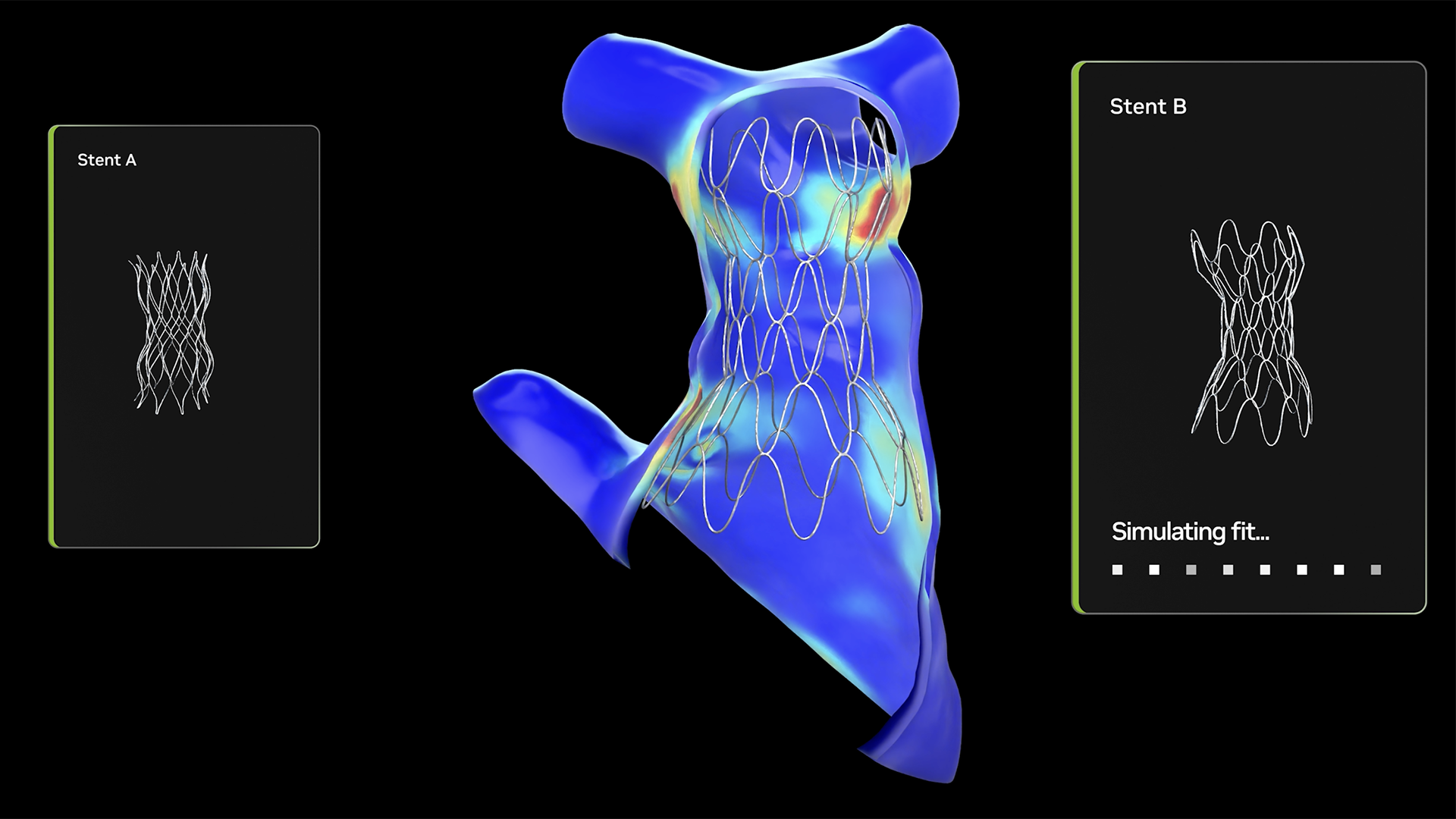
This innovation has proven invaluable, particularly in complex ventricular septal defects, where models have led to successful first-time repairs in previously failed cases. Beyond visualization, CHOP's team aims to simulate how devices will function within the child's heart before any procedure, using NVIDIA's Newton physics engine.
Integrated with SlicerHeart and NVIDIA's Omniverse, these simulations offer real-time insights into device deployment, potentially enabling same-day clinical decisions. The open source nature of these technologies fosters collaboration among researchers and institutions, as CHOP aspires to create a national network of children's hospitals to further advance shared modeling infrastructure.
Written by urgent.news from NVIDIA Blog's reporting — not their text. Machine-written — may contain errors; check the original before relying on it.